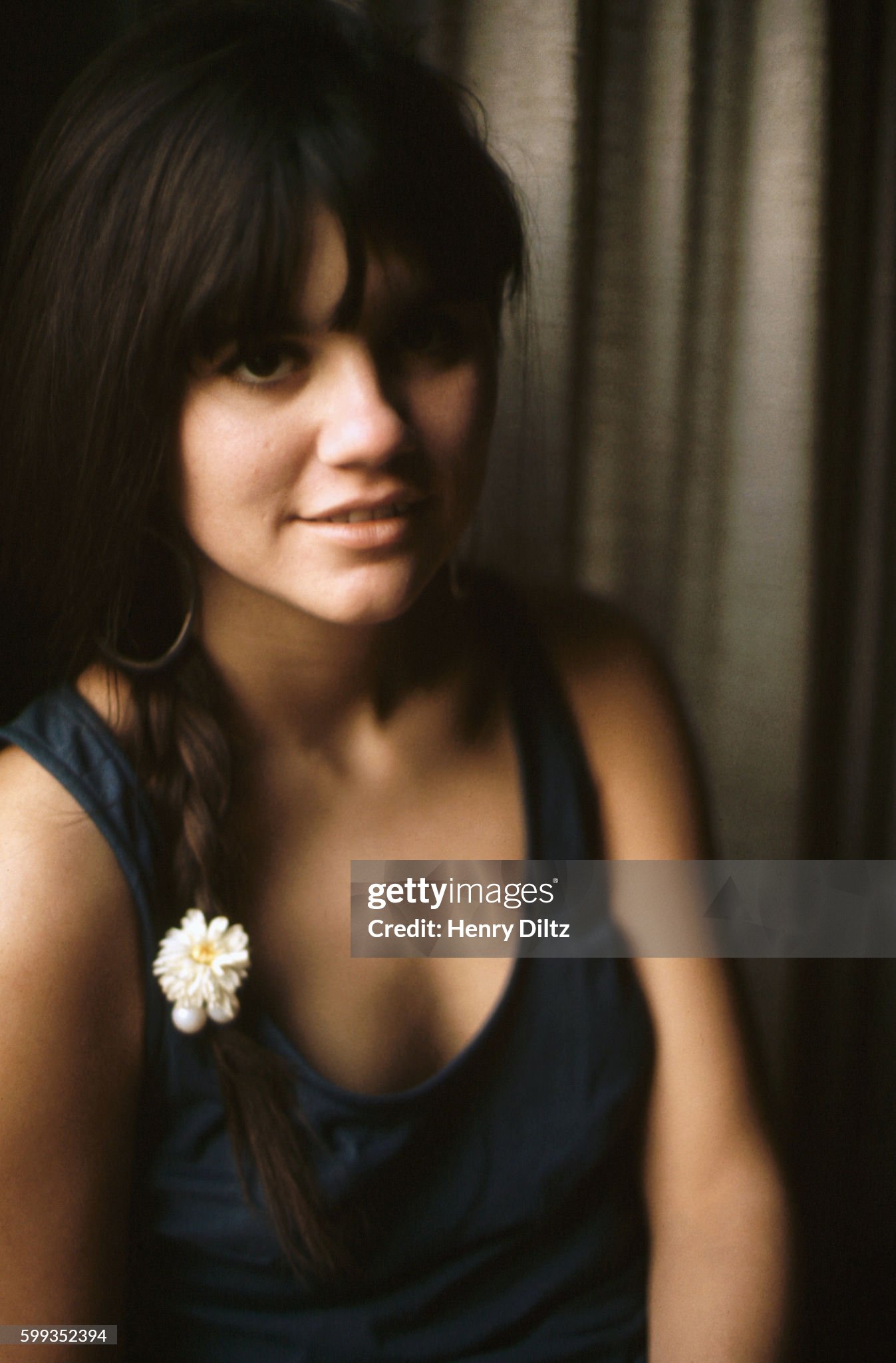
On Lush Life, Linda Ronstadt meets “Falling in Love Again” at the border of cabaret and pop, proving that a singer can cross genres without leaving her emotional truth behind.
When Linda Ronstadt recorded “Falling in Love Again (Can’t Help It)” for her 1984 album Lush Life, she was doing far more than adding another familiar standard to her catalog. She was entering a song already heavy with atmosphere and association. Written by Friedrich Hollaender and forever linked to Marlene Dietrich through the 1930 film The Blue Angel, the number carries a kind of European cabaret cool that can easily turn stiff, theatrical, or overly knowing in the wrong hands. On Lush Life, with Nelson Riddle and his orchestra behind her, Ronstadt did something subtler. She did not try to recreate Dietrich’s shadow. She stepped beside it and sang from her own history.
That was no small thing in 1984. By then, Ronstadt had already built one of the most wide-ranging careers in American popular music. She had moved through folk-rock, country-rock, pop, and classic song interpretation with a restlessness that was not trend-chasing so much as artistic appetite. Yet her work with Nelson Riddle still felt like a bold turn. These albums asked audiences to hear her not as a rock-era hitmaker visiting old material for prestige, but as a serious vocalist willing to inhabit a much older discipline of phrasing, architecture, and tone. Lush Life, her second collaboration with Riddle after What’s New, made it clear that the standards project was not a side excursion. It was a real chapter in her artistry.
“Falling in Love Again” is one of the clearest examples of why that chapter matters. Unlike the open-hearted romantic sweep of many American standards, this song lives in a more elusive emotional space. It is amused, resigned, faintly dangerous, and strangely detached even while it circles desire. The lyric does not plead. It accepts. The melody does not rush toward release. It glides, almost with a raised eyebrow. That gives the singer very little room to hide. Oversing it, and the charm disappears. Treat it as a camp curio, and the feeling goes thin. Ronstadt understands that balance immediately.
What she brings is not smoky imitation but disciplined clarity. Her voice on Lush Life is beautifully centered, and on this performance she uses that steadiness to reshape the song’s meaning. Where Dietrich made the number feel worldly and elusive, Ronstadt gives it a more transparent but no less intelligent sadness. She phrases with care, allowing the title line to land not as flirtation alone, but as recognition. There is no strain to sound arch, continental, or theatrical. Instead, she trusts pitch, timing, and restraint. The effect is quietly persuasive. You hear a singer known for emotional directness discovering how much can be said when the volume stays low and the edges stay clean.
Nelson Riddle’s contribution is just as important. Riddle, whose arranging legacy runs through recordings by Frank Sinatra, Nat King Cole, and Ella Fitzgerald, knew how to build orchestral settings that supported a voice without embalming it. On “Falling in Love Again”, the arrangement gives Ronstadt room rather than pressure. The orchestra does not crowd the song with false glamour. It shapes the air around her. That distinction matters. The performance feels elegant, but it never feels trapped in museum glass. Riddle understands that sophistication in popular music is often a matter of spacing, proportion, and the confidence to let a line breathe.
This is where the cross-genre story becomes especially compelling. Ronstadt had long been admired for the force and emotional immediacy she brought to country-rock and pop material, but those qualities do not disappear here. They are refined. Anyone who had heard the ache in earlier performances could still recognize the same artist, only working through a different emotional grammar. Instead of driving into a chorus, she leans into nuance. Instead of using vocal power as revelation, she uses control. That is why the recording feels so satisfying. It is not a rejection of the singer she had been. It is an expansion of what that singer could contain.
Within the flow of Lush Life, the song also deepens the album’s emotional palette. The record moves through American popular song with grace and intelligence, but “Falling in Love Again” introduces a slyer, darker shade. Beside the album’s romance and melancholy, it brings irony, performance, and a faint sense of emotional theater. That keeps Lush Life from becoming merely lovely. It gives the album contour. Ronstadt and Riddle were not just polishing beloved songs; they were mapping different kinds of adult feeling, from tenderness to wit to resignation, all within a carefully shaped orchestral world.
There is also something quietly defiant about the timing. In the mid-1980s, when much of mainstream pop was moving toward sleek surfaces and digital sheen, Ronstadt’s standards work insisted that older song forms still had living expressive power. Her version of “Falling in Love Again” does not ask for reverence because it is old. It asks for attention because it is good, because it holds emotional tension that still reads clearly, and because a singer of Ronstadt’s intelligence knew how to approach it without vanity. That is the lasting beauty of the performance. It feels less like genre tourism than like a meeting of traditions that had been waiting for each other: Hollywood cabaret, American orchestral pop, and a modern singer with the courage to slow down and listen to the song itself.
That is why this recording continues to resonate. Backed by Nelson Riddle and carried by a voice willing to trade display for poise, Linda Ronstadt turns “Falling in Love Again” into more than a revival of a classic. She turns it into a portrait of musical maturity, where style is not costume, genre is not a cage, and understatement becomes its own kind of revelation.
