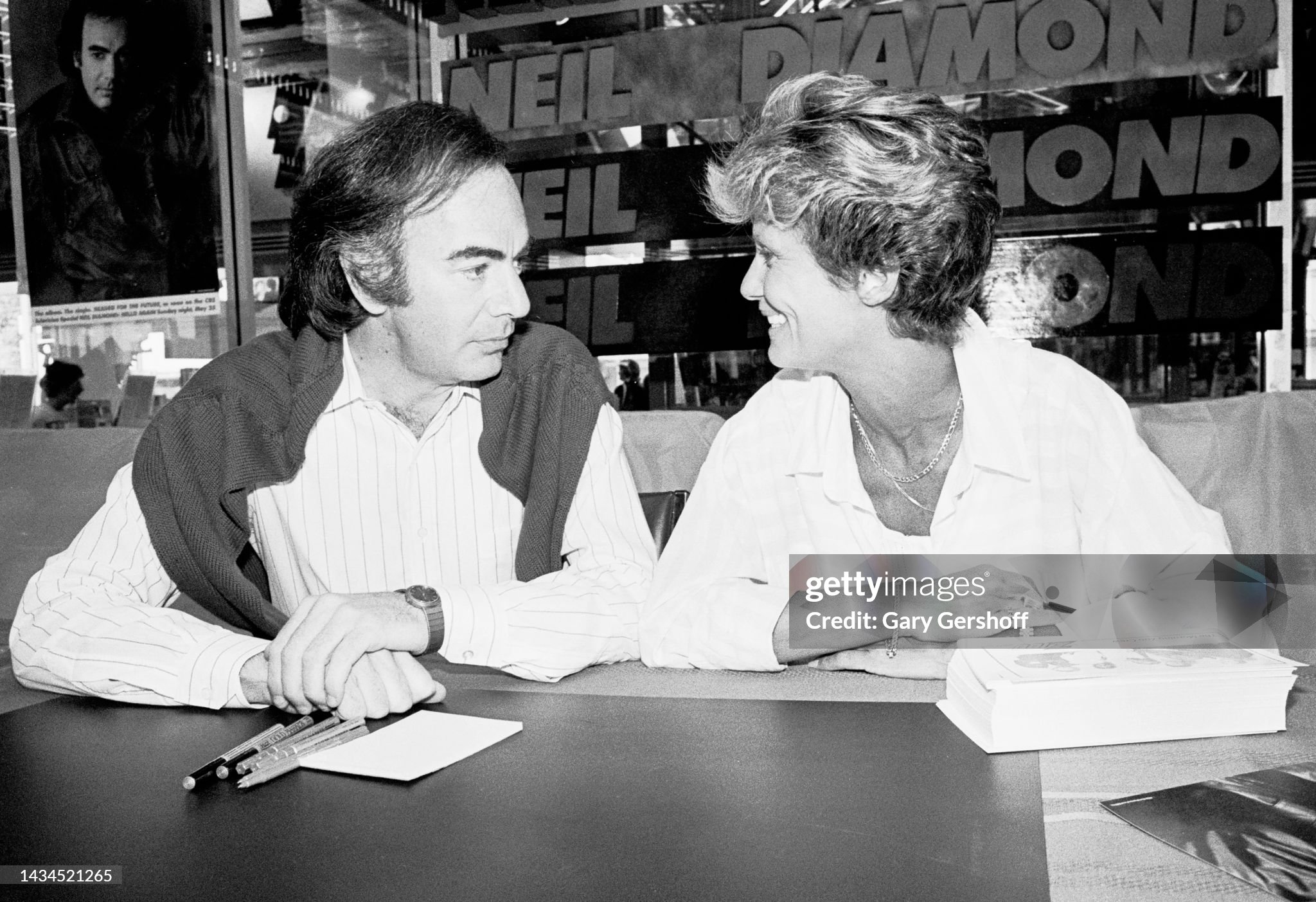
Inside Reggae Strut, Neil Diamond lets the grandeur of Serenade loosen its shoulders and move with a sly, unexpected pulse.
Reggae Strut arrived in 1974 as a deep cut on Neil Diamond’s Serenade, the Columbia album best remembered for the hit glow of Longfellow Serenade and the dramatic reach of I’ve Been This Way Before. Tucked among songs that often lean toward romance, reflection, and theatrical sweep, this track feels like a side door opening onto a different room. It does not try to carry the full emotional architecture of Diamond’s grandest ballads. Instead, it moves with a compact confidence, a rhythm-conscious curiosity, and a flash of playfulness that makes it stand out precisely because it does not behave like the album’s obvious centerpiece.
By 1974, Diamond was no longer simply the punchy Brill Building songwriter who had written concise pop statements with a radio-ready bite. He had become a major album artist, a performer drawn to scale, orchestration, character, and spiritual overtones. His early Columbia period found him working in broader colors, following the success and ambition of the Jonathan Livingston Seagull soundtrack and stepping into music that could feel almost cinematic in scope. Serenade, produced in that moment of expansion, carries much of that sensibility. It is polished, carefully arranged, and emotionally serious in many places. Against that backdrop, Reggae Strut has the charm of a raised eyebrow.
The title itself says a great deal. It does not promise reggae in a purist sense, and it should not be heard as Diamond trying to become a Jamaican roots singer. What it captures instead is the way reggae’s offbeat feel and relaxed propulsion had begun to filter through American and British popular music in the early 1970s. Artists outside the genre were listening, borrowing textures, and testing how that rhythmic sway might sit inside their own musical identities. Diamond’s version is unmistakably his: controlled, theatrical, slightly mischievous, and shaped by the studio craft of his era. The groove becomes less a costume than a rhythmic accent, a way for him to step away from the solemn frame and let the record breathe.
What makes Reggae Strut interesting as a Serenade deep cut is not that it overwhelms the better-known songs. It does something subtler. It reminds us that albums from this period were not merely containers for singles. They were landscapes, with hills, corners, interludes, and unexpected weather. A listener drawn in by the romantic lift of Longfellow Serenade might be surprised to find Diamond shifting into a lighter, more rhythm-driven pocket. That surprise matters. It gives the album dimension. It shows an artist willing to interrupt his own seriousness, if only for a few minutes, and follow a groove that feels more body than confession.
Diamond’s voice is part of the tension. His baritone naturally carries weight; even when he sings something playful, there is a grain in the sound that suggests command and intention. On a track like Reggae Strut, that vocal presence rubs against the looseness implied by the rhythm. He does not disappear into the style. He remains Neil Diamond, with all the firmness, phrasing, and showman’s instinct that name implies. The result is a recording that can feel slightly unusual on first listen and more revealing on return. It shows how far his musical personality could stretch without breaking its own outline.
There is also a broader cultural texture around the track. In the mid-1970s, reggae was gaining greater international visibility, and pop musicians were increasingly aware of its rhythmic vocabulary. For an American singer-songwriter with Diamond’s mainstream audience to place a song called Reggae Strut on a major album says something about the porousness of the era. Radio, touring, studio musicians, and record collectors were helping sounds cross borders. Some crossings were deeper than others, and some were brief experiments rather than full commitments. But they still tell us what artists were hearing in the air.
That is why this song earns attention beyond novelty. Reggae Strut gives us a glimpse of Neil Diamond not as a fixed monument, but as a working musician inside a changing pop world. He was listening to rhythm, mood, and movement. He was placing a different kind of pulse inside an album that otherwise carries a more sweeping, polished emotional vocabulary. Deep cuts like this often become beloved because they feel less burdened by history. They are not asked to represent an entire career. They simply exist, quietly waiting for someone to notice the personality in their small departures.
Heard today, Reggae Strut feels like a reminder that even familiar artists have corners in their catalogs where the light falls differently. It may not be the first song people name when they speak of Diamond’s 1970s work, but that is part of its appeal. It is a brief loosened tie on an album dressed largely for ceremony, a rhythmic wink inside a serious frame, and a small but telling example of how an artist known for big emotional gestures could still find pleasure in a groove that just wanted to walk with style.
