
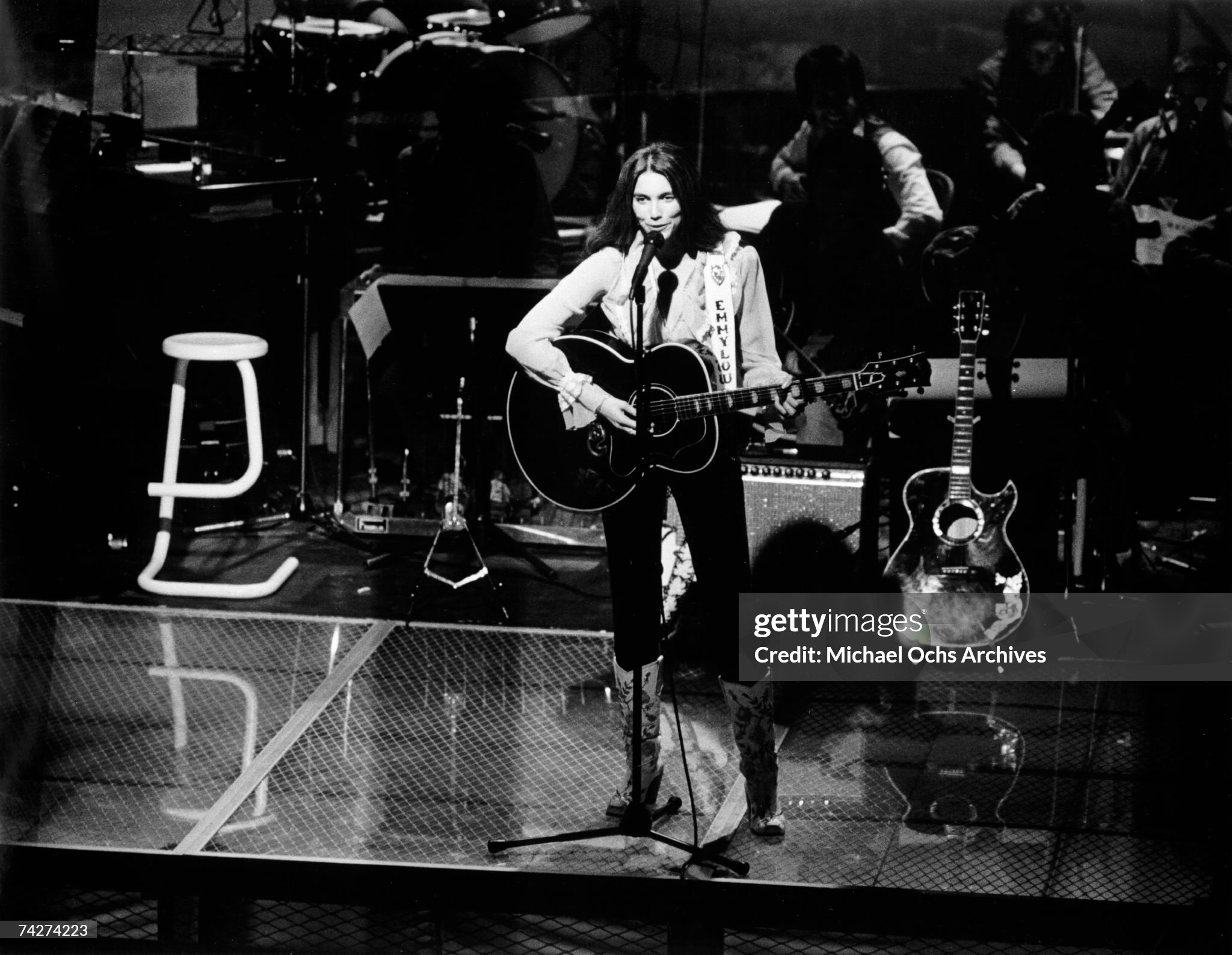
Emmylou Harris turns Little Bird into a hushed meditation on fragility, survival, and the small surviving spark that keeps singing after sorrow has passed through.
Among the many treasures in Emmylou Harris’ remarkable catalog, Little Bird remains one of the most quietly affecting. Released in 2003 on the album Stumble Into Grace, the song did not arrive with the force of a radio hit, nor did it make a separate run on the Billboard Hot Country Songs chart. But that is part of its lasting power. It belongs to a later chapter of Harris’ career, when she was no longer chasing the machinery of country radio and was instead creating something deeper, more atmospheric, and more personal. For listeners willing to sit with it, Little Bird feels less like a performance than a confession carried on the evening air.
By the time Stumble Into Grace appeared, Emmylou Harris had already lived several artistic lives. She had been the luminous interpreter of country tradition, the harmony partner with a voice that could haunt a room, and the artist who helped bridge folk, country, rock, and roots music with rare grace. Yet her later work brought another dimension into focus: a songwriter’s inward gaze. The album followed the acclaimed Red Dirt Girl, a record that marked a major turning point in how many people heard her—not only as one of America’s great singers, but as a writer capable of sketching whole emotional worlds with a few carefully chosen lines. Little Bird sits beautifully in that late-period landscape.
What makes the song so moving is its restraint. There is no need for grand declarations, no dramatic sweep meant to impress from a distance. Instead, Harris leans into stillness. The production on Stumble Into Grace, shaped in the same reflective spirit that defined much of her early-2000s work, surrounds the song with a dusky, open space. The arrangement feels weathered and tender at once, as if it understands that some truths can only be spoken softly. In that setting, her voice does what it has always done better than almost anyone else’s: it carries ache without ever becoming theatrical, and it carries wisdom without losing vulnerability.
The title image of Little Bird is deceptively simple. In song tradition, birds can stand for freedom, memory, longing, the soul, or a message from somewhere just beyond reach. Harris draws on that old symbolic language, but she keeps it intimate. Here, the bird does not feel ornamental. It feels necessary. It suggests something delicate that has survived damage, something small enough to be overlooked and yet strong enough to keep moving. That is why the song lands so deeply. It is not merely about sadness. It is about endurance in a fragile form. It is about the mystery of how the heart continues after disappointment, after distance, after the world has taken more than it promised to give.
There is also a maturity in the song that sets it apart from the more immediate heartbreak records of earlier decades. Younger singers often deliver sorrow as a fresh wound. Emmylou Harris, in this period, sings as someone who knows sorrow’s older shape—the kind that settles into the bones, becomes part of memory, and somehow leaves room for compassion. That is the emotional climate of Little Bird. The song does not beg to be noticed; it simply stays with you. Long after it ends, you remember the feeling of it more than any single flourish. That is usually the mark of a song built to last.
In a commercial sense, Little Bird was never positioned like one of Harris’ classic chart records. It did not come into the world as a big Nashville single, and it never occupied the same public space as songs like Two More Bottles of Wine or To Daddy. But measuring it by chart standards misses the point. By 2003, Harris was making records for the long listen, not the quick impact. Stumble Into Grace was admired for its writing, atmosphere, and emotional depth, and songs like Little Bird helped define that identity. If anything, the absence of chart pressure allowed the song to remain exactly what it needed to be: inward, searching, and undisturbed by trend.
Another reason the song matters is where it stands in her artistic evolution. For years, Emmylou Harris had been celebrated for how beautifully she interpreted songs by others. On her later albums, she increasingly revealed her own interior landscape. Little Bird belongs to that revelation. It is the work of an artist who understands that age in music is not a narrowing but an expansion. The emotions become more layered. The silences become more meaningful. The questions become more honest. Harris does not decorate the song with easy answers. She leaves room for ambiguity, and that openness is one of the reasons it feels so human.
Listening now, Little Bird feels like the kind of song that grows larger with time. It speaks to the private hours, to the moment after the house has gone quiet, when memory becomes unusually vivid and the soul starts taking inventory. It reminds us that some of the finest recordings are not the loudest or the most celebrated, but the ones that understand the heart in its quieter seasons. Emmylou Harris has always known how to sing to that part of us, and in Little Bird she does it with rare gentleness.
That is why the song still matters. Not because it dominated the charts. Not because it became a standard. But because it reveals something essential about Emmylou Harris as an artist: her gift for finding beauty in the bruised places, and her refusal to mistake softness for weakness. Little Bird is a late-career gem, a song of delicate imagery and deep emotional weather, and once it enters your life, it tends to stay there—quietly, faithfully, like a voice heard at dusk when the day has almost let go.
