
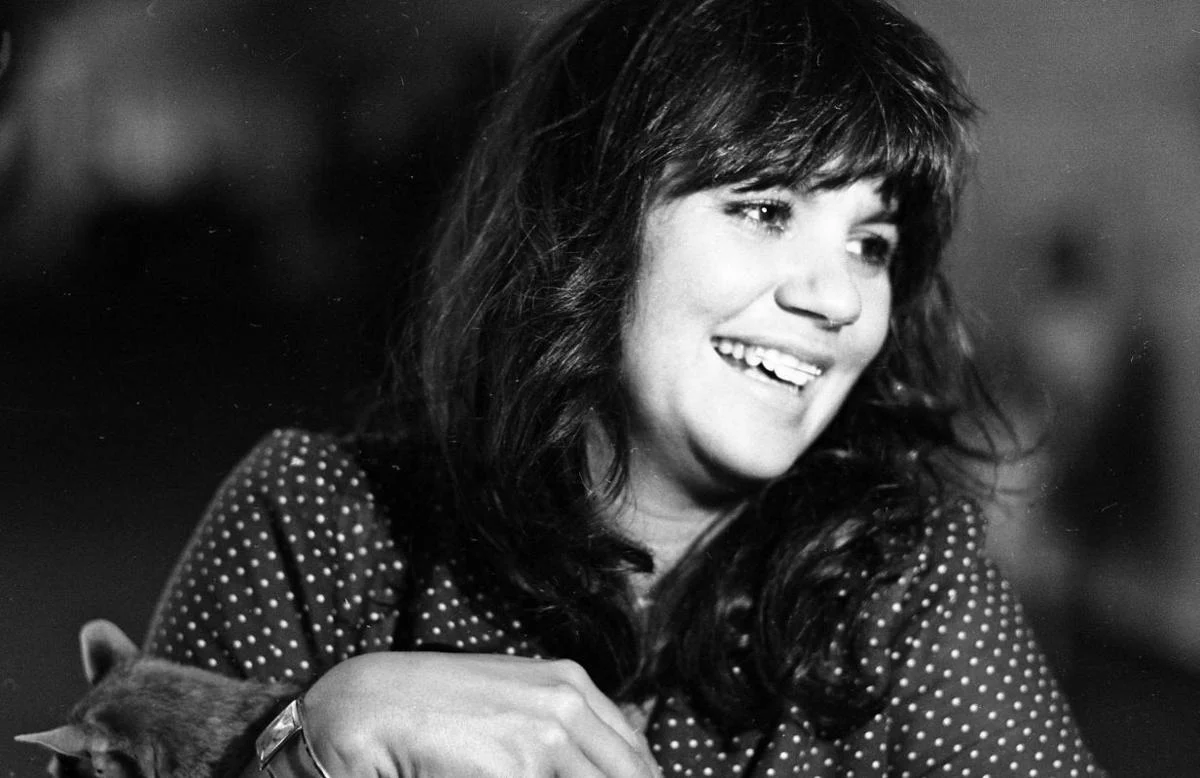
Guess I’ll Hang My Tears Out to Dry is heartbreak made graceful, and in Linda Ronstadt‘s hands it became proof that silence, restraint, and emotional honesty could be just as powerful as any big hit.
When Linda Ronstadt recorded Guess I’ll Hang My Tears Out to Dry, she was doing something far braver than simply reviving an old standard. She was stepping away from the sound that had made her one of the most recognizable voices in American popular music and entering a far more delicate world, one where every phrase had to carry memory, ache, and maturity. Her version appeared on What’s New in 1983, the first of her celebrated collaborations with arranger Nelson Riddle. The song itself was not pushed as a major standalone pop single, so its chart story is tied to the album around it: What’s New climbed to No. 3 on the Billboard 200, an extraordinary achievement for a traditional pop record in that era and a clear sign that audiences were willing to follow Ronstadt somewhere deeper and more timeless.
That chart success matters because it tells us just how daring this move really was. By the early 1980s, Linda Ronstadt had already conquered rock, country-rock, and pop. She could have stayed in the safer lane of radio-friendly material. Instead, she turned toward the great American standards, repertoire many industry people considered too old-fashioned for a contemporary star. Yet Guess I’ll Hang My Tears Out to Dry showed exactly why the gamble worked. She did not treat the song like a museum piece. She sang it as if she understood every lonely room inside it.
The song was written in 1944 by Sammy Cahn and Jule Styne, two masters of elegant melancholy. Even the title is unforgettable. It takes private sorrow and gives it a domestic image, almost painfully ordinary: tears hung out to dry like washed clothes on a line. That is the genius of the lyric. It does not scream. It does not collapse into drama. It suggests a person trying to live through sadness with dignity, putting grief away for the moment because there is nothing else to do. That quiet practicality is often what makes the song hit so hard. It sounds like someone surviving the day.
Long before Ronstadt recorded it, the song had already earned its place as a standard, especially through the shadow cast by Frank Sinatra, who helped define its emotional weight for generations of listeners. That history could have intimidated almost any singer. But Linda Ronstadt was too intelligent an interpreter to imitate anyone. Her voice on Guess I’ll Hang My Tears Out to Dry is tender, controlled, and almost conversational at moments. She does not overstate the sadness. She lets the melody breathe. She trusts the writing. That decision is what gives her version such lasting beauty.
The arrangement by Nelson Riddle is just as important to the song’s impact. Riddle understood how to frame a voice without smothering it, and on What’s New he gave Ronstadt space rather than spectacle. The orchestration around Guess I’ll Hang My Tears Out to Dry feels like evening light on old furniture: soft, precise, and full of atmosphere. Strings carry the ache, but they never turn sentimental in a cheap way. Everything is measured. Everything serves the mood. In that setting, Ronstadt sounds less like a pop celebrity visiting the past and more like an artist who has found the exact room her voice was waiting for.
What makes her reading so moving is the balance between vulnerability and composure. Many sad songs are built around collapse. This one is built around endurance. The person in the lyric is wounded, yes, but not theatrical. There is a kind of emotional housekeeping going on, a painful attempt to put things in order after love has gone quiet. Linda Ronstadt captures that feeling with remarkable discipline. She sings as if she knows that some of the deepest heartbreak is not loud at all. It is tidy. It is mannered. It is what remains after the crying stops.
That may be why the song sits so naturally within What’s New, an album filled with longing, memory, and emotional refinement. The record was not just a commercial success; it became a cultural statement. It reminded the wider public that the Great American Songbook was not an antique shelf of beautiful relics. In the right voice, with the right intelligence, these songs could still speak clearly to modern feeling. Guess I’ll Hang My Tears Out to Dry is one of the finest examples of that achievement. It honors the older tradition, but it never feels trapped inside it.
There is also something deeply revealing about this performance in the story of Linda Ronstadt herself. People often praise her power, her range, and her versatility, and rightly so. But this recording shows another gift: taste. She knew when not to push. She knew when restraint would say more than force. In a career filled with memorable vocals, this one stands apart because it trusts emotion enough to leave it undisturbed.
Decades later, Guess I’ll Hang My Tears Out to Dry still lingers for the same reason the best torch songs always do. It does not beg for attention. It waits for a listener who understands that heartbreak is not always a storm. Sometimes it is a quiet room, a familiar ache, and a voice like Linda Ronstadt‘s finding beauty in what cannot be repaired. That is the lasting power of this recording, and that is why it still feels so personal each time it returns.
