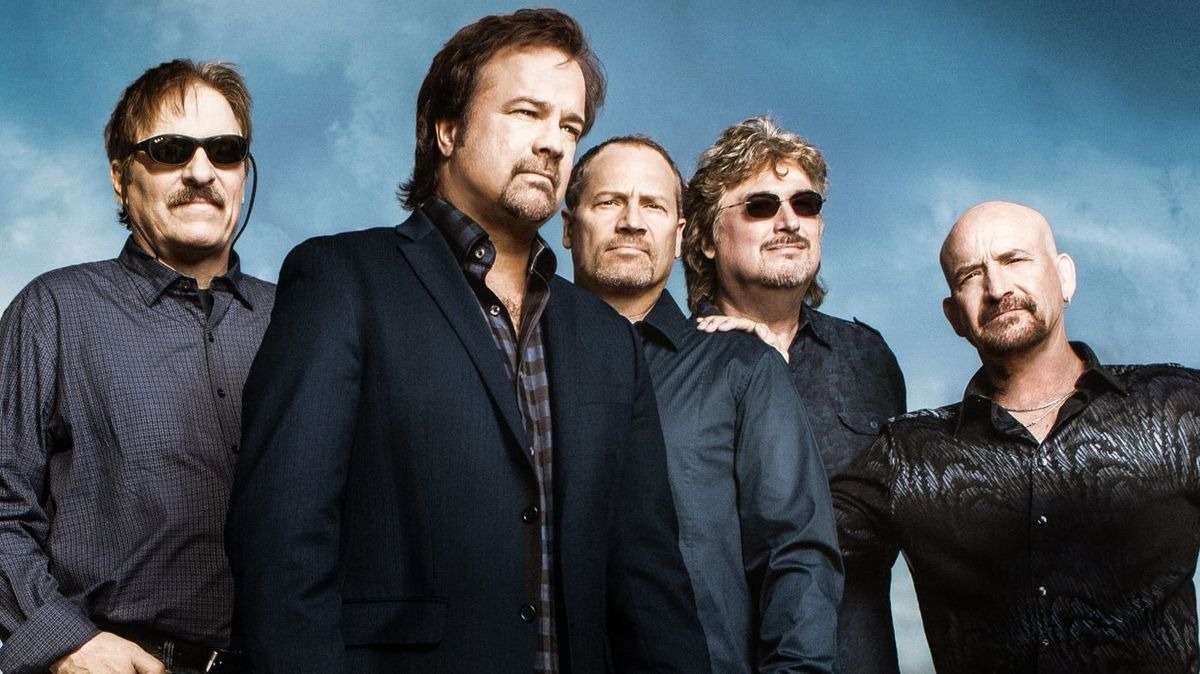
In Restless Heart’s 1988 No. 1, regret does not stand alone; it rises in harmony.
Restless Heart released The Bluest Eyes in Texas in 1988 as the lead single from Big Dreams in a Small Town, and it became a number-one country hit that helped define the group’s place in the late-1980s country-pop landscape. Written by Tim DuBois, Dave Robbins, and Van Stephenson, the song arrived at a moment when Nashville radio was opening wide enough to hold polished production, pop phrasing, and country storytelling in the same frame.
What made the record distinctive was not only its smooth surface. Many country singles of the era carried the glow of adult contemporary radio, with clean keyboard textures, carefully placed guitars, and rhythm sections that moved with measured confidence. Restless Heart used those ingredients, but the center of the sound was the band’s vocal blend. The recording is built around the idea that heartbreak can be carried by more than one voice, and that a chorus can feel larger when it sounds shared rather than declared.
The lyric is a memory song, shaped by the image in its title. The Bluest Eyes in Texas turns regret into geography: a person is gone, but the landscape keeps returning her to mind. The Texas setting is not merely decorative. It gives the song room to breathe, letting distance, sky, and motion become part of the emotional vocabulary. The narrator is not raging against loss. He is looking back, measuring what cannot easily be repaired, and the restraint gives the song much of its force.
Larry Stewart’s lead vocal keeps the performance grounded. He does not push the verses toward melodrama; he lets the lines unfold with a plainspoken clarity that suits the song’s country roots. Around him, the band’s harmonies rise with the chorus, widening the feeling without burying the story. The voices are polished, but they are not weightless. They give the melody height while keeping the ache close to the lyric, a balance that became one of Restless Heart’s signatures.
That harmony sound mattered because it changed the emotional scale of the record. A solo vocal can make regret feel private, locked inside one person’s memory. In The Bluest Eyes in Texas, the layered voices suggest something broader: the way one mistake can echo, the way a remembered face can fill more space than expected. The harmonies do not simply decorate the chorus. They act almost like the horizon in the song, expanding the view each time the title image returns.
The arrangement reflects the careful craftsmanship of late-1980s country-pop. The drums are steady rather than forceful, the instrumental textures leave space for the singers, and the melodic lift is direct enough for radio without losing the song’s reflective mood. This was a period when country acts often had to balance accessibility with identity. Restless Heart found a path through that balance by making precision sound human. Their records could be sleek, but the best of them still depended on phrasing, blend, and emotional discipline.
On Big Dreams in a Small Town, that discipline fit the album’s larger sense of ambition and place. The band was not presenting itself as a rough-edged barroom outfit or as a purely pop act with country accents. It occupied a middle ground where harmony, melody, and narrative could meet. The Bluest Eyes in Texas became one of the clearest examples of that identity: a country song in feeling, a pop-country record in construction, and a band performance in spirit.
The number-one success of the single is important, but the chart fact is only part of the story. Its deeper significance lies in how it shows a group understanding its own strengths. Restless Heart did not need to overwhelm the song to make it memorable. They trusted the arc of the melody, the ache of the central image, and the cumulative power of voices entering together at just the right moment. That trust is a form of musical maturity.
Heard now, The Bluest Eyes in Texas preserves the atmosphere of its era without being trapped by it. The production places it clearly in the late 1980s, but the emotional design remains direct: a person looks back, a memory refuses to shrink, and a group of voices turns that private reckoning into something spacious. The song’s quiet lesson is in the blend itself. Sometimes the strongest sound is not the loudest one, but the one made by listening closely enough to rise together.
