
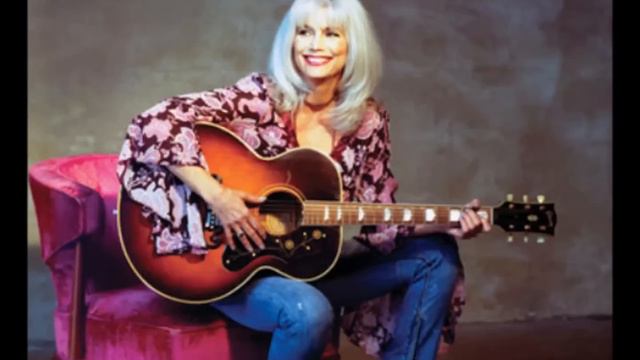
Burn That Candle shows Emmylou Harris in a thrillingly different light: playful, restless, and fully alive, turning an old rock-and-roll firecracker into a country-rock farewell that still feels like headlights on a midnight road.
When Emmylou Harris released Quarter Moon in a Ten Cent Town in 1978, the album quickly proved how wide her musical world had become. It reached No. 3 on Billboard’s Top Country Albums chart, and it carried major singles including “Two More Bottles of Wine”, which went to No. 1 on the country chart, and “To Daddy”, which climbed to No. 3. Yet one of the record’s most revealing moments was not a hit single at all. It was the closing track, “Burn That Candle”, a song that arrived not as a chart contender, but as a burst of motion, wit, and pure musical instinct.
That matters, because songs tucked at the end of an album often tell a secret truth about an artist. They are not always the obvious centerpiece. Sometimes they are the last smile after the tears, the loose sleeve after the tailored jacket, the sound of a singer stepping away from expectation and simply following joy. “Burn That Candle” feels exactly like that kind of ending. It reminds us that Emmylou Harris was never only the great interpreter of heartache, never only the queen of luminous sadness. She also understood lift, swagger, and the deep American thread that runs from country into rockabilly and early rock and roll.
The song itself was already part of that older tradition before Emmylou Harris touched it. “Burn That Candle” is best known as a lively rock-and-roll number associated with Bill Haley & His Comets, and in Harris’s hands it becomes something more than a revival exercise. She does not treat the tune like a museum piece. She gives it air, bounce, and a bright edge, letting it sit naturally inside the world of Quarter Moon in a Ten Cent Town. That was one of her rare gifts as an artist: she could take material from another time, another voice, even another genre, and make it feel as if it had always belonged beside her own songs.
Produced by Brian Ahern, the album balances polish with movement, and “Burn That Candle” benefits from that touch. The performance never sounds stiff or overly respectful. It moves. It smiles. It leans into rhythm instead of solemnity. Where some of Harris’s best-known recordings invite the listener inward, into longing, memory, or loss, this one pushes outward. It is about momentum. About keeping the room warm. About refusing to let the evening fade quietly. Even without a heavy confessional lyric, the meaning comes through clearly: sometimes music is its own kind of freedom, and sometimes a singer tells the truth by choosing delight.
That is the deeper charm of “Burn That Candle”. On the surface, it is a lively cover, quick on its feet and built for motion. But beneath that surface is a statement about taste, identity, and heritage. Emmylou Harris spent much of her classic period building bridges between traditions that were never as separate as the marketplace tried to pretend. Country, folk, bluegrass, honky-tonk, rockabilly, early rock and roll: she heard the family resemblance in all of them. By recording a song like “Burn That Candle”, she was not stepping away from country. She was tracing country’s cousins, its echoes, its rebellious grin.
There is also something wonderfully human in the way the track lands at the end of the album. Quarter Moon in a Ten Cent Town contains reflection, elegance, and emotional weight, but it does not leave the listener in stillness. It leaves with a kick. That sequencing choice says plenty. After the tenderness and introspection heard elsewhere on the record, “Burn That Candle” arrives like a reminder that grace and spirit can live in the same body. Harris had refinement, yes, but she also had spark. The song catches that spark in a way that feels almost offhand, and that may be why it stays with people. It does not plead for attention. It earns affection by sounding free.
For listeners who came to Emmylou Harris through aching masterpieces like “Boulder to Birmingham” or the heartbreak-laced beauty of “Blue Kentucky Girl”, this track can feel like a small revelation. It widens the portrait. It shows how deeply she loved the roots of American popular song, and how naturally she could move from sorrow to swing without losing artistic integrity for a second. In fact, that flexibility is one reason her best albums still endure. They were not narrow statements. They were living maps of what she heard, loved, and carried forward.
So the story behind “Burn That Candle” is not the story of a major hit. It is, in some ways, the better story. It is about a great artist choosing an old song because it still had life in it. It is about placing that song on a 1978 album that became one of her strongest commercial releases, then letting it close the record with a grin instead of a sigh. And it is about the meaning that comes from that choice: not every lasting performance is built from heartbreak. Some are built from energy, memory, and the thrill of hearing a singer light up a room one more time.
That is why “Burn That Candle” still matters. It captures Emmylou Harris not in mourning, not in reverence, but in motion. It preserves the side of her artistry that loved the jump, the spark, the little flash of danger and fun at the edge of a beautifully made record. Decades later, it still sounds like a last dance that nobody wanted to end.
