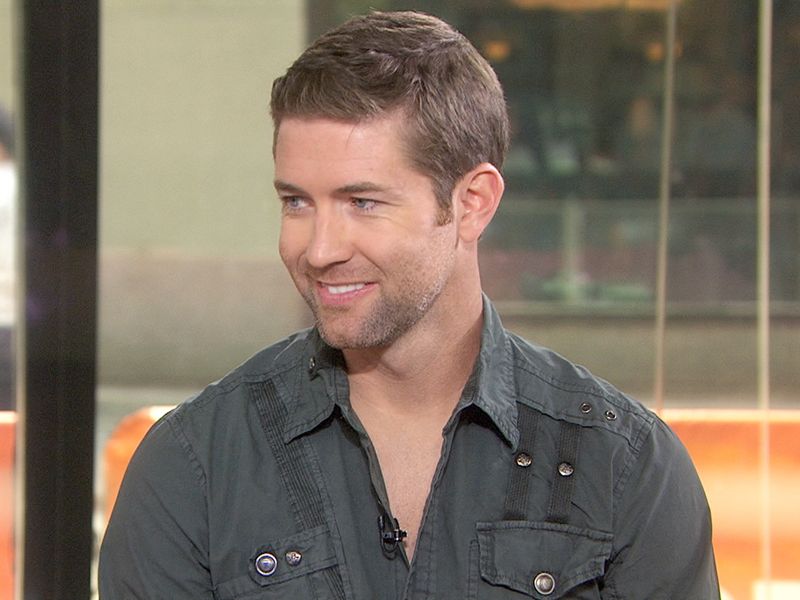
On a 2024 album built around country identity, Josh Turner lets If You Ain’t With Me speak for the steady promises and plainspoken textures that still give his music its center.
If You Ain’t With Me appears on Josh Turner’s 2024 album This Country Music Thing, and it works best as the kind of album track that asks for patient listening rather than instant attention. In an era when country music often announces itself with bright production, quick hooks, and big gestures, this traditional-leaning deep cut feels more rooted in the older discipline of the form: a clear emotional premise, a voice that does not need to hurry, and a sense that the strongest promises are often the least decorated.
Turner has spent much of his career making room for that kind of restraint. Since Long Black Train introduced him to a wider audience in 2003, his deep baritone has carried a particular authority in modern country music. It is not merely a low voice; it is a voice that changes the temperature of a song. When Turner sings something plain, the plainness can become the point. He has often sounded most at home when the arrangement gives him space to stand inside a lyric instead of pushing him past it, and If You Ain’t With Me fits that strength with quiet confidence.
The title alone tells the listener what kind of country song this wants to be. If You Ain’t With Me uses the language of everyday commitment, not polished romance. There is a difference between a love song that tries to dazzle and one that simply draws a line around what matters. This one belongs to the second tradition. It leans toward the country idea that devotion is not always spoken in grand declarations. Sometimes it is heard in the way a singer lands on a phrase, in the space between lines, in the refusal to overexplain what the heart already knows.
That is why its place on This Country Music Thing matters. The album title itself sounds like a statement of belonging, and the record finds Turner engaging with the music that shaped his public identity without turning that identity into a costume. A deep cut like this helps reveal the character of the album more than a headline single might. It is not trying to summarize a career or chase a moment. It is doing the smaller, more durable work of giving the album its grain, the part of the wood you notice when you run your hand across it.
Traditional-leaning country can be misunderstood as nostalgia for its own sake, but the better examples are not about pretending time has stopped. They are about remembering the emotional grammar that made the music last in the first place. In Turner’s hands, that grammar includes understatement, grounded phrasing, and a comfort with silence. He does not need to crowd the song with vocal fireworks. His performance suggests a man who understands that sincerity can be stronger when it is not overperformed.
There is also something fitting about hearing this kind of track from Turner at this stage of his career. More than two decades after his breakthrough, he is no longer being introduced as a promising new traditionalist with a startlingly deep voice. He is an established figure whose best work often comes from trusting the qualities that made him distinct in the first place. If You Ain’t With Me does not need to reinvent him. Instead, it reminds listeners why his particular lane in country music still has value: he can make steadiness sound dramatic, not because the music swells, but because the feeling refuses to move.
As an album track, the song also invites a more intimate kind of discovery. Singles arrive with expectation; deep cuts tend to find people in quieter ways. They become favorites not because they were pushed hardest, but because they feel personally claimed. If You Ain’t With Me has that quality. It sounds like a song someone might come back to after the obvious highlights have passed, finding in it a sturdy emotional center that was there all along.
In the broader landscape of contemporary country, where tradition and modernity are constantly being negotiated, Josh Turner remains valuable because he does not treat tradition as a museum piece. On This Country Music Thing, and especially in a track like If You Ain’t With Me, tradition feels like a living habit: direct speech, honest tone, melody built to carry feeling rather than distract from it. The song may sit quietly within the album, but quiet songs can hold their ground. Sometimes the deepest country feeling comes not from the loudest chorus, but from a voice that stands still long enough for the promise to mean something.
