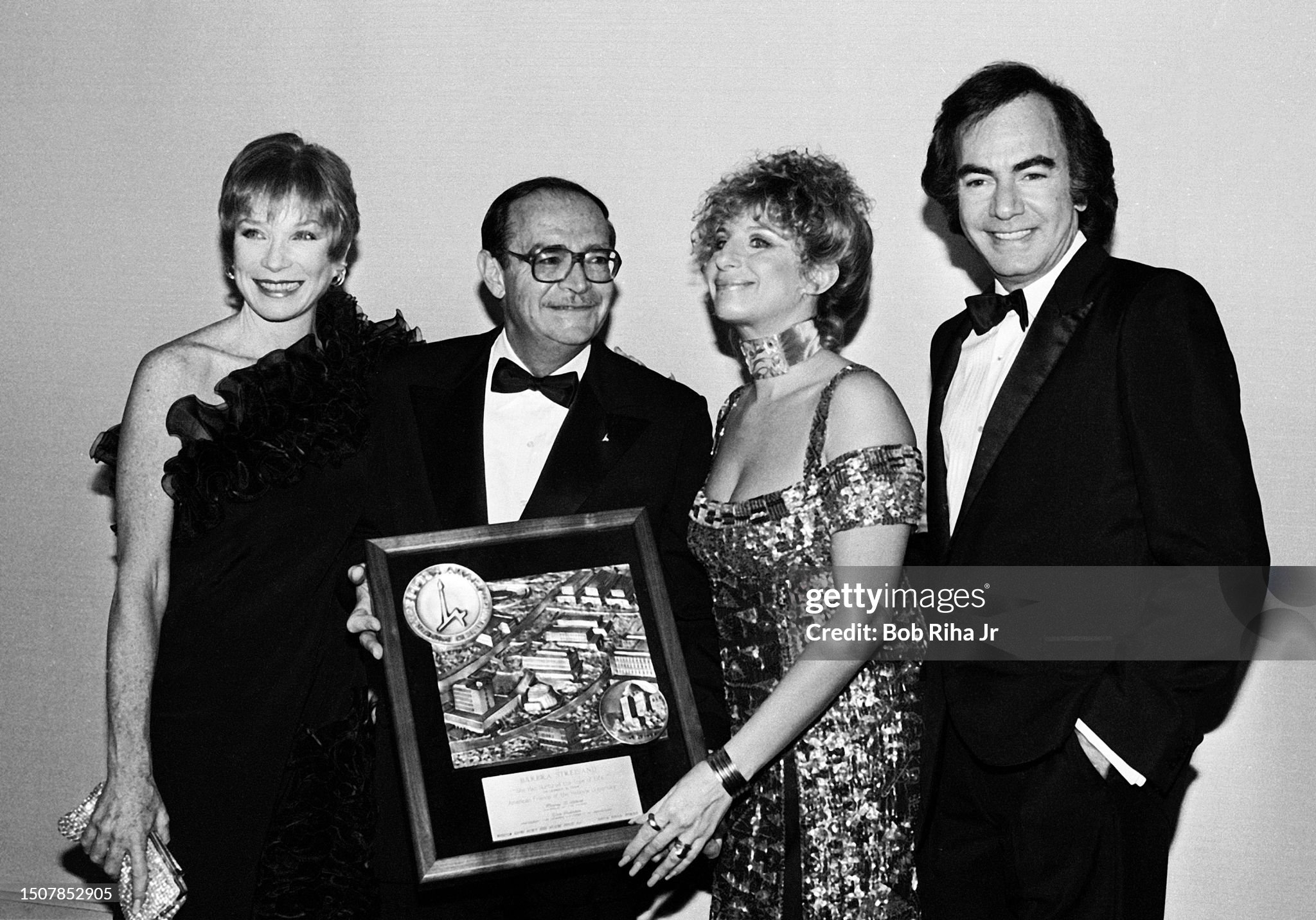
On Beautiful Noise, Neil Diamond could fill a room with drama, but Lady-Oh proved how deeply he could move when he lowered his voice.
Lady-Oh sits inside Neil Diamond’s 1976 album Beautiful Noise as one of those album tracks that does not announce itself like a hit single, but quietly changes the temperature of the record. Released during a fascinating moment in Diamond’s career, Beautiful Noise found him working with Robbie Robertson of The Band, a collaboration that gave the album a textured, roots-aware atmosphere without stripping away Diamond’s instinct for melody, theater, and emotional reach. In that setting, Lady-Oh feels less like a showpiece than a private room with the door left slightly open.
By 1976, Diamond was already far beyond the role of a Brill Building songwriter who had become his own star. He had written songs that others carried into the charts, built a commanding solo identity, and learned how to make popular music feel direct without making it feel small. His voice was part confession, part proclamation. He could sound like a man standing alone under a single light, or like someone calling out to the last row of a vast hall. Beautiful Noise made room for both sides of him, but its quieter corners are where some of its most revealing moments live.
That is why Lady-Oh deserves more attention than it often receives. It is not remembered with the immediate recognition attached to some of Diamond’s signature recordings, and it does not carry the same public mythology as the songs that became permanent fixtures in his concerts and radio history. Yet its beauty lies in restraint. The title itself has an old-fashioned tenderness, almost like a phrase from a half-remembered letter or a melody carried across a late evening. Diamond does not need to push the song into grand declaration. He lets it unfold with a kind of patient ache, trusting the melody and the atmosphere to do their work.
On Beautiful Noise, Robertson’s production helped frame Diamond in a different kind of light. The album was not a reinvention in the sense of abandoning who Diamond was; instead, it placed his songwriting inside warmer wood, deeper shadow, and earthier musical colors. The result often feels like Diamond walking through a more cinematic version of American pop, where Broadway-sized feeling brushes against folk-rock texture and late-night studio intimacy. In that landscape, Lady-Oh does not need to compete with the album’s more immediate songs. It works by lingering.
There is a particular skill in writing a song that feels modest on the surface but keeps widening as it plays. Diamond’s best work often carries a tension between simplicity and scale. His melodies are built to be grasped quickly, but the emotion beneath them can be more complicated than the first listen suggests. Lady-Oh belongs to that tradition. It has the shape of a gentle address, as if the singer is speaking to someone who is present in memory as much as in the room. The song does not have to spell out every wound or explain every longing. Its power is in the feeling of reaching toward someone through music.
That quality makes it an especially rewarding deep cut. Great album tracks are not always the songs that define an artist to the general public. Sometimes they are the songs that deepen the portrait for those willing to stay a little longer. Lady-Oh suggests a Neil Diamond who understood that romance was not only spectacle, not only sweep, not only the big chorus rising over a crowd. It could also be hesitation, softness, a phrase held carefully because saying too much would break the spell.
The 1976 setting matters. Popular music in the mid-1970s was crowded with transition: singer-songwriters, soft rock, soul, country-rock, theatrical pop, and album-oriented listening were all sharing space. Diamond had the unusual ability to move through those worlds without belonging entirely to any one of them. Beautiful Noise captured him at a point where he could still sound intimate even within a polished production, still sound searching even as his career had become enormous. Lady-Oh benefits from that balance. It is not raw in the unfinished sense, but it leaves enough air around the feeling for the listener to step inside.
Part of the pleasure of revisiting Lady-Oh now is hearing how little it asks for. It does not demand that we call it the center of the album. It simply waits, as many overlooked songs do, for the right listener and the right quiet moment. In a catalog filled with songs built for communal recognition, this one feels more personal, almost private. It reminds us that an artist’s legacy is not made only from the songs everyone can sing back at once. It is also made from the tracks that remain tucked into albums, carrying their own weather for anyone willing to return.
For listeners who know Neil Diamond mainly through the songs that became public celebrations, Lady-Oh offers a subtler kind of reward. It shows the craftsman behind the grand gesture, the singer who could make a small phrase feel like a room full of memory. And on Beautiful Noise, an album whose very title suggests sound, motion, and city-like brightness, this quiet track becomes something essential: a pause, a breath, a reminder that sometimes the overlooked song is where an artist lets the deepest tenderness show.
