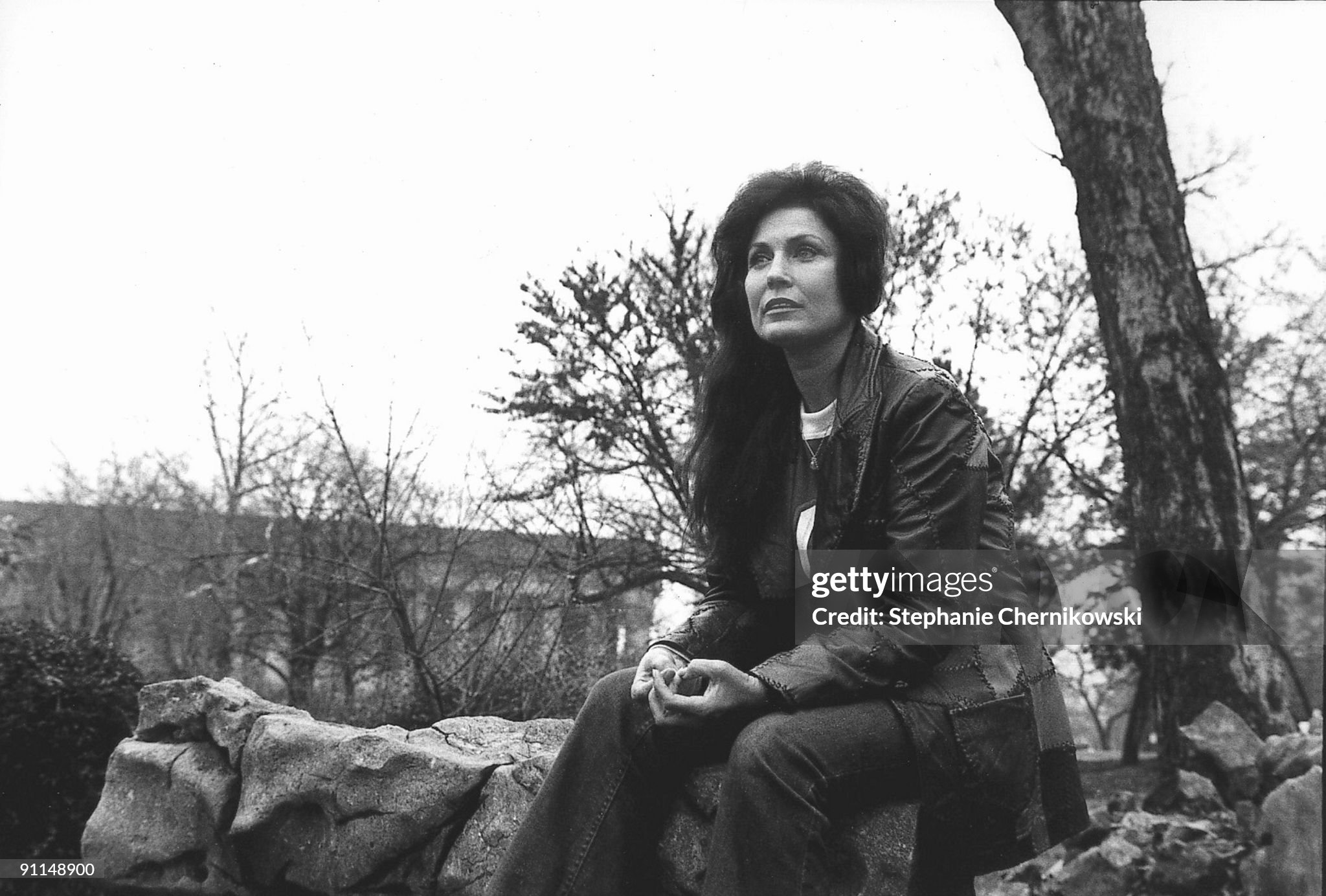
With “Coal Miner’s Daughter,” Loretta Lynn made poverty sound neither small nor shameful, but rooted, exact, and proud.
Loretta Lynn released “Coal Miner’s Daughter” in 1970, and country music received one of its clearest self-portraits. Written by Lynn herself, the song drew directly from her childhood in Butcher Hollow, near Van Lear, Kentucky, where her father, Melvin “Ted” Webb, worked in the coal mines and her mother, Clara, held a large family together with practical strength. It became a No. 1 country hit and soon grew beyond the usual life of a single. The title would name Lynn’s 1971 album, her 1976 autobiography, and the 1980 film that introduced her story to an even wider audience. But the song’s power begins in something smaller than fame: a daughter speaking plainly about where she came from.
Country music has always carried stories of labor, family, land, and survival, but “Coal Miner’s Daughter” is distinct because it refuses to turn hardship into spectacle. Lynn does not sing as if she is asking for pity. She does not soften the poverty, either. The details are domestic and specific: a cabin, children, work clothes, a mother’s hands, a father’s dangerous job. The lyric moves like memory arranged into verses, each image placed with the confidence of someone who knows that ordinary life can bear the weight of art.
The arrangement supports that directness. The recording is built in the language of country music Lynn had already mastered by 1970: clear rhythm, unfussy instrumentation, and enough melodic lift to keep the story moving forward. Nothing crowds her voice. The musicians frame the narrative rather than decorate it. That restraint matters. A more dramatic setting might have made the song feel like a monument. Instead, it feels like a kitchen-table account, dignified by precision.
Lynn’s vocal performance is central to that dignity. She sings with a bright Appalachian edge, but also with remarkable steadiness. The pride in the song is not loud. It is carried in the way she lands on facts. When she describes being raised in a miner’s home, the phrase becomes both biography and identity. Her voice does not separate the child she was from the artist she became. The adult star and the Kentucky daughter occupy the same line.
That was part of the song’s quiet artistic courage. By 1970, Lynn was already one of country music’s major voices, known for songs that spoke frankly about women’s lives, marriage, class, and social expectation. “Coal Miner’s Daughter” did something different from her sharper topical material. It turned inward without becoming private in a narrow way. The song made autobiography public, but not decorative. It told listeners that origin could be a source of authority. Lynn was not borrowing rural credibility; she was naming the place that formed her language, her humor, her toughness, and her ear for truth.
The song also changed the scale of her legacy because it gave her audience a central image through which to understand her. Many artists have hits; fewer have a song that becomes a kind of doorway. “Coal Miner’s Daughter” became that doorway for Lynn. Through it, the rest of her work could be heard with added clarity: the plain-spoken woman challenging double standards, the writer who trusted everyday speech, the performer whose strength often came from sounding close to home rather than above it.
Its autobiographical shape also widened what a country signature song could do. It was not only a love song, a heartbreak song, or a honky-tonk declaration. It was a family history compressed into three minutes, and it treated working-class memory as material worthy of national attention. Lynn’s father is not presented as an abstract symbol of labor; he is a parent whose work shaped the household. Her mother is not reduced to sentiment; she is part of the practical architecture of survival. The children are not props in a hardship tale; they are the living evidence of a family’s endurance.
What remains striking is how little the song needs to explain itself. Lynn trusts the listener to understand the emotional weight of a coal miner’s life, the closeness of a large poor family, and the pride that can live inside scarcity. The famous line about being poor but loved has often been remembered because it states the song’s balance so simply. Yet the deeper achievement is that Lynn never lets love erase difficulty, and never lets difficulty erase love.
In the decades after its release, “Coal Miner’s Daughter” became inseparable from Loretta Lynn. That kind of identification can sometimes flatten an artist, reducing a complicated career to one phrase. In Lynn’s case, the phrase kept expanding. It held her birthplace, her family, her class background, her authorship, and her refusal to be embarrassed by any of it. It became not a limitation, but a foundation.
The song endures because it is built on a rare kind of pride: not polished pride, not defensive pride, but remembered pride. Lynn sings as someone who has traveled far enough to look back clearly, yet not so far that the place has become scenery. “Coal Miner’s Daughter” defined her legacy because it revealed the source of her authority. Before the awards, the books, the film, and the mythology, there was a voice naming home with accuracy. In that naming, Loretta Lynn gave country music one of its most enduring acts of self-recognition.
