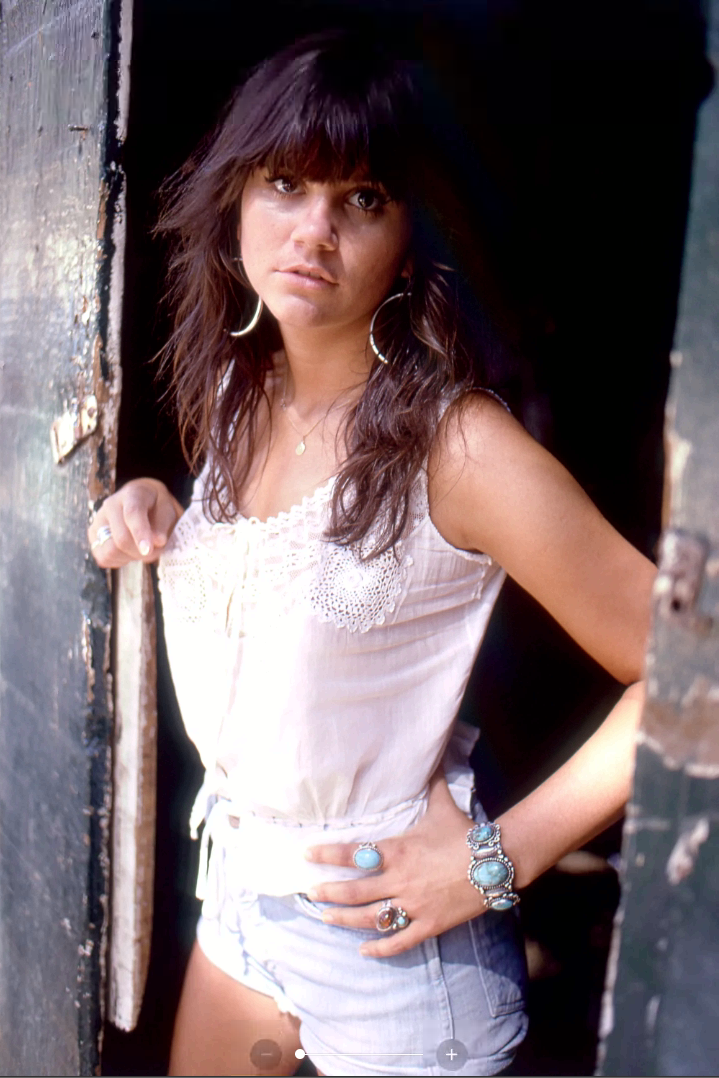
On Más Canciones, Linda Ronstadt let El Crucifijo de Piedra become a solemn bridge between public song and private inheritance.
Released in 1991, Más Canciones continued one of the most meaningful chapters in Linda Ronstadt’s career: her full-hearted return to the Spanish-language music tied to her Mexican heritage and family memory. The album followed the landmark success of Canciones de Mi Padre, her 1987 mariachi-centered project, and went on to earn Grammy recognition, confirming that this was not a brief experiment or a sentimental detour. Within that 1991 collection, El Crucifijo de Piedra stands as one of the recordings that reveals the seriousness of the project most clearly. It is not merely a performance of a traditional-sounding song; it is Ronstadt entering a musical language where devotion, sorrow, pride, and restraint are carried in the same breath.
By the time she recorded Más Canciones, Ronstadt had already traveled farther across American popular music than most singers of her generation. She had moved through folk-rock, country-rock, pop balladry, new wave edges, operetta, and the Great American Songbook with a voice that could sound clear as glass or wounded at the edges. But her Spanish-language era asked for something different. It asked not just for range, but for belonging. These songs were connected to the world of her father’s side of the family, to the borderland culture of Arizona and Mexico, and to musical memories that existed before the machinery of pop fame found her.
El Crucifijo de Piedra belongs to the emotional landscape of Mexican song, where sacred images often stand beside earthly grief. The stone crucifix of the title suggests more than religious decoration. It becomes a witness, an object that does not speak but seems to absorb everything around it: vows, departures, prayers, regrets, and the quiet dignity of people trying to endure what life has placed before them. In Ronstadt’s interpretation, the image does not become melodrama. She does not flatten the song into a display of vocal force. Instead, she gives it shape through control, letting the emotional temperature rise without breaking the frame of the tradition.
That restraint is part of what makes the recording linger. Ronstadt had the technical ability to overwhelm a song if she chose, but here she respects the architecture of the style. The phrasing has a ceremonial weight. The Spanish vowels open naturally, the melodic turns feel carried rather than decorated, and the mariachi setting gives the performance its sense of place without crowding the center. The strings, brass, and rhythmic pulse belong to a tradition in which sorrow is not whispered away but presented upright, with poise. Ronstadt sings as someone who understands that this music does not require translation to be felt, though it rewards anyone willing to listen closely.
The importance of Más Canciones is not only that it preserved beloved material for a broad audience. It also challenged a narrow idea of what an American singer was supposed to sound like. Ronstadt’s career had always crossed borders of style, but these albums crossed something deeper: the assumptions of language, identity, and commercial expectation. In the late 1980s and early 1990s, mainstream U.S. pop still tended to treat Spanish-language recordings as separate from the central story. Ronstadt refused that separation. She placed Mexican song beside her rock and country triumphs, not beneath them, and she sang it with the authority of someone claiming a living inheritance.
Heard in that light, El Crucifijo de Piedra becomes more than an album track. It is part of a larger act of musical memory. The song’s solemn imagery gives Ronstadt room to show a different kind of power: not the bright power of a radio chorus, not the theatrical power of a stage flourish, but the power of reverence. There is a particular intimacy in hearing a famous voice step away from the familiar language of its fame and into the older language of home. The effect is not smaller; it is, in many ways, more revealing.
What makes the performance endure is the way it holds two truths at once. It belongs to a tradition older than Ronstadt’s pop career, yet it also belongs unmistakably to her. She does not claim the song by modernizing it beyond recognition. She claims it by listening to it, honoring its gravity, and allowing her voice to stand inside it without disguise. In El Crucifijo de Piedra, the stone image at the center of the song feels almost symbolic of the album itself: something durable, weathered, and quietly luminous, carrying memory long after the moment of singing has passed.
