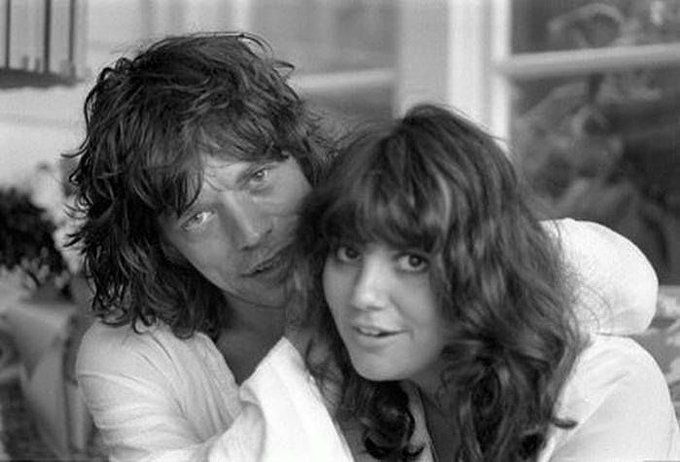
On Crazy He Calls Me, Linda Ronstadt did not try to outshine a classic standard; she let its devotion become smaller, closer, and more dangerous.
When Linda Ronstadt recorded “Crazy He Calls Me” for her 1983 album What’s New, she was stepping into one of the most delicate rooms in American popular music. The song, written by Bob Russell and Carl Sigman, had long been associated with Billie Holiday, whose 1949 recording gave it a mixture of tenderness, resignation, and private weather. Ronstadt’s version did not arrive as a museum piece or a vocal imitation. It came backed by the elegant force of Nelson Riddle and his orchestra, arranged within a project that asked a major rock-era singer to stand almost motionless inside the Great American Songbook and trust the song to reveal her.
What’s New, released by Asylum in 1983 and produced by Peter Asher, was a bold turn in Ronstadt’s career. By then she had already become one of the defining female voices of 1970s American popular music, moving through country-rock, folk, pop, and rock with a rare mix of power and precision. Songs like “You’re No Good” and “Blue Bayou” had made her a radio presence of enormous reach. But the Nelson Riddle sessions asked for a different kind of bravery. Instead of pushing against guitars, drums, and contemporary arrangements, she had to sing into space, into strings, into standards that carried decades of memory before she ever touched them.
That is what makes “Crazy He Calls Me” so quietly revealing. The song’s emotional center is not simple romance. It is devotion stretched toward irrationality, a love so complete that it begins to sound like surrender. In another singer’s hands, that idea can become theatrical or overly fragile. Ronstadt avoids both traps. Her vocal is intimate but not weak, poised but not cold. She sings as if the feeling has already been decided before the first note begins, as if the character in the song is not asking permission to love this way and is not expecting to be understood.
The shadow of Billie Holiday matters here, because any singer approaching this standard has to pass through Holiday’s emotional territory. Holiday’s genius was in making a line feel lived in, sometimes wounded before the words even arrived. Ronstadt wisely does not borrow that ache. Her instrument was different: clearer, fuller, more open in tone. On What’s New, she uses that clarity not as a display of polish but as a way of letting vulnerability appear without distortion. She does not sound like a nightclub ghost from another era. She sounds like Linda Ronstadt, standing respectfully inside an older song and discovering that restraint can be as expressive as force.
Nelson Riddle was essential to that discovery. By 1983, Riddle’s name carried associations with the great mid-century arrangers’ art, especially through his work with singers such as Frank Sinatra and Nat King Cole. His arrangements understood that an orchestra should not simply decorate a singer; it should breathe around the voice, answer it, test it, and sometimes leave it alone. On “Crazy He Calls Me”, the orchestral setting gives Ronstadt a soft but formal frame. The strings do not smother the vocal. The arrangement creates a kind of luminous distance, allowing the lyric’s extremity to feel almost civilized on the surface while something more reckless moves underneath.
That contrast is the performance’s quiet drama. Ronstadt is surrounded by elegance, yet the song itself is about emotional abandon. The polished world of Riddle’s orchestra meets a lyric that admits love can make a person appear unreasonable. Ronstadt’s phrasing respects that contradiction. She does not rush toward the emotional peaks. She lets the melody unfold with a patient sense of inevitability, shaping the vowels carefully, holding back just enough that the listener leans in. The result is not a grand confession shouted across a room. It feels closer to a confession made after midnight, when pride has lost its usefulness.
In the larger story of What’s New, “Crazy He Calls Me” also shows why the album connected beyond novelty. Ronstadt was not merely proving that a rock-era star could sing standards. She was listening to them. The album’s success helped bring pre-rock American popular song back into conversation with a broad mainstream audience, but its lasting value rests in performances like this one, where respect does not become stiffness and beauty does not erase risk. The Nelson Riddle era of Ronstadt’s career was not a detour away from feeling; it was a different architecture for feeling.
Heard now, the recording carries an added layer of grace. It reminds us that reinvention does not always announce itself with volume. Sometimes it happens when a familiar singer lowers the temperature, steps into an older language, and finds a new kind of honesty there. Linda Ronstadt did not make “Crazy He Calls Me” bigger than its history. She made it personal enough to stand beside that history, with Riddle’s orchestra holding the room open and her voice turning devotion into something both elegant and unsettling.
