
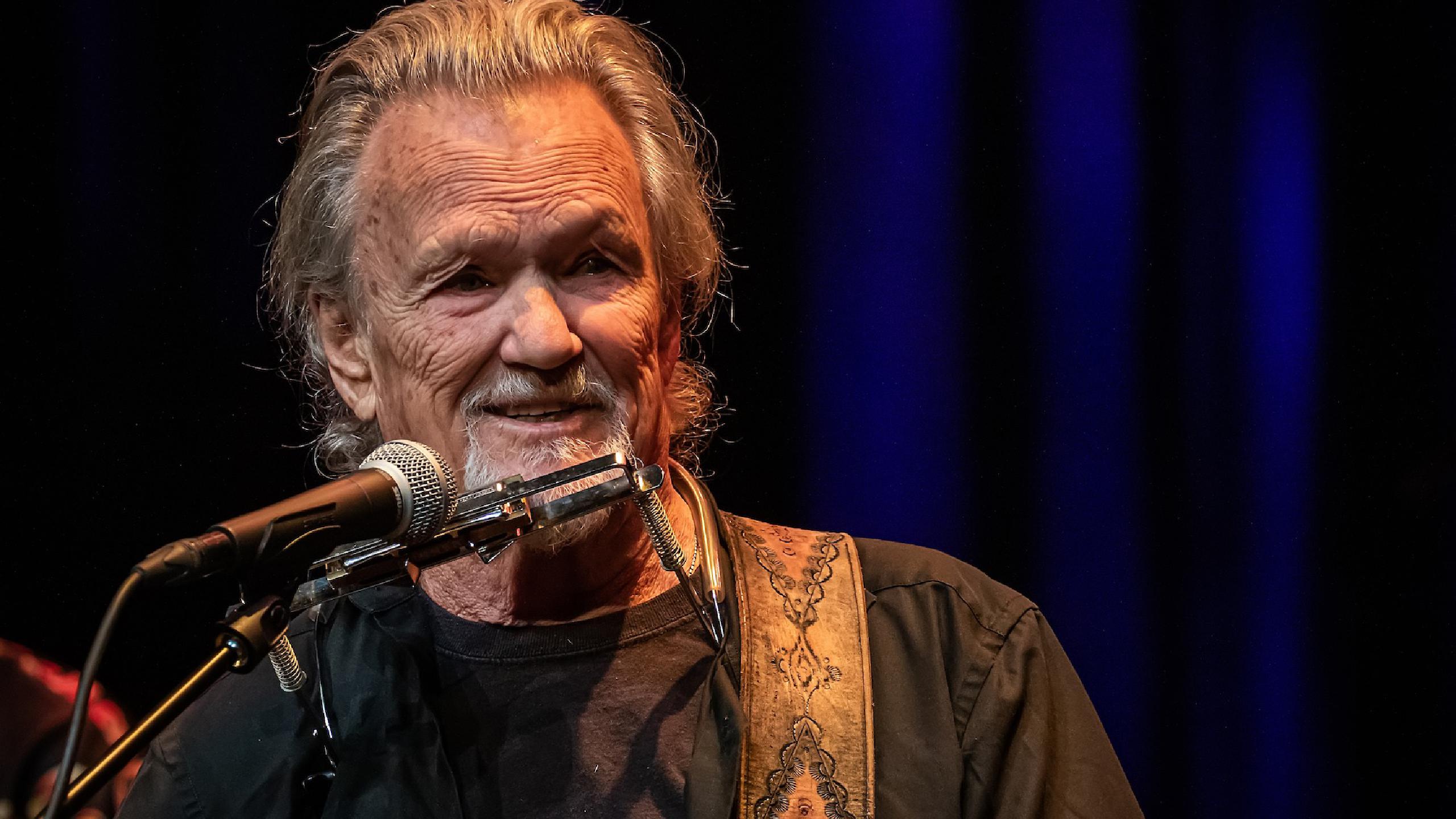
A younger baritone approaches an older songwriter’s prayer, and the duet finds its strength in restraint.
Released in 2020 on Josh Turner’s album Country State of Mind, Why Me is not simply a respectful cover of a spiritual country standard. It is a duet with Kris Kristofferson, the man who wrote the song and first brought it into the country mainstream in the early 1970s. That fact changes the emotional temperature of Turner’s recording. The track is a tribute, but it does not feel like a display case. It feels like a younger singer stepping toward the source of the song and choosing, wisely, to make reverence audible.
Why Me first appeared on Kristofferson’s 1972 album Jesus Was a Capricorn and became a major country hit in 1973. Its question is not a complaint so much as an act of wonder. The song stands in the country-gospel tradition, but its power comes from plain speech rather than ornament: a flawed person looking at mercy and finding no adequate explanation for it. Kristofferson’s writing often had that gift. He could make direct language feel philosophical without sanding away its roughness.
On Country State of Mind, Turner built an album around songs tied to the country music that shaped his imagination. The project is a covers record, but the strongest moments are not about imitation. They are about lineage: one singer acknowledging that his own voice did not emerge from nowhere. In that setting, Why Me becomes one of the album’s clearest statements of purpose. Turner is not only revisiting a song he admires; he is placing himself beside its author and allowing the older voice to remain central.
The arrangement understands the assignment. It leaves room around the voices, moving with country-gospel simplicity instead of theatrical weight. Nothing in the track seems designed to overwhelm the prayer at the center of the song. The accompaniment supports rather than decorates, giving the lyric a steady floor and letting the vocal contrast carry the meaning. That restraint matters because Why Me can lose its force if it is treated as a grand dramatic confession. Turner’s version keeps it close to the ground.
Turner’s deep baritone has long been one of his defining musical signatures, but here he resists turning that voice into the main event. He sings with control, warmth, and an obvious sense of deference to the material. His tone gives the song solidity, yet he does not crowd it. The most moving aspect of the duet may be the way Turner seems to understand that respect is not the same as distance. He enters the song fully, but he does not try to take it away from the writer who gave it its first life.
Kristofferson’s presence gives the recording its deepest grain. By the time of this duet, his voice carried the marks of age more openly than it had in the song’s early years, and that change serves the lyric rather than weakening it. Why Me has always depended on humility; a polished, untouched surface would not necessarily make it more convincing. Heard beside Turner’s grounded baritone, Kristofferson’s voice brings the directness of memory and authorship. He is not merely a guest on the track. He is the living history inside it.
That is what makes the collaboration feel different from a conventional duet. There is no sense of competition, no attempt to divide the song into equal showcases. Instead, the recording works like a conversation across generations. Turner offers steadiness; Kristofferson offers the weathered authority of the person who wrote the question in the first place. The result is not larger because two famous names appear together. It is larger because the song’s central idea—unearned grace—seems to shape the performance itself.
The choice also fits Turner’s broader artistic identity. From the beginning of his career, he has often left space for spiritual language and moral reflection within the frame of mainstream country. Long Black Train introduced many listeners to that side of him, and later faith-centered recordings made it clear that gospel themes were not an occasional costume. In that context, Why Me on Country State of Mind feels natural. It is not a detour from his sound; it is a return to one of the streams feeding it.
Heard after Kristofferson’s death in 2024, the duet carries an added poignancy, though its power does not depend on hindsight alone. It was already a meaningful recording because it captured a particular kind of artistic humility: a singer honoring an elder by leaving the elder’s song intact. Turner’s performance suggests that admiration can be active, disciplined, and quiet. It can mean knowing when not to embellish, when not to prove, when the most generous thing a strong voice can do is make space.
That is the lasting beauty of Josh Turner and Kris Kristofferson singing Why Me together. The song remains a prayer, but in this version it is also an act of listening. One artist carries the melody forward; the other reminds us where it came from. Between them is the modest truth that country music has often understood at its best: inheritance is not possession. It is care passed hand to hand, voice to voice, until the old question still sounds alive.
