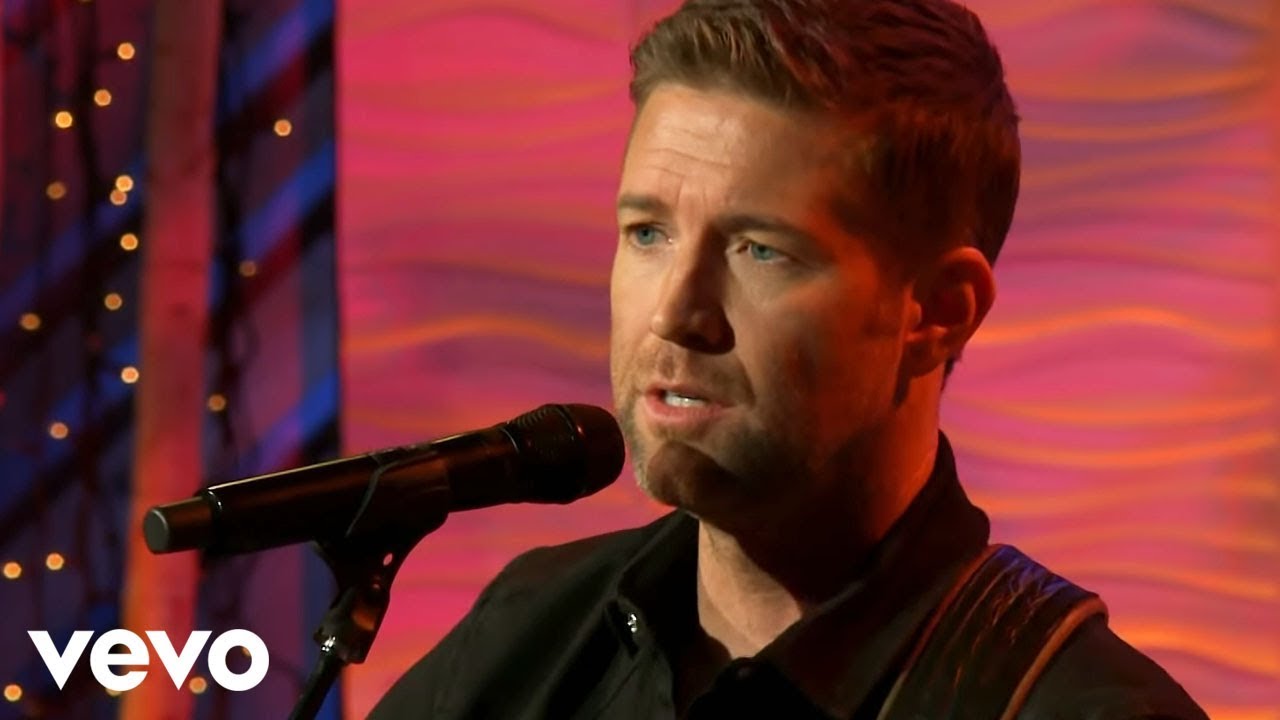
A song about choosing time over hurry became a chart story about endurance.
In 2012, Josh Turner released Time Is Love as the lead single from his album Punching Bag, and the record went on to earn one of the more quietly interesting honors in modern country chart history. Billboard ranked it as the No. 1 country song of the year, even though it never reached No. 1 on the weekly Hot Country Songs chart, rising as high as No. 2. For a song built around the value of presence, that distinction feels almost fitting: it did not seize the summit in a single dramatic moment; it stayed.
The year-end milestone is not a contradiction so much as a reminder of how music can move through public life. Weekly charts capture a moment. Year-end rankings reward accumulation, consistency, and the slow arithmetic of return. A single can miss the top position in any given week and still gather enough strength across months to become the defining chart record of its year. Time Is Love carried that kind of patient force. Its success was not shaped like a sudden flare. It was shaped like routine, repetition, and recognition.
Written by Tom Shapiro, Tony Martin, and Mark Nesler, the song turns on a plainspoken idea: work has its demands, but love requires time. There is nothing abstract about the premise. It belongs to ordinary hours, to the push and pull between responsibility and relationship, to the decision to leave one thing unfinished so another can be protected. Country music has often found strength in that kind of everyday moral choice, and Time Is Love delivers it without making the feeling heavy.
Musically, the recording moves with a bright, forward country-radio pulse. The tempo gives the song urgency, but not panic. Guitars and rhythm carry it cleanly, making room for Turner’s voice to become the center of gravity. His baritone has always been one of the most recognizable instruments in contemporary country, not because it strains for attention, but because it settles into a lyric with unusual weight. On Time Is Love, that depth matters. A lighter delivery might have made the title phrase sound like a slogan. Turner makes it sound like a decision already tested by real life.
What distinguishes the performance is its restraint. Turner does not oversell the message, and the arrangement does not dress it in unnecessary drama. The chorus is direct, almost proverb-like, and that directness is part of its durability. The song’s central phrase is easy to remember because it feels older than the record itself, as if it names something people understand before they have language for it. Time is not presented as a luxury. It is the actual substance of care.
The single also arrived at a meaningful point in Turner’s career. By Punching Bag, released in 2012, he was no longer a newcomer defined only by the deep-voiced arrival of Long Black Train or the romantic ease of earlier hits such as Your Man and Would You Go with Me. He was an established country artist working within a radio landscape that increasingly favored bigger textures and sharper crossover momentum. Time Is Love fit that landscape without surrendering his identity. It had pace and polish, but its emotional center remained traditional: a voice, a promise, a homeward pull.
That may be why the year-end honor feels especially revealing. A weekly No. 1 is often remembered as a peak; this record’s achievement is better understood as a pattern. Listeners and radio programmers kept returning to it often enough for it to outlast songs that may have had clearer weekly victories. In that sense, the chart story echoes the lyric’s own argument. The thing that counts is not always the grand gesture. Sometimes it is the steady offering, the repeated choice, the evidence gathered over time.
There is a quiet lesson in that, though the song never turns into a lecture. Time Is Love is not asking anyone to abandon ambition or duty. It simply insists that a life can become mismeasured if every hour is valued only by productivity. Turner’s vocal steadiness gives the song its sense of adult clarity: the awareness that love is not proved mainly by words, but by the space made for someone else inside a crowded day.
More than a decade later, the Billboard milestone remains a useful way to hear the record. Its unusual path to the top of the year-end country list keeps the song from being remembered only as another 2012 hit. It becomes a small case study in endurance, in how a modestly framed recording can gather meaning through persistence. Josh Turner did not need Time Is Love to dominate every week for it to define the year. The song’s victory was quieter than that, and perhaps more faithful to its own message: what lasts is often what keeps showing up.
