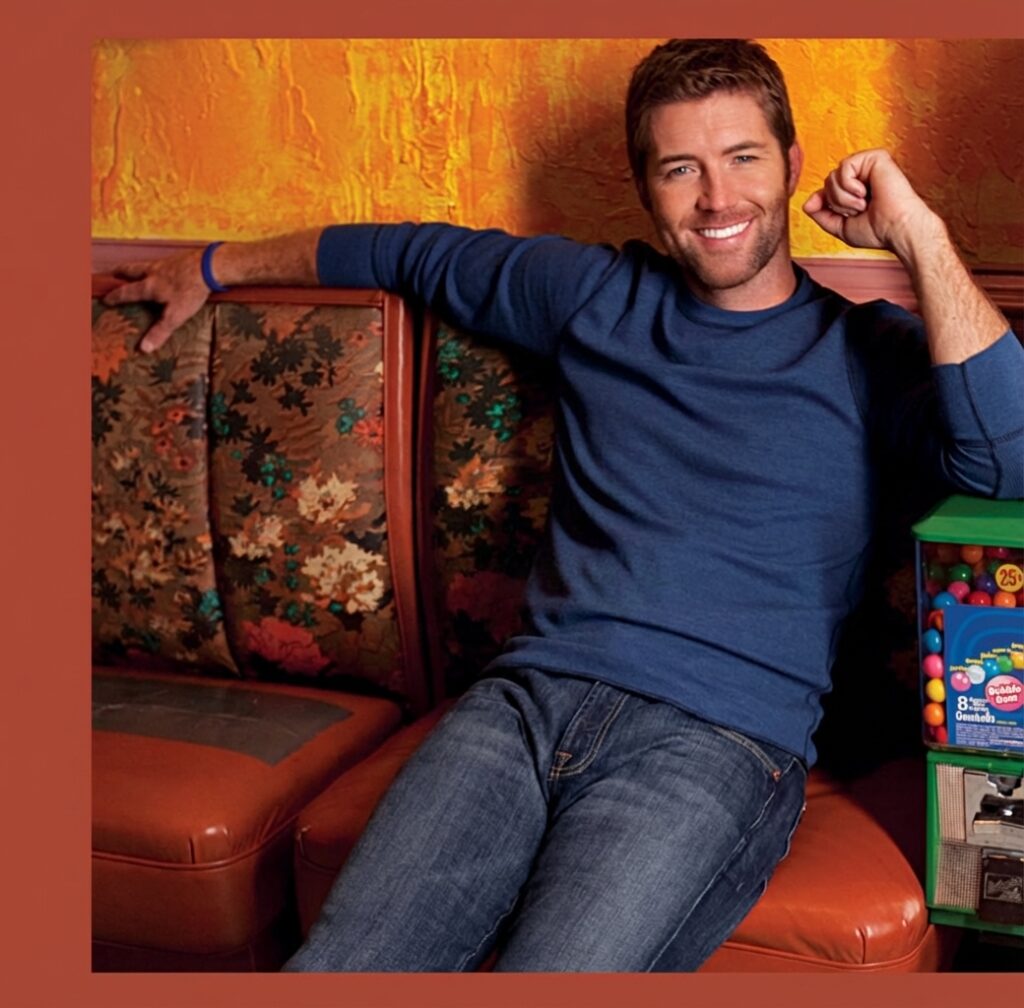
Time’s Swift Embrace: Revisiting “Time Is Love” by Josh Turner
When Josh Turner released Time Is Love as the lead single from his 2012 album Punching Bag, the song quickly found its place on country radio. It reached No. 2 on the Billboard Hot Country Songs weekly chart and finished the year as Billboard’s No. 1 Hot Country Songs song of 2012. This made it one of the rare singles to secure a Year End title without reaching No. 1 during its weekly run.
Turner has spoken often about his immediate connection to the track. He said he fell in love with the song right off the bat, describing it as a message centered on quantity time more than quality time. In his words, quantity time is what deepens a relationship because “you get to know somebody, their strengths and weaknesses, and that brings you closer.” In interviews with CBS Local he emphasized that anyone can relate to the song’s message of “leaning your priorities toward the people you love.”
Although Turner wrote most of Punching Bag, Time Is Love was one of only three songs on the album he did not write. He chose it because it was “a great song first of all” and because it stayed in his head from the very first listen. The track carries a contemporary brightness, yet the instrumentation remains grounded in country tradition. Turner noted that the album as a whole is “one of the more country records” he had made, with mostly acoustic instruments even on modern leaning songs like this one.
Coverage from early studio sessions described Time Is Love as a mandolin tinged single. Writers who observed rehearsals remarked that the band “nailed it” easily, reinforcing the song’s clean structure and accessible melody. Rather than leaning into heavy production, the track keeps a straightforward arrangement that lets Turner’s baritone guide the central theme without distraction.
Placed within Punching Bag, the song reflects Turner’s interest in balancing tradition with subtle influences. He has spoken about growing up in an environment shaped by both country and soul music. While he remains rooted in bluegrass and traditional country, he acknowledges that old soul and R&B shaped his phrasing and sense of feel. That blend adds a quiet undercurrent to Time Is Love without shifting it away from its country identity.
Listeners responded to the track not because it was complex, but because it was direct. The song frames a common decision. People can work more or they can go home. They can chase demands or they can turn toward the relationships that sustain them. Turner’s calm vocal delivery reinforces the simplicity of the choice. He does not push urgency. He states it plainly, trusting the lyric to carry itself.
Across the year of its release the song stayed in steady rotation. Its Year End placement shows how long it remained on playlists, in cars, and on daily soundtracks for listeners who recognized their own routines in its refrain. It became a reminder that time moves quickly and that choosing the right priorities can be an act of care.
In Josh Turner’s broader career Time Is Love stands as a clear, concise statement. It is a single built on a strong hook, an accessible message, and a vocal presence shaped by years of discipline. The result is a song that continues to resonate long after its chart run ended. It remains part of how listeners understand Turner, and part of how they consider the time they give to the people who matter most.
