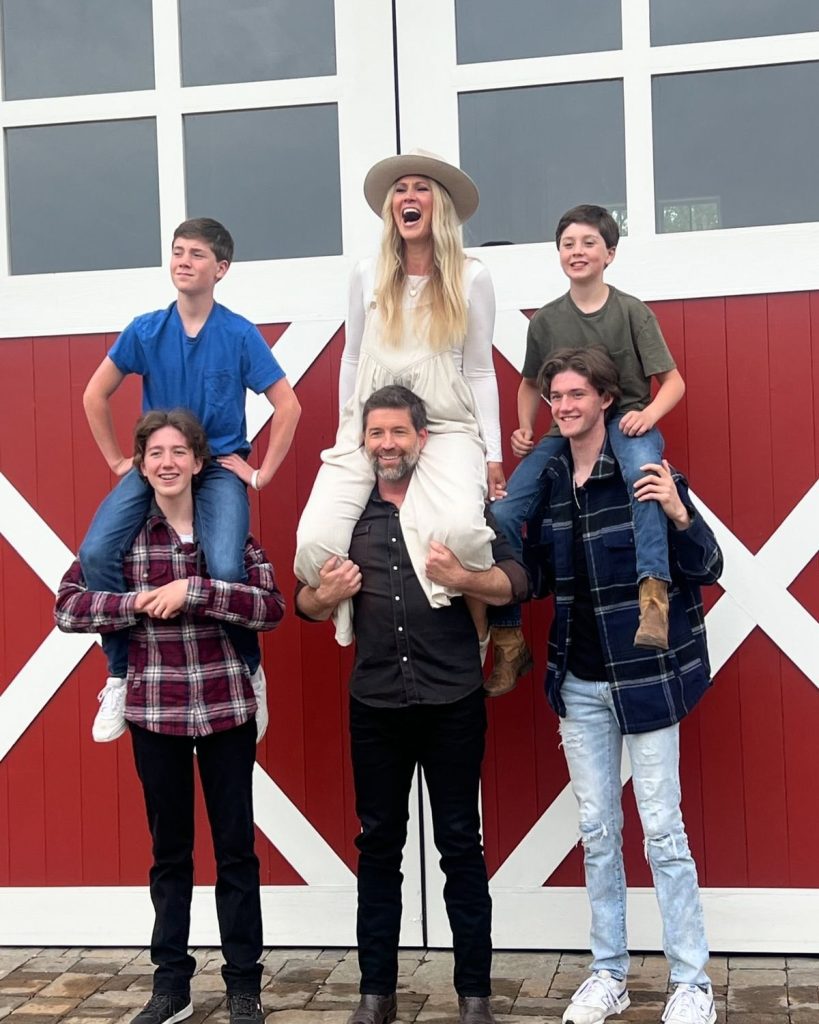
“I’ll Be There” is a father-hearted promise set to country warmth—an assurance that real love shows up in the small moments, not just the dramatic ones.
“I’ll Be There” is one of those Josh Turner songs that never needed a radio “moment” to matter. It wasn’t released as a major single, so it doesn’t have a clean Hot Country Songs debut week to point to. Instead, it lives the old, album-track kind of life—quietly, faithfully—inside Turner’s fourth studio record, Haywire, released February 9, 2010 on MCA Nashville, produced by Frank Rogers.
That album arrived with real commercial force: Haywire debuted at No. 5 on the Billboard 200 and No. 2 on Top Country Albums, selling 85,000 copies in its first week. Yet even amid that success—propelled by big singles like “Why Don’t We Just Dance” and “All Over Me”—“I’ll Be There” feels deliberately smaller, more domestic, more rooted in the everyday. It appears as track 7 on the album, and it was written by Phillip White and Steven Dale Jones.
What makes “I’ll Be There” special is that it carries a kind of love country music doesn’t always linger on long enough: the steady, unglamorous devotion of someone who understands that care is practical. A shoulder offered. A hand extended. A voice in the dark saying, you’re not alone. Even the way the song has been described in album notes and retailer copy leans into this idea—a father’s love as the spark behind the lyric’s protective tenderness. Whether you hear it as a parent speaking, a partner promising, or simply a friend refusing to disappear, the emotional core remains the same: the song is about reliability—that rare human quality that becomes more valuable the longer you live.
There’s a quiet brilliance in how Josh Turner fits this material. His baritone has always carried a calm authority—like a voice that doesn’t panic, doesn’t posture, doesn’t beg to be believed. On “I’ll Be There,” that voice turns the lyric into something you can lean on. It’s not the rush of young love; it’s the grounded tone of someone who understands that life comes with scraped knees, tired hearts, and days when confidence simply doesn’t show up. In that sense, the song isn’t really about romance alone. It’s about presence—the kind that holds when everything else is slipping.
And then there’s the placement inside Haywire, which matters more than people sometimes admit. Albums like this are built like evenings: you don’t want constant fireworks; you want pacing, contrast, breath. Haywire has its radio-ready lift and its glossy polish, but “I’ll Be There” functions like a pause where the room gets warmer. It’s the point in the record where the smile softens into sincerity—where the listener stops tapping along and starts remembering.
The meaning of the song, when you sit with it, is almost old-fashioned in the best way. It suggests that love is proven not by grand speeches but by repeated, ordinary acts—showing up again and again until the promise becomes a habit. That’s why the title phrase “I’ll Be There” lands so powerfully: it’s short, plain, and therefore believable. No poetry for poetry’s sake—just the kind of sentence you hope someone will mean when you need it most.
So while “I’ll Be There” may not come with a chart peak attached to its name, its real “ranking” is the one listeners assign privately—when they return to Josh Turner not for spectacle, but for steadiness. And when the song ends, what lingers is not cleverness, but comfort: the feeling that someone, somewhere, is still capable of keeping a promise—and singing it as if it matters.
