
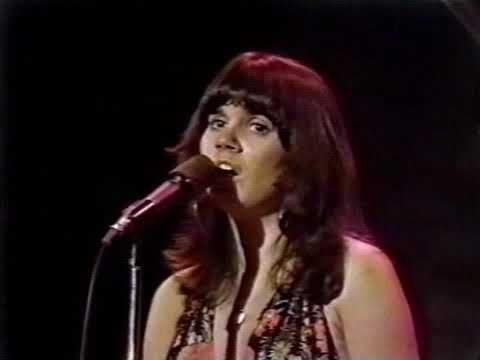
A quiet album closer, You Can Close Your Eyes reveals how Linda Ronstadt could turn a gentle borrowed song into something deeply personal, intimate, and unforgettable.
On paper, You Can Close Your Eyes was never the track from Linda Ronstadt‘s Heart Like a Wheel that stormed radio. That distinction belonged to the bigger hit singles surrounding it. But the chart story is still important, and it says a great deal about the song’s place in her career. Released on Heart Like a Wheel in November 1974, You Can Close Your Eyes was not issued as a major standalone single, so it did not earn its own Billboard Hot 100 peak. Instead, its chart legacy is tied to the album itself, and that album became a landmark: Heart Like a Wheel rose to No. 1 on the Billboard 200, the first chart-topping album of Ronstadt’s career. In other words, this soft, almost whispered performance lived inside the record that finally made her an undisputed superstar.
That contrast is part of what makes the song so moving. Here was an artist reaching a new commercial height, yet one of the album’s most lasting moments came not from bravado, but from restraint. You Can Close Your Eyes was written by James Taylor, who first recorded it on his 1971 album Mud Slide Slim and the Blue Horizon. Taylor has long been associated with the song’s lullaby-like tenderness, and that description fits. The melody is calm, the imagery is simple, and the emotional promise is quiet rather than dramatic. The song does not shout devotion. It offers comfort. It says that even as daylight fades and separation becomes unavoidable, there is still a voice, still a song, still some form of love that can remain.
When Linda Ronstadt chose to record it, she did not try to overpower that gentleness. She understood exactly what kind of song it was. This was one of her greatest gifts as an interpreter. She could take material written by somebody else and sing it so naturally that it felt as if it had been waiting for her all along. Many singers can cover a song. Far fewer can uncover something inside it. Ronstadt did that again and again throughout the 1970s, and You Can Close Your Eyes is one of the clearest examples of her emotional intelligence as a vocalist.
Produced by Peter Asher, Heart Like a Wheel is often remembered for its range: country ache, rock drive, pop accessibility, and deep emotional seriousness. In that sequence, You Can Close Your Eyes serves as a kind of final exhale. It closes the album not with theatrical force, but with trust. The arrangement stays beautifully restrained, giving Ronstadt room to do what she did best: phrase a line so simply that it feels like a private reassurance. There is no need for embellishment. No need for excess. The power is in the calm.
The meaning of the song has always lived in that delicate balance between comfort and absence. Its opening image of the sinking sun and rising moon suggests that life keeps moving whether people are ready or not. That alone gives the song a mature sadness. This is not youthful infatuation pretending the world can stop for love. It is a wiser kind of tenderness. And then comes the emotional center: the idea that even if the singer cannot offer grand declarations, there is still this song, and it can remain after he is gone. In Linda Ronstadt‘s voice, that feeling becomes even more poignant. She sings it with warmth, but never with sentimentality. She allows the ache to stay inside the words.
That is why the song continues to resonate so deeply. What sounds at first like a lullaby slowly reveals itself as something more adult and more complicated. It is about reassurance, yes, but it is also about limits. About loving someone without pretending you can protect them from every nightfall, every goodbye, every turn of time. Ronstadt understood that emotional tension instinctively. Her reading does not smooth away the sadness. It keeps the sadness close, and because of that, the comfort feels honest.
There is also a larger story here about Linda Ronstadt herself. By the time Heart Like a Wheel arrived, she had already earned admiration for her voice, but this album changed the scale of her success. Hits like You’re No Good and When Will I Be Loved gave the record its commercial lift, yet the quieter tracks proved the depth behind the popularity. You Can Close Your Eyes may not have been the song people heard blasting from every car radio, but it helped define why Ronstadt mattered. She was not merely a hitmaker. She was an artist who knew how to make vulnerability sound strong.
That may be the most beautiful thing about this recording. It never begs for attention. It does not arrive with the swagger of a blockbuster or the neat certainty of a chart statistic. In fact, the absence of a standalone chart peak almost feels fitting. This is the kind of performance that works its way into memory slowly. It waits. It returns in quiet hours. It stays for reasons that have little to do with commercial measurement.
So if someone asks where You Can Close Your Eyes stands in the story of Linda Ronstadt, the answer is not that it was her biggest hit. It was not. The better answer is that it was one of her purest moments. Inside a No. 1 album, surrounded by more famous songs, she delivered a performance of rare grace and emotional clarity. Decades later, that is exactly why it still matters. Some recordings impress. Some comfort. A precious few do both. This one does.

Linda is my alltime favorite. Her voice is so clear and emotional. I am glad I found this page.
Thank you.