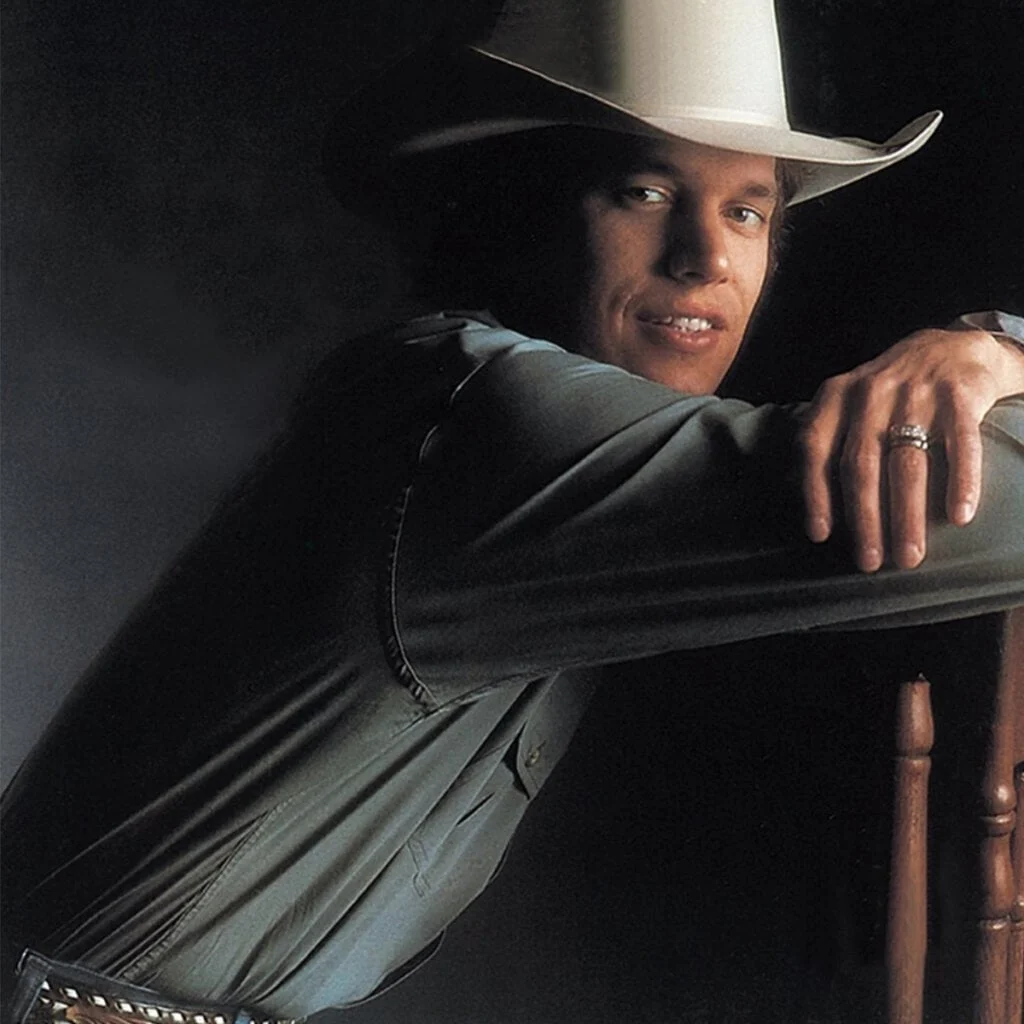
“Amarillo by Morning” is a Western postcard written in dust and determination—where a worn-out traveler arrives with empty pockets, yet carries a stubborn, shining freedom no one can repossess.
Few country songs feel as inevitable as “Amarillo by Morning”—as if it had always been waiting somewhere out on the plains, just needing the right voice to ride it into town. When George Strait released his version, the public story was clear and immediate: the single entered the Billboard country chart in February 1983 and climbed to No. 4 on Billboard Hot Country Songs. That’s not just a respectable peak; it’s the kind of placement that tells you a song has found its people—listeners who don’t merely hear it, but recognize it.
The song’s life, though, began earlier and more quietly. “Amarillo by Morning” was written by Terry Stafford and Paul Fraser, and it was first recorded by Stafford in 1973, where it reached No. 31 on the Billboard country chart. It’s one of those rare cases where the “second life” becomes the legend—yet the original seed matters, because the imagery is so specific it feels lived-in. The opening line doesn’t waste time with metaphors: “Amarillo by mornin’ / up from San Antone.” The road is named. The hour is named. The traveler is already moving.
The behind-the-scenes story adds a wonderfully human twist to that poetic certainty. According to American Songwriter, Stafford got the idea after a drive home to Amarillo following a rodeo show in San Antonio—and the title concept was sparked by a delivery-service commercial promising something would arrive “Amarillo by the next morning,” as Fraser later recalled (via Ace Collins’ book). It’s almost funny—how something as ordinary as late-night television can strike the match for a song that ends up sounding timeless. But that’s how real songwriting often works: the sacred slips into the everyday, and suddenly a phrase becomes a doorway.
George Strait recorded the song on April 13, 1982 at Music City Music Hall in Nashville, and it appeared on his 1982 album Strait from the Heart. The single’s publisher release is listed as January 14, 1983, with the full release following on February 16, 1983. Even these dates feel like they suit the song: winter-to-late-winter timing, when morning air can bite and the horizon looks far away.
But the true “ranking” of “Amarillo by Morning” isn’t only numerical. It’s emotional—how it has come to be regarded as one of Strait’s defining performances, a piece of his identity as much as a track in a catalog. And it earns that status by refusing to dress up its hero. This cowboy isn’t glamorous. He’s road-worn, underpaid, and bruised by the very life he keeps choosing. Yet the chorus doesn’t ask for pity. The lyric lands with a plain, almost spiritual pride: I ain’t got a dime, but what I’ve got is mine… I ain’t rich, but Lord I’m free.
That’s the song’s lasting meaning: the strange dignity of a hard road. “Amarillo by Morning” doesn’t pretend the life is easy. It simply insists that the life is owned. The man in the song is battered, yes—but he is not borrowed. And in George Strait’s hands, that message arrives without theatrics. He sings it as if it’s a fact of the landscape, like wind or distance: you can’t argue with it, you can only accept it.
There’s also a quiet ache underneath the freedom—because arriving “by morning” suggests that the traveler is always arriving somewhere, and therefore always leaving somewhere else. The road becomes a kind of destiny: it gives you the sky, but it takes the stillness. That tension—between the romance of motion and the loneliness it can carry—is exactly why the song keeps returning to people across decades. It sounds like hoofbeats and headlights at once: old West and modern restlessness braided together.
In the end, “Amarillo by Morning” is not a song about winning. It’s about continuing. It’s about showing up again—dusty, tired, uncelebrated—and still believing that the sunrise is worth meeting. And that belief, sung in Strait’s unforced, steady voice, is why the song’s finest chart position may be the one it holds quietly in memory: permanently, unmistakably, homeward-bound.
