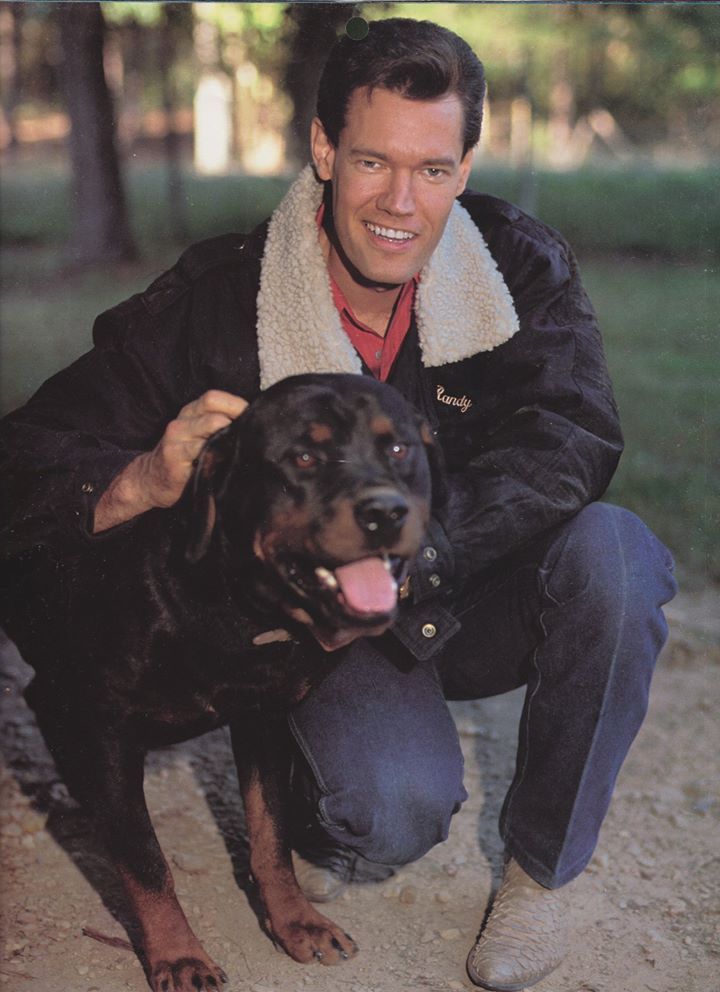
A gentle but unshakable country confession, “On the Other Hand” turned temptation into a song about conscience, commitment, and the kind of love that is tested when no one else is looking.
When Randy Travis recorded “On the Other Hand”, he was not simply cutting another country single. He was helping lead country music back toward its plain-spoken heart. Written by Paul Overstreet and Don Schlitz, the song was first released in 1985 and initially reached only No. 67 on Billboard’s Hot Country Singles chart. By ordinary industry standards, that might have been the end of the story. But country music has always had room for second chances. After Randy Travis broke through with “1982” and “Diggin’ Up Bones”, “On the Other Hand” was re-released in 1986 and this time climbed all the way to No. 1, becoming his first chart-topping country hit. It later appeared on his landmark album Storms of Life, a record that helped define the neo-traditional revival of the decade.
That chart journey matters because it says something deeper about the song itself. “On the Other Hand” is not flashy. It does not beg for attention. It wins you over slowly, the way true country music often does—through honesty, restraint, and a line that lands harder the older life gets. The central image is unforgettable: a man tempted by another woman, then glancing at the wedding band on his hand and remembering the promise it represents. In lesser hands, the idea might have felt preachy or mechanical. Here, it feels human. There is longing in the song, but also self-command. There is vulnerability, but also moral clarity. That balance is what gives it staying power.
Randy Travis had the perfect voice for material like this. He did not sing “On the Other Hand” as a grand moral speech. He sang it in that rich, unhurried baritone of his, with the calm authority of someone who understood that the strongest convictions are often spoken quietly. His phrasing is one of the song’s secret powers. He lets the words breathe. He allows pauses to do emotional work. And in those spaces, the listener hears not only the temptation, but the decision. That is why the song feels so intimate. It is not merely about saying no. It is about remembering who you are.
There was also something important happening culturally when the record found its audience. By the mid-1980s, parts of country music had drifted toward a slicker, pop-leaning style. Then came artists like Randy Travis, bringing back fiddle, steel guitar, uncluttered arrangements, and lyrics rooted in everyday life. “On the Other Hand” became one of the clearest signals that listeners were hungry for that sound again. It did not rely on production tricks or crossover polish. It relied on story, melody, and character. In many ways, that made it revolutionary without ever sounding as though it was trying to be.
The songwriting deserves special praise. Paul Overstreet and Don Schlitz wrote with admirable economy. The lyric says exactly what it needs to say, then leaves the emotional echo behind. The title itself is brilliant. “On the other hand” usually introduces a second thought, a hesitation, a competing truth. Here, it becomes both a phrase and an image—the literal hand wearing a wedding band, and the figurative hand of conscience interrupting desire. That is the kind of craftsmanship country music has always treasured: simple enough to sing along with, deep enough to live with.
Part of what makes the song endure is that it never pretends temptation belongs only to reckless people or dramatic circumstances. It presents it as part of ordinary life. That honesty is what gives the song dignity. The narrator is not a saint floating above weakness. He is a man confronted by it, and choosing fidelity anyway. The emotional force comes from that very choice. Anyone can sing about passion. It takes more wisdom to sing about restraint without draining the song of feeling. “On the Other Hand” manages both.
Listening now, decades later, the record still carries the clean lines of a classic. The arrangement remains beautifully understated. The steel guitar does not overwhelm; it answers. The rhythm section keeps everything grounded. Nothing is wasted. Everything serves the song. That economy is one reason Storms of Life felt so important when it arrived. It reminded listeners that country music could still be elegant in its simplicity, and that a song about personal honor could be just as compelling as one about heartbreak or revenge.
It is also impossible to separate “On the Other Hand” from the larger story of Randy Travis himself. This was the song that finally opened the door all the way. Once it reached No. 1 in 1986, it confirmed that he was not a passing curiosity but a major new voice. From there, his career accelerated, and country music changed with it. Many artists would follow the path he helped reopen, but the purity of this record still feels singular. It is one of those performances that sounds effortless until you realize how difficult such plain truth really is.
In the end, “On the Other Hand” lasts because it speaks to something older than radio trends. It understands that character is often revealed in private moments, in silent decisions, in the promises we keep when breaking them would be easy. Randy Travis did not oversell that truth. He simply sang it, steady and sure, and trusted the listener to recognize its weight. That trust is part of the song’s beauty. It does not shout. It endures.
