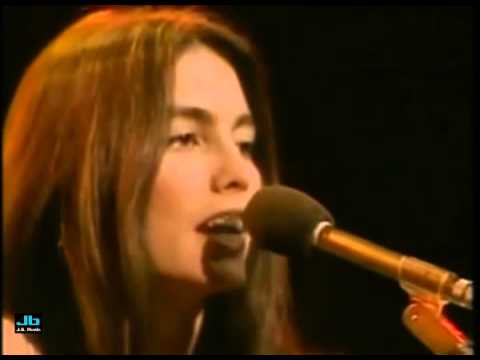
“My Name Is Emmett Till” is Emmylou Harris giving voice to a boy history tried to silence—turning a murder into a memorial, and a memorial into a warning we can still hear.
Emmylou Harris has always sung like someone who understands that a song can be more than entertainment—it can be a conscience, a witness, a candle set in a window. “My Name Is Emmett Till” is one of her starkest examples of that calling. She released it on April 26, 2011, on her album Hard Bargain (Nonesuch), where it appears as track 3 and runs 4:53. The album itself arrived with real public attention—debuting at No. 18 on the Billboard 200 and No. 3 on Billboard’s Top Country Albums—which matters, because it means this isn’t a song whispered only to a niche circle. It stepped into the mainstream room and asked listeners to sit still long enough to remember.
The song is, in the plainest factual sense, exactly what its title says: Harris tells the story of Emmett Till, a 14-year-old African-American boy from Chicago who was abducted and lynched in Mississippi in August 1955 after being accused of offending a white woman, Carolyn Bryant, at her family’s store. His murder—brutal beyond the imagination’s comfort—was followed by a trial in which the men accused of killing him were acquitted, a conclusion that exposed, with unbearable clarity, how cheaply Black life was valued under the law in that time and place.
But the most haunting “behind the song” truth—the one that explains why Till’s name still rings like a struck bell—is what happened after his body was returned to Chicago. Till’s mother, Mamie Till-Mobley, insisted on an open-casket funeral, a deliberate act of moral courage: she wanted the world to see what had been done. Photographs of Till’s mutilated body circulated widely and helped galvanize public outrage, becoming a catalytic moment for the Civil Rights Movement. When Harris sings from Till’s perspective, she is not inventing tragedy for dramatic effect—she is stepping into a real, documented horror, and asking the listener to look without looking away.
Musically, Harris doesn’t “decorate” the subject with melodrama. That’s part of what makes it so devastating. Her style on Hard Bargain is lean and focused—recorded largely with just three musicians: Harris, producer Jay Joyce, and Giles Reaves—and that stripped intimacy suits a song that must feel like testimony rather than spectacle. You can sense her lifelong discipline as an interpreter here: she knows that when the subject is this heavy, the smartest artistic choice is restraint—let the lyric stand upright, let the silence around it do part of the speaking.
The meaning of “My Name Is Emmett Till” is not complicated, but it is enormous. It is a reminder that history is not safely sealed in textbooks; it breathes into the present. It asks what it means to say a name—Emmett Till—and whether we are willing to carry the weight that comes with saying it. It also quietly honors Mamie Till-Mobley’s insistence on visibility: her refusal to let the world keep its innocence by keeping the truth hidden.
And in that sense, Harris is doing something both old and deeply American: turning a story of violence into a song of memory. Folk music has always been a place where the dead are allowed to speak—where the listener is asked to become not a spectator, but a keeper. When Emmylou Harris sings “My Name Is Emmett Till,” she isn’t offering comfort in the easy way. She is offering the harder comfort: the belief that remembering is a form of love, and that love—real love—doesn’t flinch from truth.
