
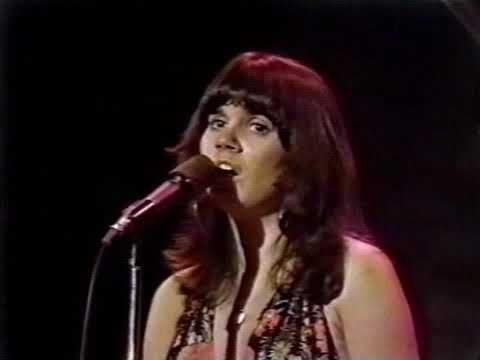
I Knew You When is one of those early Linda Ronstadt recordings that quietly reveals her gift in full: turning a well-written song into something more intimate, more bruised, and far more lasting than its chart history might suggest.
Long before Linda Ronstadt became one of the defining voices of the 1970s, she was already leaving behind recordings that carried an astonishing emotional weight. I Knew You When belongs to that early chapter, when her solo identity was still taking shape after the Stone Poneys years, and when listeners could hear, almost in real time, how she was becoming not just a singer with power, but an interpreter with rare emotional intelligence. The song itself was written by Joe South and had first become a hit for Billy Joe Royal, whose 1965 version climbed to No. 14 on the Billboard Hot 100. Ronstadt’s recording did not become a major chart landmark in the same way, but that is part of what gives it its quiet mystique today: it feels like a treasure from before the spotlight fully found her.
That matters, because I Knew You When is exactly the kind of song that shows why Ronstadt’s rise was never just about a beautiful voice. Plenty of singers could hit the notes. Far fewer could step into a song that had already lived another life and make it sound as if it had been waiting for them all along. In her hands, the tune loses any sense of pop cleverness and gains a deeper ache. What had been a strong mid-1960s hit becomes, with Linda Ronstadt, a meditation on time, distance, and the strange pain of recognizing someone who no longer belongs to the same moment you do.
The story behind the song begins, of course, with Joe South, one of the finest songwriters of his era, a writer who understood how to make simple words carry emotional complexity. I Knew You When is built on a familiar but piercing idea: the shock of meeting the past in the present. It is not merely a reunion song, and it is not just about romance. It is about that unsettling instant when memory and reality refuse to line up. The person is still there, but what once existed between two people has changed, dimmed, or disappeared. That emotional contradiction is what gives the song its staying power.
Ronstadt understood that kind of material instinctively. In her early solo years, she was moving through country, folk, rock, and pop with a freedom that few singers of her generation could match. She did not treat genre as a boundary; she treated it as atmosphere. On I Knew You When, that instinct is especially clear. Rather than pushing the song into a harder rock direction or dressing it up too heavily, she lets its bittersweet center breathe. The result is a performance that sounds tender without weakness, poised without coldness. She sings with the kind of restraint that often says more than a dramatic flourish ever could.
There is also something deeply revealing in where this song sits in the larger Ronstadt story. When people look back on her career, they often begin with major landmarks like Heart Like a Wheel, You’re No Good, When Will I Be Loved, or Blue Bayou. Those songs deserve every bit of their reputation. But recordings like I Knew You When remind us that the emotional architecture of that later greatness was already there. Even before superstardom, Ronstadt had the ability to sing from inside a song rather than simply over it. She had already learned how to make a listener feel that the lyric was being remembered, not merely performed.
And that is really the song’s meaning in her version: memory is never neat. We tell ourselves that the past is settled, that old feelings stay where we left them, but certain encounters prove otherwise. I Knew You When captures that uneasy truth with remarkable grace. It is about recognition, yes, but also about loss disguised as familiarity. The title sounds almost gentle, yet beneath it sits a world of regret, tenderness, and emotional dislocation. Ronstadt does not overstate any of that. She trusts the song, and she trusts the listener. That trust is one reason the performance still feels so human.
For longtime admirers of Linda Ronstadt, this recording has another appeal: it preserves the sound of an artist on the verge. You can hear the confidence arriving, the interpretive authority sharpening, the emotional clarity deepening. It may not be the first Ronstadt song casual listeners name, and it never carried the blockbuster chart profile of her later hits, but it reveals something arguably more valuable. It shows the roots of her greatness. It shows how early she understood heartbreak, not as spectacle, but as memory with a pulse.
That may be why I Knew You When lingers so beautifully. It is not just an early cover from a future star. It is a quiet testimony to what Linda Ronstadt would always do better than most: take a song that already had a history and give it a second life, richer in feeling, softer in surface, and deeper in truth.
