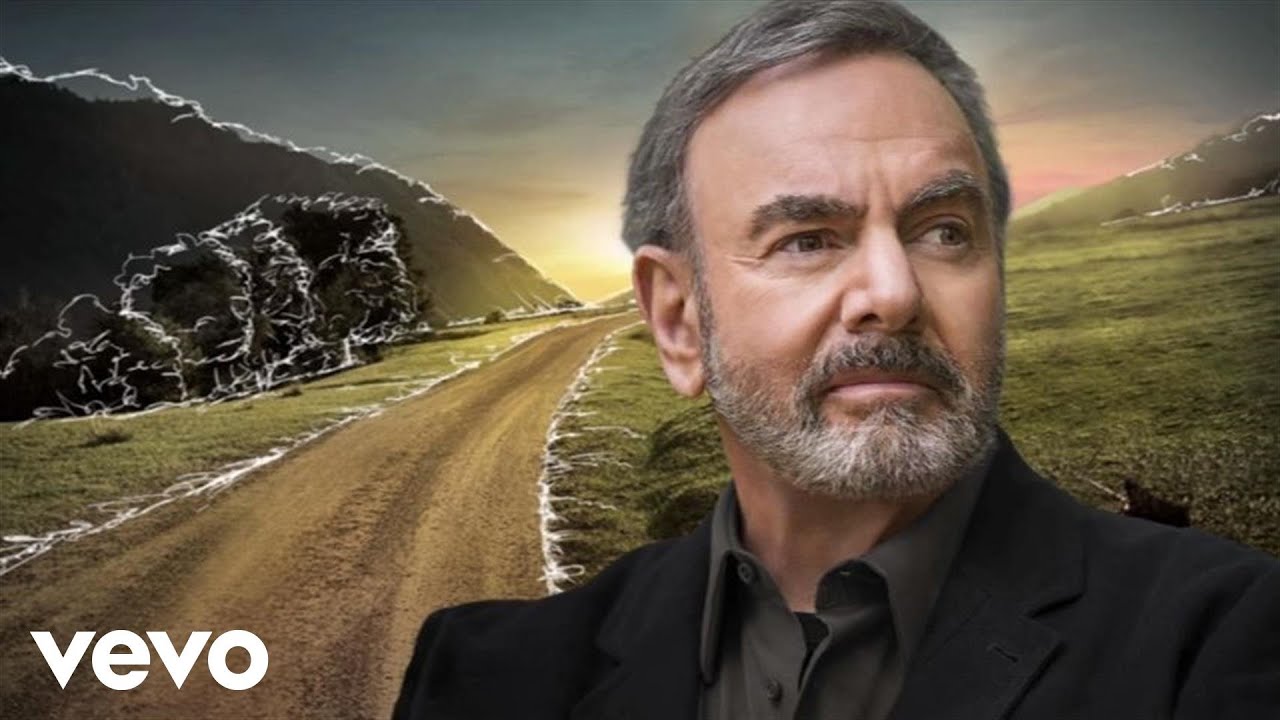
At the Troubadour in 1970, Neil Diamond let a singer’s public role turn inward, making And The Singer Sings His Song feel less like performance than confession.
Neil Diamond recorded And The Singer Sings His Song for the 1970 live album Gold: Recorded Live at the Troubadour, a document of a crucial moment in his rise from sharp, hit-making songwriter to commanding stage presence. Captured at the famed Troubadour in Los Angeles and released on Uni Records, Gold did not present Diamond as a distant star framed by arena spectacle. It placed him close enough for the listener to hear the grain in the voice, the tension in the pauses, and the way a room can shape a song before fame makes everything larger.
That setting matters. The Troubadour was not simply a venue; it was one of the rooms where American popular music in the late 1960s and early 1970s learned how to sound personal in public. It held folk singers, country-rock experiments, confessional songwriters, comedians, pop craftsmen, and restless performers trying to become something more than their studio singles. When Diamond stood there in 1970, he was already the writer and voice behind songs such as Solitary Man, Cherry, Cherry, Sweet Caroline, and Brother Love’s Travelling Salvation Show. Yet on And The Singer Sings His Song, the drama does not come from shouting for attention. It comes from the strange intimacy of hearing a performer sing about the act of singing itself.
Written by Diamond, the song belongs to that self-reflective corner of his catalog where the showman steps slightly away from the spotlight and looks at what the spotlight costs. In the studio, such a piece can feel polished, shaped, and enclosed. In the live atmosphere of Gold, it breathes differently. The audience is present, but the performance is not merely aimed at applause. It feels like a man standing inside his own profession for a few minutes, trying to understand why the song must be sung even when the reason cannot be neatly explained.
Diamond’s voice in this period carried a fascinating contradiction. It had the muscular drive of a pop-rock performer who knew how to seize a room, but it also had a rough, searching quality that made his quieter songs feel unsettled in the best way. On And The Singer Sings His Song, that combination is essential. He does not need to overstate the lyric. The live phrasing lets certain words land with the weight of experience, while the arrangement leaves room for the sense that the singer is both telling a story and being exposed by it.
The Gold album arrived at a turning point. In 1970, Diamond was moving into a broader national presence, with Cracklin’ Rosie soon becoming one of the major records of his career. But Gold: Recorded Live at the Troubadour preserves him before the scale expanded too far, before the later image of the major concert entertainer could overshadow the leaner, more vulnerable songwriter underneath. That is why this live version remains valuable. It catches the artist in motion, already powerful, not yet sealed into myth.
There is also something beautifully circular about the song’s placement in a live album. A studio recording asks the listener to imagine the singer alone with the material; a live recording puts that solitude in front of witnesses. The result is a subtle tension. The title itself, And The Singer Sings His Song, sounds almost simple, even inevitable. But in Diamond’s hands at the Troubadour, it becomes a question: is the singer offering a gift, fulfilling a duty, hiding behind a role, or trying to say the one thing ordinary speech cannot carry?
Part of Diamond’s lasting appeal lies in that unresolved feeling. He could write hooks that filled radios and choruses that crowds could carry, but his best performances often contained a private weather system beneath the surface. The Troubadour version does not ask to be remembered because it is the loudest moment on Gold. It endures because it captures a smaller truth: before songs become part of public memory, they pass through a single human voice, with all its ambition, fatigue, hope, and need.
Listening to this 1970 performance now, the room feels close, the career feels open, and the song feels almost prophetic. Neil Diamond would go on to stand before much larger audiences, but here he sounds as if he is still measuring the distance between the man and the performer. In that narrow space, And The Singer Sings His Song finds its quiet power.
