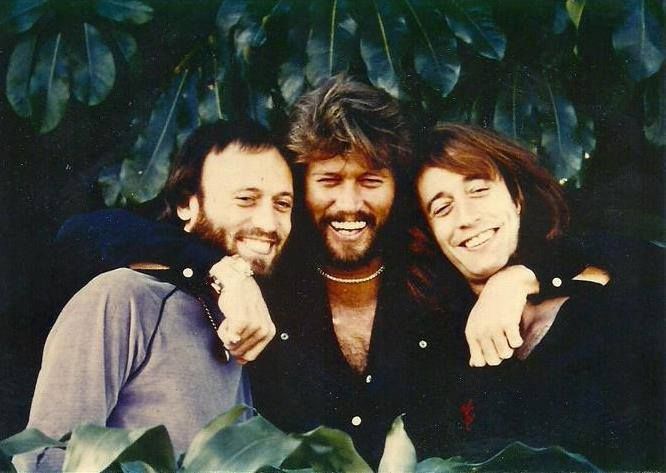
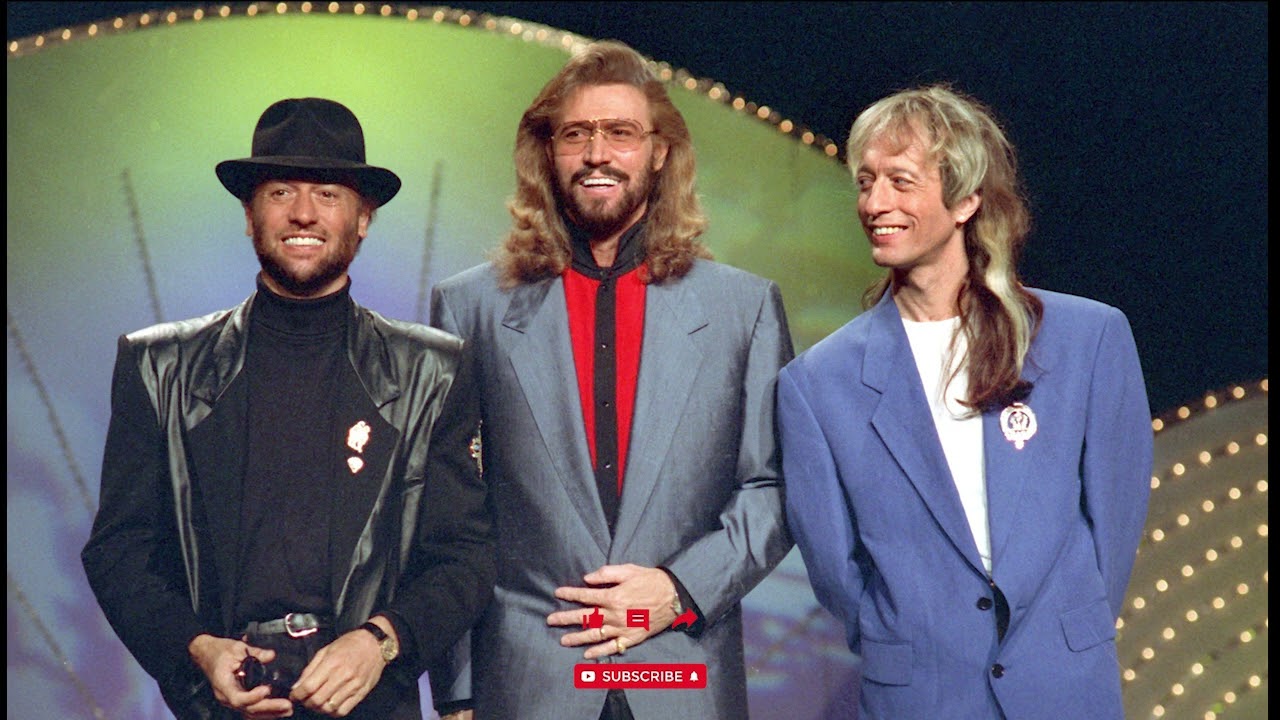
On Angela, the Bee Gees turned their late-1980s return inward, letting a polished synth-pop ballad reveal the tenderness beneath E.S.P.
Released from the Bee Gees’ 1987 album E.S.P., Angela belongs to a very particular chapter in the group’s story: the moment when Barry, Robin, and Maurice Gibb returned to the studio-album spotlight after several years away from releasing new Bee Gees material. The album was their first full studio album as a group since Living Eyes in 1981, and it arrived in a pop landscape that had changed dramatically around them. Synthesizers, gated drums, glossy production, and adult contemporary radio textures were shaping the decade’s sound. The Bee Gees did not come back by pretending it was still the 1970s. They came back by stepping into the 1980s and asking whether their old emotional instincts could survive inside a new surface.
E.S.P. is often remembered first for You Win Again, the thunderous comeback single that re-established the Bee Gees across much of the world, especially in Europe. That song had the force of a declaration. It stomped forward, bright and defiant, as if the brothers were kicking open a door that had been left closed too long. Angela, by contrast, feels like what happens after the applause settles. As the final single from that late-1980s studio return, it does not carry the same public drama. Its power is more private. It sounds less like a banner and more like a late-night confession dressed in the elegant machinery of the era.
Written by Barry Gibb, Robin Gibb, and Maurice Gibb, Angela shows how naturally the Bee Gees could place vulnerable melody inside a modern frame. The arrangement is lush without becoming heavy. The keyboards create a soft, shining atmosphere, the rhythm moves with restrained patience, and the vocal lines lean into that unmistakable Gibb gift: a melody that seems to rise out of longing rather than calculation. Even when the production belongs unmistakably to the late 1980s, the emotional architecture is older and deeper. The song understands yearning as something circular, something that returns in waves.
Part of the fascination of Angela is that it does not try to compete with the Bee Gees’ most famous eras. It is not disco, not blue-eyed soul in the classic 1970s sense, and not the close-harmony pop of their 1960s breakthrough. It sits in another room entirely. Yet the identity of the group is still present in the way the voices seem to fold into one another, in the way a romantic name becomes less a character than a feeling, and in the way the chorus opens with the kind of melodic ache that had always been central to their writing. The sound may be digital, but the wound is human.
By 1987, the Bee Gees had already lived several careers. They had been teenage pop craftsmen, dramatic balladeers, global disco-era architects, and songwriters for other major voices. The years before E.S.P. had also proved how complicated fame could become. In some markets, the group had been so strongly identified with one cultural moment that their range was easy to overlook. The late-1980s comeback was therefore not simply a commercial return; it was also a test of perception. Could listeners hear the Bee Gees as contemporary songwriters again, not just as symbols of a previous decade?
Angela answers that question quietly. It does not argue. It does not swagger. It trusts atmosphere, melody, and emotional patience. There is something revealing in that restraint. The song suggests that a comeback is not always defined by the loudest hit. Sometimes it is found in the album track or later single that shows how an artist breathes after proving a point. In this case, the Bee Gees had already announced their return with force. Angela allowed them to soften the light and show another side of that same return.
Heard now, the song carries a particular late-1980s glow: clean lines, spacious keyboards, a careful studio sheen, and a romantic seriousness that belongs to its time. But beneath that surface is the same quality that made so much Bee Gees music endure—the sense that voices can make longing feel communal, that a private ache can become something shared the moment harmony enters. The brothers were masters at making emotion feel suspended between intimacy and scale. Angela may not be the first title people name when discussing the Bee Gees, but it is one of those recordings that helps complete the picture of who they were in their comeback era.
As the final single connected to E.S.P., Angela feels like a closing door left slightly open. It follows the boldness of a return with a gentler kind of confidence, reminding listeners that reinvention is not only about changing sound. It is also about carrying the same emotional truth into a different room and letting it speak in a new accent. For the Bee Gees in 1987, that room was filled with synthesizers, polished rhythm tracks, and the cool shine of contemporary pop. But at the center of it, as always, were three brothers chasing the fragile shape of a song.
