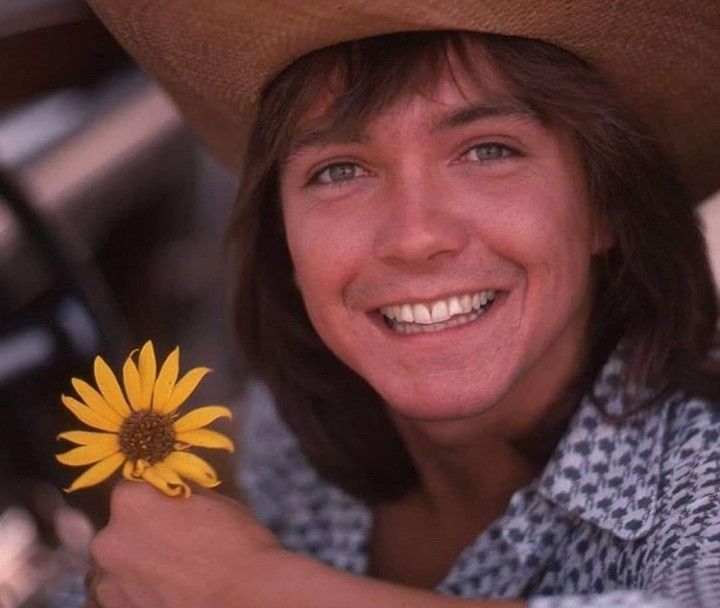
Heard now, “How Long Is Too Long” feels less like a routine late-period The Partridge Family track and more like a tender, uneasy question hanging over the end of a television dream.
There is something quietly moving about returning to The Partridge Family in its final stretch and hearing a song that seems to understand more than it says. “How Long Is Too Long”, from Bulletin Board (1973), was not one of the group’s major hit singles, and it did not earn a Billboard Hot 100 chart position of its own. That matters, because this was not the sound of a phenomenon at full blaze. This was the sound of a franchise in its later chapter, when the bright colors were still there, the harmonies still polished, but the mood around the project had begun to change. By the fourth season of the TV series, the cultural storm that had made David Cassidy one of the defining teen idols of the early 1970s was no longer quite the same storm.
That is why the song feels so affecting today. In its own moment, “How Long Is Too Long” was simply part of the Bulletin Board album, a late-entry release from a television-pop machine that had once dominated bedrooms, lunchboxes, fan magazines, and the imaginations of millions. But heard with the benefit of time, it carries a different emotional weight. It sounds like a question asked from the edge of an ending. Not necessarily an intentional farewell, not a formal closing statement, but something more haunting than that: a song that accidentally became a mirror of the moment surrounding it.
Bulletin Board itself belongs to an important place in the story. Released in 1973, it arrived during the fourth and final season of The Partridge Family, a period when the show was still recognizable but no longer untouched by fatigue. Television moves quickly. Pop culture moves even faster. What once feels permanent can suddenly begin to look fragile. Earlier Partridge Family releases had produced major chart action and broad commercial excitement, but by the time this album appeared, the atmosphere was different. The machinery was still running, yet the innocence of the original explosion was fading. That late-period softness is exactly what gives “How Long Is Too Long” so much of its bittersweet power.
Musically, the track sits in the polished pop language that made The Partridge Family such an easy listen in the first place: clean melody, emotional directness, and a sense of longing that never has to shout. But this particular song carries a question in its title that deepens everything around it. “How Long Is Too Long” is built on uncertainty. It asks about endurance, about waiting, about the point where patience turns into ache. In another setting, those ideas might read simply as romantic pop themes. Here, because of where the song sits in the group’s timeline, they take on a larger meaning. The title begins to feel almost meta-textual, as though the entire Partridge Family world were asking how long a TV-made fantasy can remain untouched by time, pressure, and the changing ambitions of the people inside it.
No figure represents that tension more strongly than David Cassidy. He was the face at the center of the phenomenon, the voice many listeners most closely identified with the records, and the young star whose fame quickly outgrew the tidy frame of the show itself. By 1973, Cassidy was no longer simply being carried by the wave. He was also trying to steer away from it. He had become a global sensation, but he was also increasingly eager to be seen as more than a manufactured television heartthrob. That friction is part of what makes the late Partridge Family material so interesting now. The records still offered sweetness and accessibility, yet the world around them had become more complicated.
And so “How Long Is Too Long” lands with a kind of unintended poignancy. It is easy to imagine viewers hearing it then as just another pleasant entry in the familiar catalog. But listeners returning today can hear the shadow around the melody. The song seems to belong to that delicate moment when a public image is still intact, even as the people holding it up already know change is coming. That is the ache in it. Not collapse, not scandal, not melodrama. Just the soft realization that an era has almost finished speaking.
There is also something distinctly moving about the way The Partridge Family package itself now looks in retrospect. The series debuted in 1970 with irresistible optimism, blending sitcom warmth with radio-friendly pop in a way that felt fresh and commercially brilliant. By the time the fourth season arrived in 1973, the formula was still functioning, but the surrounding culture had shifted. Pop music was getting rougher, deeper, more varied. Television tastes were evolving. And David Cassidy, perhaps more than anyone, was caught between the image that made him famous and the adulthood that would not wait politely offstage.
That is why this song deserves more attention than it usually gets. Not because it was a lost chart giant; it was not. Not because it changed the history of pop music single-handedly; it did not. It matters because it captures a feeling that many bigger hits never manage to preserve. “How Long Is Too Long” now plays like an emotional afterglow from the final pages of The Partridge Family story. It reminds us that endings in pop culture are rarely announced with perfect clarity. More often, they arrive wrapped in a familiar arrangement, smiling gently, while carrying a question no one is fully ready to answer.
And perhaps that is the lasting beauty of it. In the world of 1973 television pop, this was just one song on Bulletin Board. In memory, it has become something more fragile and more revealing: a late-season whisper from a bright American phenomenon, and a song that now sounds uncannily close to a goodbye for the TV era that helped define David Cassidy.
