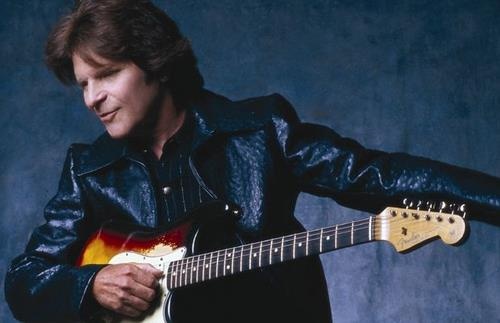
With the road suddenly behind them, Creedence Clearwater Revival used Pagan Baby to make Pendulum feel like a stage show reborn inside the studio.
When Pendulum arrived in December 1970, it carried more meaning than its plain cover first let on. This was Creedence Clearwater Revival entering a new chapter after stepping away from touring in late 1970, and that context is essential to hearing the album the right way. The record climbed to No. 5 on the Billboard 200, while its best-known single, Have You Ever Seen the Rain backed with Hey Tonight, soon reached No. 8 on the Billboard Hot 100. Yet before that famous single leaves its mark, Pagan Baby opens the album with a jolt. It does not sound cautious, tired, or domesticated. It sounds like a band that had lost the road but refused to lose its pulse.
That is what makes Pagan Baby such a revealing opener. It was not designed as a tidy radio single. It is rough-edged, extended, groove-heavy, and almost defiantly physical. From the start, the track surges forward with the force of a live set opener, the kind of performance built to wake up a room. John Fogerty attacks the vocal rather than merely delivering it, and the rhythm section of Stu Cook and Doug Clifford gives the song a thick, rolling foundation that never loosens its grip. Even in the controlled setting of the studio, the record moves like bodies are packed against the stage.
By that point, Creedence Clearwater Revival had already lived at a punishing pace. In a remarkably short span, they had released a string of hit-filled albums and become one of the most efficient and recognizable rock bands in America. Pulling back from touring late in 1970 might have looked, from the outside, like a moment of exhale. But Pendulum suggests something more complicated. The energy did not disappear. It had to be redirected. Pagan Baby is perhaps the clearest example of that transfer, as if all the force that would once have been spent under stage lights now had to find its release inside the studio walls.
That matters even more because Pendulum is often remembered as a transitional record. It broadened the band’s palette with keyboards, layered textures, and a somewhat more crafted studio atmosphere than the earlier albums. There is a sense throughout the record that John Fogerty was interested in expanding what CCR could do without surrendering the directness that made them so powerful. So placing Pagan Baby first was no accident. Before the album wanders into more reflective, more polished, even slightly more experimental spaces, it plants its boots in the dirt. It declares that whatever new colors might appear, the engine is still running hot.
As a song, Pagan Baby does not tell a clean, cinematic story the way Proud Mary or Green River does. Its meaning is looser, more instinctive, more rooted in motion than message. The lyric feels feverish and earthy, closer to a chant riding a riff than a careful narrative. That is part of its charm. The song is driven by appetite, danger, rhythm, and pursuit. It reaches for something primal rather than explanatory. In that sense, its title fits the mood perfectly. This is music less interested in polite interpretation than in raw sensation. You do not stand back from it and decode it; you step into it and let it work on your nerves.
There is also a historical poignancy in hearing it now. Pendulum would be the last Creedence Clearwater Revival album made by the classic four-man lineup before Tom Fogerty left the group. Knowing that gives Pagan Baby another layer of force. Nothing about the performance suggests a band fading away. Quite the opposite. The players sound tight, committed, and muscular. Tom Fogerty helps thicken the track’s attack, while John Fogerty shapes the whole performance with the same hard focus that had carried the band through its astonishing run. If there were tensions in the air, the record does not collapse under them. It transforms them into pressure and drive.
That may be why Pagan Baby has aged so well as an album cut. It captures something a greatest-hits summary cannot quite express. Pendulum is often remembered for the melancholy glow of Have You Ever Seen the Rain, and rightly so. But Pagan Baby tells another truth about where the band stood at the time. They were not simply turning inward. They were trying to preserve velocity. Without a tour schedule to absorb their fire, they pushed that fire into arrangement, attack, and groove. The studio did not soften them; it became the place where they tried to recreate the tension and release of the stage.
Listen closely and that is the lasting thrill of the track. It has the repetition of a jam, the discipline of a seasoned band, and the urgency of musicians who still needed to prove something, perhaps even to themselves. There is sweat in it, but there is also design. That balance is what makes Pagan Baby more than a loud opener. It is a document of transition handled with grit rather than retreat.
More than fifty years later, the song still kicks open Pendulum with the force of a door thrown wide. It reminds us that Creedence Clearwater Revival did not respond to the end of touring by becoming fragile or distant. They answered by turning the studio into a substitute stage and playing as if the room still had to be won. That is the deep pleasure of Pagan Baby: it preserves the live nerve of CCR at the exact moment their history was beginning to shift. In the end, it is not just a strong album track. It is the sound of momentum refusing to die quietly.
