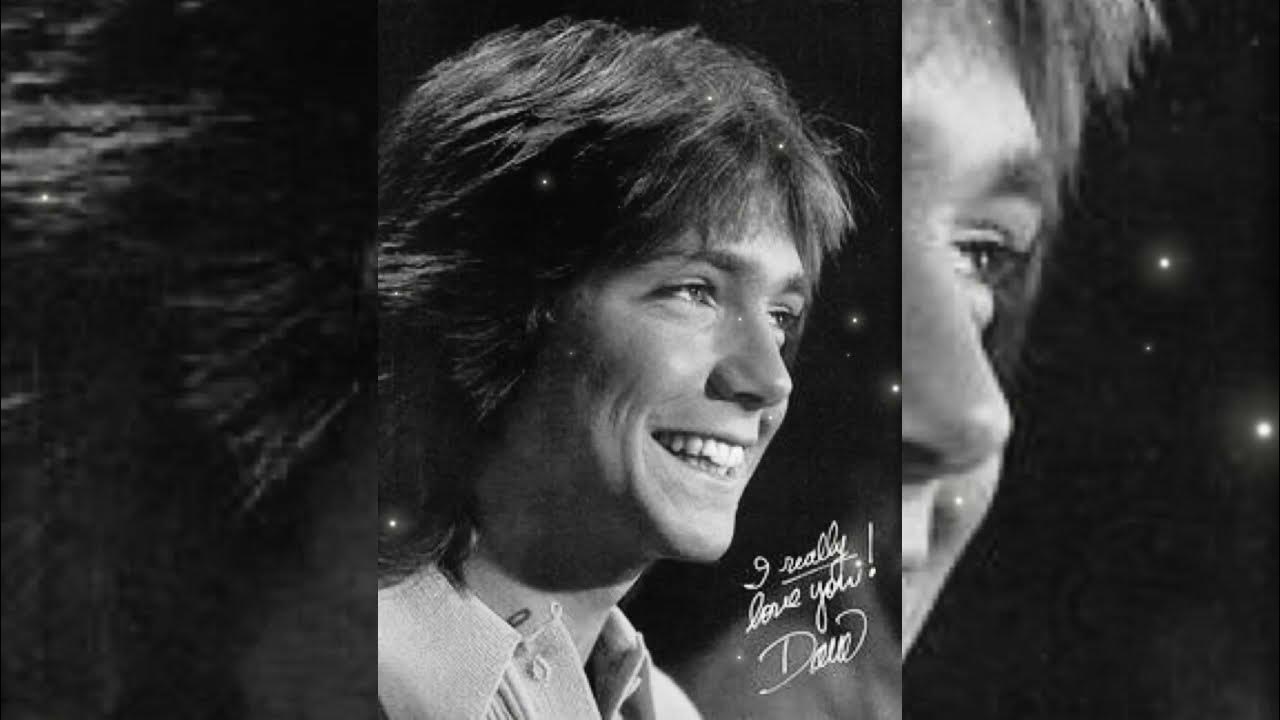
My Christmas Card to You began as a warm seasonal gesture from The Partridge Family, but later holiday reissues and reflections on David Cassidy gave it the ache and tenderness of a message saved across time.
Some songs do not change at all, and yet they somehow deepen with every passing decade. My Christmas Card to You is one of those recordings. First heard on A Partridge Family Christmas Card, released in late 1971 on Bell Records, it arrived during the height of The Partridge Family phenomenon, when the group’s blend of television charm, polished pop craftsmanship, and David Cassidy’s star power felt almost inseparable from the moment itself. The song was not a charting single in its own right, so its chart story belonged to the album around it. That album became a major seasonal success and rose to No. 1 on Billboard’s special Christmas albums chart, confirming just how powerfully the Partridge brand connected with listeners at the holidays.
But the real story of My Christmas Card to You did not end in 1971. If anything, it grew more meaningful later, when the album returned in holiday reissues and when David Cassidy’s career began to be revisited through retrospectives, documentaries, compilations, and broader conversations about what his voice had meant to a generation. In those later contexts, the song no longer sounded merely like a charming seasonal track from a television-era family pop act. It began to feel like something more intimate: a preserved note from youth, wrapped in melody, still reaching outward long after the original moment had passed.
That is part of the song’s quiet strength. Unlike the bright rush of a Christmas novelty number or the full-throated grandeur of a holiday standard, My Christmas Card to You works through gentleness. Its sentiment is direct, almost disarmingly simple. It suggests closeness, gratitude, and a wish to bridge the distance between performer and listener. In 1971, that idea fit perfectly. The Partridge machine was built not only on records and ratings, but on affection. Fans felt they knew these voices. A title like My Christmas Card to You was more than seasonal branding; it played into the language of connection, the old-fashioned ritual of sending greetings, and the comforting illusion that a record could feel personal.
That is why the song could be heard one way in its own time and quite differently in the years that followed. Back then, David Cassidy was the bright center of a cultural storm, his voice carrying both teen-pop excitement and a soft sincerity that made even lighter material feel earnest. On first release, the song likely registered for many listeners as sweet, festive, and emotionally uncomplicated. Yet later reissues stripped away some of that immediate cultural frenzy. Once the posters faded, once the television schedule no longer defined the song, what remained was the voice itself, the phrasing, the innocence, and the strange poignancy of hearing a young performer send warmth into the future without ever knowing who would still be listening decades later.
That is where reissue culture matters. Holiday reissues often do more than keep old music available; they change the frame through which the music is heard. A seasonal LP from 1971, rediscovered on CD, in digital libraries, or in nostalgia-driven Christmas playlists, is no longer competing inside the same commercial world that produced it. It becomes archival, almost domestic again. The listener meets it in a quieter room. In that setting, My Christmas Card to You can feel less like product and more like memory. The title itself begins to carry a second meaning. What was once a contemporary greeting starts to sound like an unopened envelope from another era.
David Cassidy retrospectives added still another layer. Any serious look back at his career eventually has to acknowledge the tension between image and person, between mass adoration and the private cost of being turned into a symbol of youth. Without forcing that tension onto the song, it inevitably colors how later listeners hear him. On retrospectives, his early recordings are no longer just snapshots of fame at full speed. They become evidence of a real musical gift, of warmth under pressure, of charm shaped by extraordinary demands. In that light, My Christmas Card to You gains a delicacy that may not have been fully apparent in 1971. It begins to sound like a moment of sincerity preserved inside one of pop culture’s busiest machines.
There is also something especially touching about the song’s place within A Partridge Family Christmas Card as an album. Holiday records often rely on familiarity, offering listeners songs they already know. But a title piece like My Christmas Card to You gives the album its emotional identity. It says this is not only a collection of Christmas sounds; it is a gesture, a seasonal offering, a little package of warmth. That idea may have seemed modest then. Today, it feels surprisingly durable. The song still carries the cozy textures of early-1970s pop, yet it also holds a kind of emotional afterglow that later decades have only intensified.
What makes the song endure is not dramatic heartbreak or grand lyrical revelation. It is restraint. It is the way a simple holiday sentiment can gather meaning as the years accumulate around it. Many seasonal recordings survive because they are festive. This one survives because it feels human. Through holiday reissues, it kept returning. Through David Cassidy retrospectives, it kept being re-heard. And with every return, My Christmas Card to You seemed to say a little more than it did before.
In the end, that may be the loveliest thing about it. A song born in the glow of 1971 television-pop success has outlasted the frenzy that first surrounded it. What remains is a gentle performance, a beautifully fitting title, and the sense that some recordings do not simply revive nostalgia; they deepen it. Heard now, My Christmas Card to You feels like both a holiday song and a time capsule, one that carries the voice of David Cassidy and the spirit of The Partridge Family with far more tenderness than anyone could have measured when the album first reached the top of the Christmas chart.
