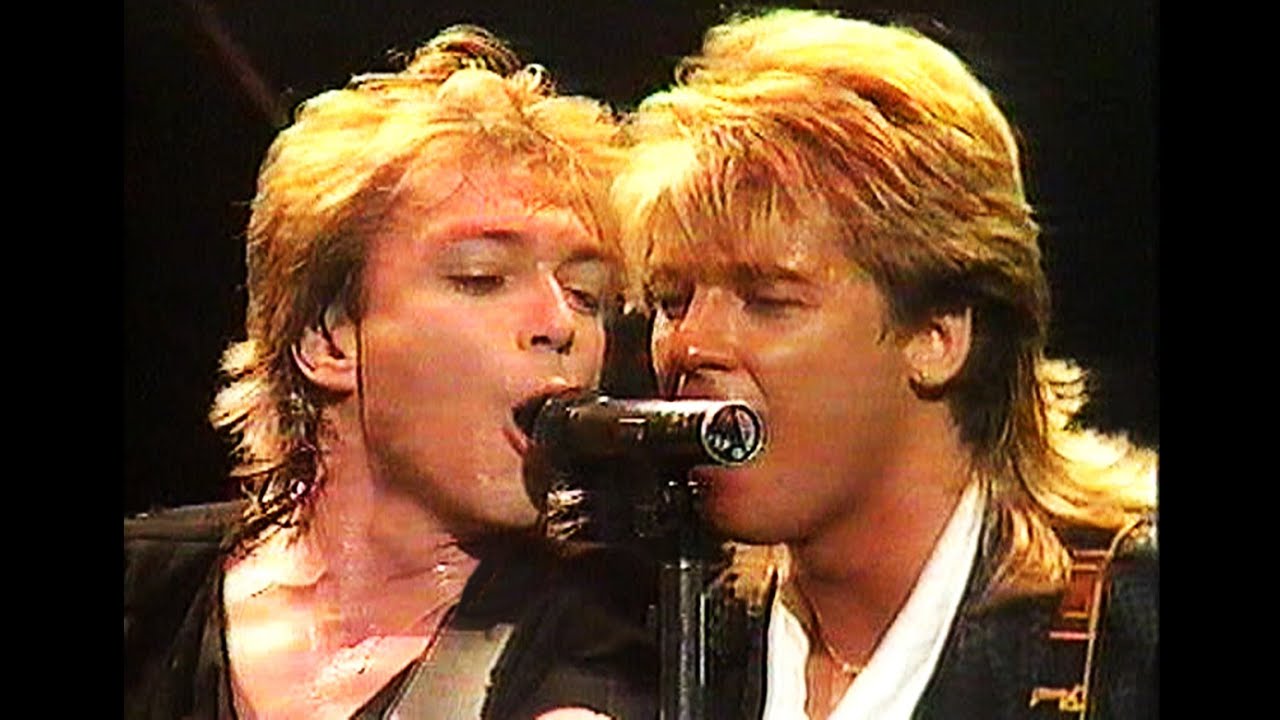
The Partridge Family took a bright early-60s pop standard and turned it into a tender 1972 ache, with David Cassidy giving Breaking Up Is Hard to Do a bruised sincerity that still surprises listeners.
There is a special kind of surprise that comes when a song you thought you understood suddenly reveals another life inside it. That is exactly what happened when The Partridge Family recorded Breaking Up Is Hard to Do in 1972. The song had already been part of American pop memory for a decade, thanks to Neil Sedaka and Howard Greenfield, whose 1962 original went all the way to No. 1 on the Billboard Hot 100. In its first life, it was catchy, sprightly, and deceptively cheerful, the kind of heartbreak song that danced while it hurt. But the Partridge Family remake did something more delicate. Slowed down and softened, it exposed the sadness that had always been hiding beneath the melody. Released as a single in 1972, it climbed to No. 28 on the Billboard Hot 100, not one of the group’s biggest chart triumphs, but one of their most revealing records.
That chart position tells only part of the story. If anything, the modest peak may be one reason the record has long been underrated. It was not a novelty, not a throwaway television tie-in, and not merely a familiar tune recycled for young fans. It was a genuine reinterpretation. Long before Neil Sedaka himself returned with his own slower hit version in 1975, The Partridge Family had already proved that this song could live as a ballad. That matters. It means the 1972 recording was not simply imitating an established sad arrangement. It was finding the ache for itself.
Much of that emotional charge comes from David Cassidy. By 1972, he was one of the defining teen idols of the era, famous through television, magazines, sold-out concerts, and the impossible intensity of public attention. It would have been easy for a performance like this to feel packaged, polished, and safe. Instead, Cassidy sings as if he understands the lyric’s hesitation. He does not overplay the pain. He never pushes too hard. That restraint is exactly why the record works. He sounds young, but not childish; wounded, but trying to stay composed. There is a slight tremble in the emotional posture of the performance, a feeling that the singer is discovering, in real time, that the end of a romance is not dramatic in the way movies promise. It is quieter, more embarrassing, more confusing than that. The tenderness in Cassidy’s voice gives the song its tension.
And tension is the key word here, because this record sits at a fascinating crossroads. The Partridge Family came from a television world built on warmth, humor, and family-friendly brightness. Yet behind that image, the records were cut with serious craft. Producer Wes Farrell and top Los Angeles studio musicians gave the group a polished, radio-ready sound that was far stronger than many critics of TV pop wanted to admit. On paper, this version of Breaking Up Is Hard to Do might have seemed like another smart commercial move: take a proven old hit, update it for early-70s pop, let the star carry it home. But the finished track carries more feeling than that formula suggests. The arrangement leaves space for the lyric. The softer tempo invites reflection. Instead of racing past the hurt, the record lingers inside it.
That lingering changes the meaning of the song. In the 1962 original, heartbreak is real, of course, but it is wrapped in bounce and rhythm. In the 1972 remake, the words suddenly sound less like a pop slogan and more like a confession. The title itself becomes less tidy, less catchy, and more painfully literal. Breaking up really is hard to do. Not glamorous. Not clean. Not theatrical. Just hard. The Partridge Family version understands that emotional truth in a way many polished pop records never quite manage. It does not shout its sadness. It lets the sadness settle.
What also gives the recording its lasting power is the contrast between image and feeling. Viewers who knew David Cassidy as the smiling center of a sunny TV phenomenon may not have expected this degree of vulnerability. That contrast now feels essential to the song’s afterlife. The performance captures a moment when youth culture, pop commerce, and personal emotion briefly met in a convincing way. Cassidy was not singing from the weathered perspective of an older torch singer. He was singing from the emotional edge of youth itself, where every romantic ending feels absolute for at least one long night. That gives the record a lived-in immediacy. It sounds like someone trying to keep his voice steady while the world shifts under him.
Listening to it now, the song also stands as a quiet corrective to the old habit of dismissing television-connected pop as lightweight. The Partridge Family certainly knew how to deliver glossy, accessible hits, but this track shows something deeper: interpretation, mood, and emotional intelligence. There is nothing flashy about the performance, and perhaps that is why it has endured for listeners willing to hear it clearly. It does not need irony, camp, or retro novelty to survive. It survives because the feeling is there.
So why did this 1972 remake hit harder than expected? Because it found the hidden center of a famous song and trusted it. Because David Cassidy brought just enough fragility to make the words believable. Because beneath the bright brand name of The Partridge Family was a record willing to admit that heartbreak rarely arrives with grand gestures. Sometimes it arrives in a careful vocal, a slowed tempo, and the strange realization that a song from the past has suddenly become your own. That is why this version still lingers. It turned a familiar old hit into a moment of real emotional weather.
