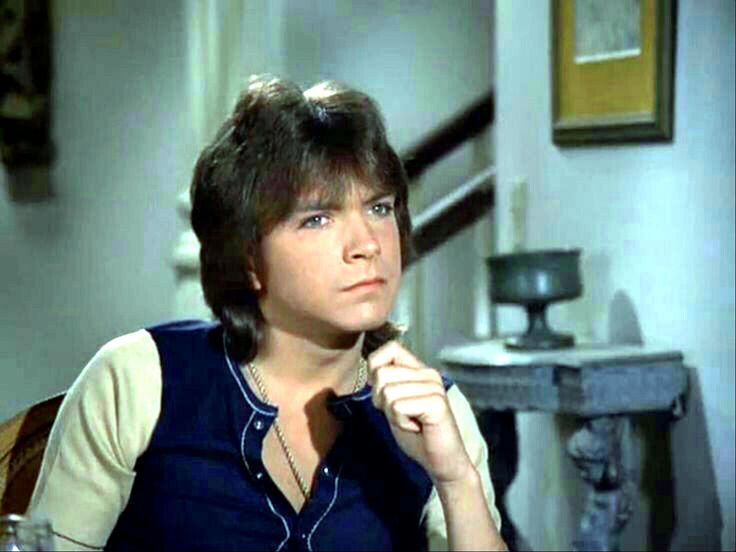
A bright 1971 pop hit with a lonely ache underneath, Doesn’t Somebody Want to Be Wanted gave David Cassidy one of his most recognizable performances—and one of his most conflicted.
There are songs that sound cheerful until time teaches us how to hear them differently. Doesn’t Somebody Want to Be Wanted is one of those records. Released in 1971 by The Partridge Family, with David Cassidy on lead vocal, it arrived during the full rush of teen-pop fame and climbed to No. 6 on the Billboard Hot 100 in the United States. In Canada, it went all the way to No. 1. On paper, it was another polished success from a television phenomenon. In feeling, though, it carried something more vulnerable: a plainspoken hunger to be chosen, noticed, loved, and held onto.
That emotional simplicity was a large part of its power. Pop music has always had room for cleverness, but this song works because it does not hide behind cleverness. Its title alone sounds like a sigh from someone trying to smile through disappointment. Beneath the bright production, there is a remarkably human ache. That is why the song has lasted. It was catchy enough for radio, but its longing was deep enough to outlive the moment that made it famous.
The record appeared on the 1971 album Up to Date, one of the key releases from the extraordinary commercial run of The Partridge Family. Written by Wes Farrell, Tom Bähler, and Danny Janssen, and produced by Farrell, the song was built for the airwaves of its day: quick, melodic, direct, and instantly memorable. Yet even among the bright, efficient pop craftsmanship surrounding it, this single stood out because David Cassidy gave it a voice that sounded both eager and wounded. He was not merely singing a hook; he was giving shape to the uncertainty inside it.
And then there was the spoken section—the part many listeners remember at once, and the part that has become central to the song’s legend. Cassidy later made no secret of the fact that he disliked it. He felt awkward about having to speak those lines, and in later years he spoke of the record with a certain frustration because that moment did not reflect the kind of artist he hoped to be taken for. That tension has only made the song more fascinating. Fans embraced a part of the record that its most visible voice never fully loved. In a strange way, that contradiction mirrors the song itself: a public triumph wrapped around a private discomfort.
By 1971, David Cassidy was becoming far more than the photogenic star at the center of a hit television franchise. He was turning into a cultural force, a young performer whose face was everywhere and whose voice was carrying millions of adolescent hopes through transistor radios and turntables. But fame often asks for simplification. It turns complicated people into symbols. Doesn’t Somebody Want to Be Wanted sits right in the middle of that paradox. It was sold as irresistible pop, yet it hints at the loneliness that can exist even in the middle of adoration. That may be one reason it feels richer now than it did at first listen.
The song’s meaning has only deepened with age. On the surface, it is about romantic yearning, the familiar plea of someone waiting to be loved back. But its emotional reach is wider than that. It also speaks to anyone who has ever felt overlooked in a crowded room, anyone who has carried a brave face while quietly wondering if they matter as much as they hope they do. The lyric does not decorate that feeling. It states it almost bluntly. And sometimes blunt truth is what lingers longest.
Musically, the record belongs to that golden seam of early-1970s American pop in which television visibility, studio craft, and teenage devotion all met in one place. The arrangement is crisp and radio-friendly, the melody immediate, the chorus impossible to forget. But what prevents it from becoming disposable is the emotional center of the performance. Cassidy’s voice, even within the highly managed world of The Partridge Family, could suggest restlessness. There was always a little more urgency there than the packaging around him could fully contain.
That is why the song still invites reflection. It represents the moment when David Cassidy was helping define a generation’s pop dreams, while also beginning to feel the limits of the image built around him. Listeners heard a bright anthem of wanting to be loved. He heard some of the machinery of teen-idol fame pressing in on him. Both readings are true, and the song survives because it can hold both truths at once.
In the end, Doesn’t Somebody Want to Be Wanted remains more than a hit single from a beloved era. It is a record where commercial polish and genuine yearning meet in the same three minutes. It reminds us that some of the most enduring pop songs are not the ones with the deepest metaphors, but the ones brave enough to say the simplest thing out loud. And when David Cassidy sang that title, even in a format he sometimes resisted, he gave that simple ache a voice people never forgot.
