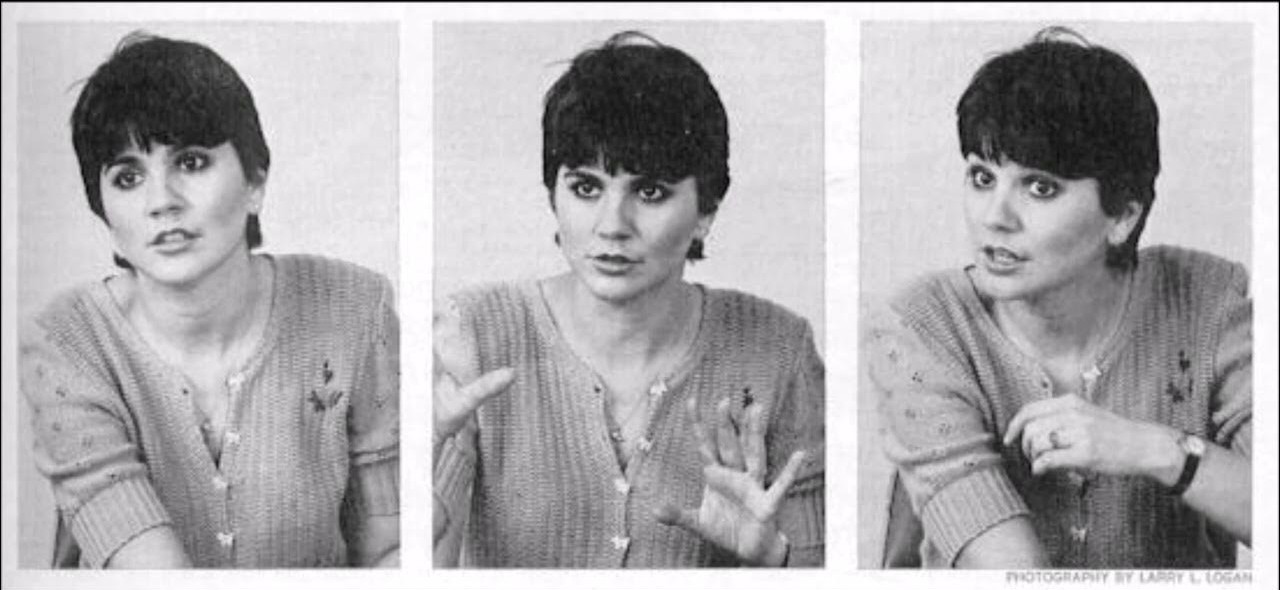
Be My Baby in Linda Ronstadt’s hands became more than a beloved old hit—it became a grown woman’s longing wrapped in the sound of memory, devotion, and ache.
There are some songs that arrive already wrapped in legend, and “Be My Baby” was one of them long before Linda Ronstadt ever sang a note of it. First made famous by The Ronettes in 1963, the song had that rare quality of seeming untouchable: the thunder of the drums, the grand ache in the melody, the dreamlike pull of young love hanging in the air. And yet when Ronstadt recorded it for her 1978 album Living in the USA, she did not treat it like a museum piece. She stepped inside it, lived in it, and made it sound as if the promise and vulnerability at the center of the song had followed her all the way into adulthood.
That is part of what made her version so striking. Released as a single, “Be My Baby” climbed to No. 6 on the Billboard Hot 100 in early 1979, proving that this was not simply an affectionate revival of an old favorite. It was a major hit in its own right. The parent album, Living in the USA, also reached No. 1 on the Billboard 200, a reminder of just how powerfully Ronstadt connected with listeners in that era. She was already one of the defining voices of the 1970s, but this performance showed something special even by her standards: a singer honoring the past without losing her own identity in it.
The story behind Ronstadt’s recording is inseparable from her deep musical instincts. She had an extraordinary ability to move between styles—country-rock, pop, rhythm and blues, torch songs, traditional material—while still sounding unmistakably like herself. That was never a small gift. Many singers can cover a classic; far fewer can make listeners hear it differently. On “Be My Baby”, Ronstadt did exactly that. She kept the emotional architecture of the original intact, but her voice carried a different kind of knowing. Where the youthful excitement of the early 1960s version felt breathless and immediate, Ronstadt’s reading added gravity, tenderness, and a touch of loneliness. It still shimmered, but it also lingered.
The song itself was written by Jeff Barry, Ellie Greenwich, and Phil Spector, and it remains one of the defining achievements of the girl-group era. By the time Ronstadt recorded it, the tune had already become part of American pop memory. That is precisely why her success with it matters. She was not introducing an obscure number to a new audience. She was taking one of the most recognizable love songs of its generation and daring to sing it after the echo of history had settled around it. That takes taste, confidence, and emotional intelligence.
What makes Ronstadt’s version endure is that she understood the emotional paradox at the center of the song. The words are direct, almost innocent: a plea for closeness, for chosen love, for the comfort of being wanted. But beneath that simplicity lies a trembling uncertainty. Every time the singer asks for devotion, there is the faint fear that it may not be given. Ronstadt was especially gifted at finding that ache. She could sing longing without exaggeration. She could make vulnerability sound dignified. That is why so many of her best recordings still feel intimate decades later. They do not perform emotion; they reveal it.
There is also something deeply nostalgic about Ronstadt choosing this song at that moment in her career. By the late 1970s, popular music had changed enormously from the world that first produced “Be My Baby”. Tastes had shifted, production styles had evolved, and the innocence often associated with early-1960s pop had long since been complicated by the years. Yet Ronstadt seemed to understand that great songs survive those changes because their emotional truth does not age out. In her voice, the song became a bridge between eras. It carried the romance of old transistor-radio memories, but it also held the deeper weather of experience.
That may be the real meaning of Linda Ronstadt’s “Be My Baby”. It is not merely a cover, and it is not simply a nostalgic nod backward. It is an act of musical faith: faith that a song born in one generation can still speak powerfully in another, and faith that tenderness never truly goes out of style. Ronstadt did not try to outdo the mythology of the original. She did something wiser. She let the song pass through her own voice, and in doing so she gave it a new emotional season.
For listeners who came to Ronstadt through her great run of 1970s hits, this recording remains a beautiful example of why she mattered so much. She had the power to make a familiar song feel freshly personal. She could take something already loved and uncover another shade inside it. And when she sang “Be My Baby”, what emerged was not just memory, but memory transformed—warmer, sadder, richer, and perhaps even more human than before.
