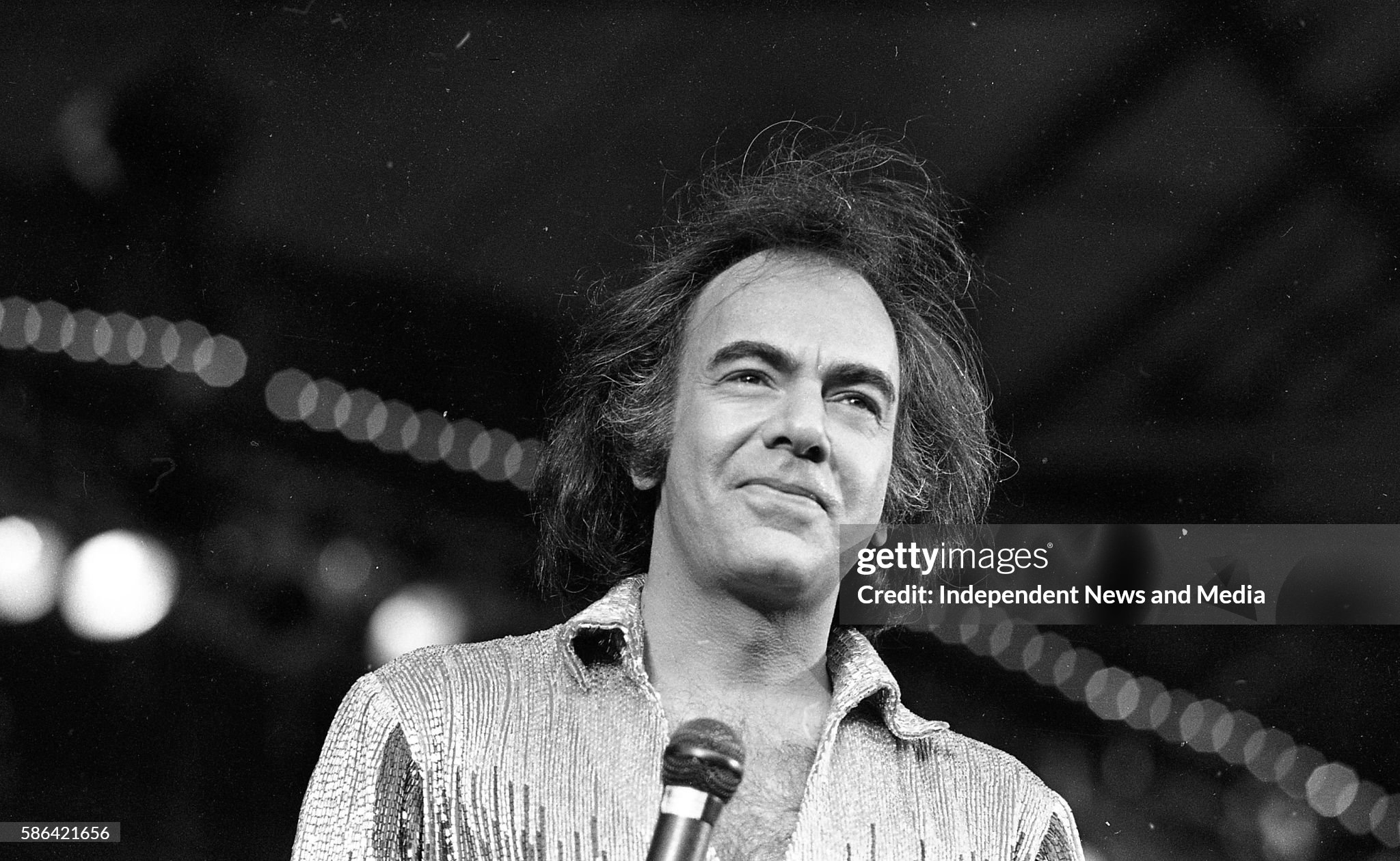
Forever in Blue Jeans may sound light on its feet, but Neil Diamond was really singing about something that lasts: love, warmth, and ordinary life outliving money every single time.
There was something wonderfully disarming about Neil Diamond releasing “Forever in Blue Jeans” in 1979. Issued as a single from his 1978 album You Don’t Bring Me Flowers, the song rose to No. 20 on the Billboard Hot 100 and reached No. 2 on Billboard’s Adult Contemporary chart. Those numbers confirm that it connected, but they do not fully explain why it has endured. This was not just another radio hit from a major artist in a golden commercial run. It was a song with the ease of conversation and the wisdom of someone who had already learned that glamour fades faster than affection.
By the time this single arrived, Neil Diamond was already one of the defining popular voices of his era. He could deliver sweeping drama, aching confession, and singalong grandeur better than almost anyone. Yet “Forever in Blue Jeans” took a different route. It did not lean on heartbreak in the grand theatrical sense. It did not chase luxury, polish, or distance. Instead, it came walking in with a grin, a steady beat, and a message rooted in plain living. That difference matters. The song felt close to the ground, and listeners could hear that immediately.
The writing credit is shared by Neil Diamond and guitarist Richard Bennett, and that partnership helped give the song its unforced, natural swing. One of its most memorable lines, “Money talks, but it don’t sing and dance, and it don’t walk,” carries the entire philosophy of the record in a single breath. That line is witty, yes, but it is also revealing. “Forever in Blue Jeans” is not anti-success, and it is certainly not bitter. It simply refuses to confuse wealth with joy. Diamond sings as if he is letting us in on a truth too many people learn too late: comfort is not always the same thing as meaning.
That is why the title has always been more important than it first appears. Blue jeans in this song are not merely clothing. They stand for a life untouched by pretense. They suggest everyday affection, familiar habits, and the kind of togetherness that does not need to impress anyone. In lesser hands, that idea might have turned sentimental. In Neil Diamond’s hands, it becomes affectionate, confident, and a little mischievous. He does not plead the point. He enjoys it. That ease is part of what makes the song so charming decade after decade.
Musically, the record has a loose, rootsy pulse that suits the lyric perfectly. There is a country-pop friendliness in the arrangement, but also a touch of rock-and-roll snap in the way it moves forward. Diamond’s vocal is strong without feeling overworked. He sounds relaxed, even playful, but never careless. He knows exactly where the emotional center is. He lets the words land with a smile, which only makes their meaning feel deeper. This is one of those performances that reminds us how effective he could be when he stopped reaching for the rafters and instead sang straight into the room.
The timing also helped. Coming from You Don’t Bring Me Flowers, an album already associated with one of Diamond’s most famous and emotionally heavy songs, “Forever in Blue Jeans” offered another side of the same artist. Where the title track carried longing and separation, this song carried companionship and perspective. It felt like a release of tension. Listeners who knew Diamond for big feeling heard that he could still move them while sounding casual, grounded, and warmly amused by the world.
What keeps the song alive is the fact that its message has never become outdated. In every era, there comes a point when people begin to understand that the shiny things they chased do not always stay bright. “Forever in Blue Jeans” speaks to that realization without sounding sour or disappointed. It is a celebration, not a complaint. It says that a simpler life, shared with the right person, may carry more richness than any display of status ever could. That idea was appealing in 1979, and it is still appealing now because it speaks to something steady in human nature.
And perhaps that is the secret of the song’s afterglow. It does not demand to be called profound, yet it leaves behind a quietly profound feeling. Neil Diamond took a phrase that could have remained casual and turned it into a lasting image of loyalty, ease, and emotional common sense. In a catalog full of towering ballads and unforgettable choruses, “Forever in Blue Jeans” stands apart because it sounds so comfortable in its own skin. It reminds us that some songs do not last because they are grand. They last because they tell the truth in a way that feels warm, lived-in, and instantly recognizable.
That is why the record still draws people back. Beneath its handclaps, its easy swagger, and its radio-friendly sparkle, there is a durable little conviction: money may impress, but it cannot sing, dance, walk beside you, or make a life feel shared. Neil Diamond knew how to dress that conviction in melody, rhythm, and personality. The result was a hit in its time, but more importantly, a song that still sounds like advice worth keeping.
