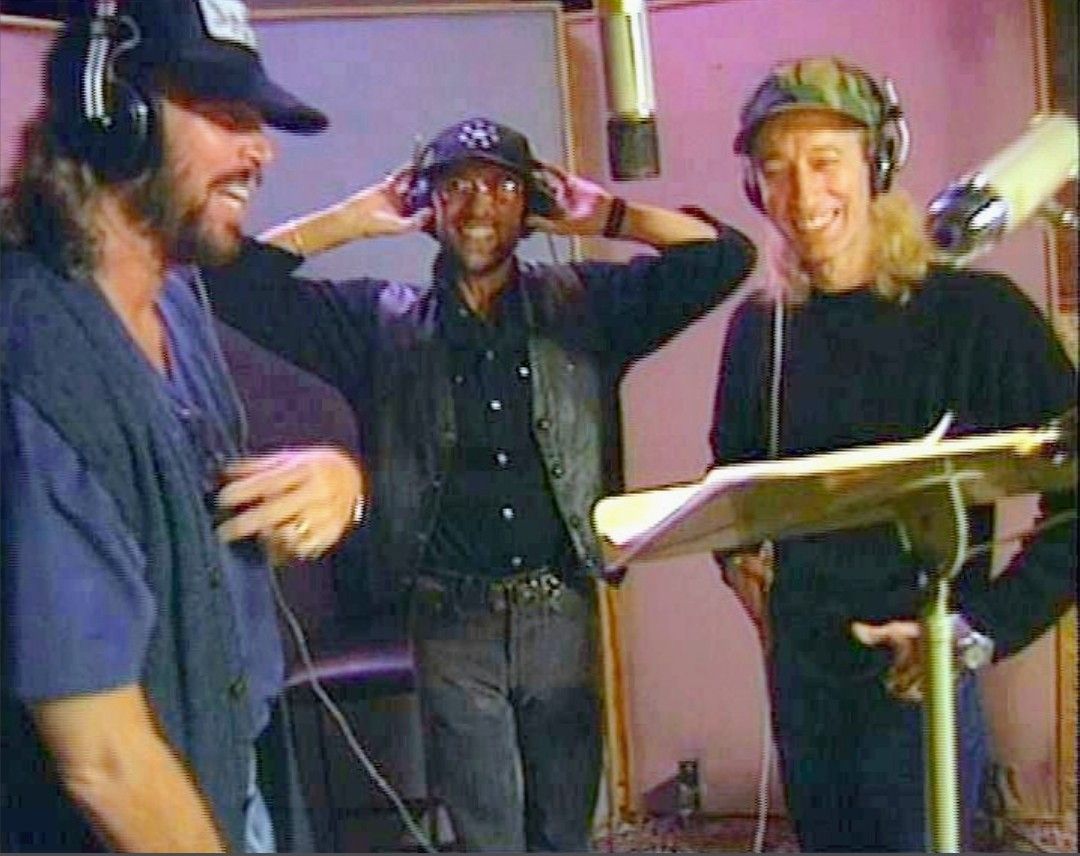
A forgotten jewel from Odessa, I Laugh in Your Face shows the Bee Gees turning wounded pride into something elegant, theatrical, and quietly devastating.
I Laugh in Your Face was never one of the Bee Gees songs pushed as a major hit single, and that matters when telling its story. Because it was issued as an album track rather than a stand-alone chart single, it did not earn its own singles-chart placing at the time. Its true home was the 1969 double album Odessa, one of the most ambitious records the group ever made, and that album reached No. 10 on the UK Albums Chart. So while this song did not arrive with the public force of Massachusetts or I Started a Joke, it came into the world inside a much larger artistic statement, one wrapped in velvet, melancholy, and grand late-1960s ambition.
That is part of what makes I Laugh in Your Face so intriguing. The title sounds harsh, almost cold, as if the song will sneer its way through a broken romance. But the deeper feeling is more complicated than that. Like many of the finest early Bee Gees recordings, the song carries an emotional double life. On the surface there is defiance. Beneath that surface there is injury, self-protection, and the unmistakable ache of someone trying to hold dignity together after disappointment. It is not the laughter of joy. It is the laughter of someone refusing to collapse in front of the person who caused the hurt.
By the time Odessa arrived, the Bee Gees were already far more than hitmakers. Barry Gibb, Robin Gibb, and Maurice Gibb had spent the previous years building one of the richest songbooks in British pop, balancing melody, close harmony, and a dramatic sense of mood that often felt closer to chamber music than to ordinary radio fare. Before the dance-floor era that would later define so much of their public legend, they were a group of extraordinary young writers making records full of rain, memory, heartbreak, and strange beauty. I Laugh in Your Face belongs very much to that world.
The broader backstory of the song is really the backstory of Odessa itself. Recorded during a period when the group was reaching for a larger, more ornate sound, the album was shaped by lush arrangements and the guiding hand of Bill Shepherd, whose orchestral writing helped give the Bee Gees their baroque grandeur. The record was also famously presented in a red flocked sleeve, a detail that said everything about its scale and confidence. Yet behind that beauty there was strain. The group was creating on a grand canvas, but tensions were growing, and the conflict surrounding the album era would soon help lead to Robin Gibb temporarily leaving the group. That atmosphere gives even the lesser-known songs from Odessa an added emotional charge. They do not sound casual. They sound like work made at a moment when everything felt heightened.
Within that setting, I Laugh in Your Face feels almost like a private wound dressed in formal clothes. Musically, it carries the refinement that marked the Bee Gees at their late-1960s peak: careful structure, expressive melody, and that sense that every phrase is trying to say a little more than the words alone can manage. The song does not need a huge chorus or a chart-sized hook to leave its mark. Its strength lies in atmosphere and emotional shading. It draws the listener into a room where pride and pain are standing side by side, each pretending not to notice the other.
That is also where the meaning of the song becomes especially powerful. The title suggests mockery, but the emotional truth feels closer to wounded resistance. This is not a song about winning. It is a song about surviving the moment after disillusionment, when a person discovers that scorn can become a mask for sorrow. The Bee Gees were masters of that contradiction in their early years. Again and again, they wrote songs in which tenderness and bitterness sat only inches apart. In I Laugh in Your Face, that tension gives the song its aftertaste. It lingers because it never settles into one simple emotion.
For listeners who know the Bee Gees mainly through their global 1970s success, songs like this can come as a revelation. They remind us that the group had already built a remarkable emotional vocabulary long before the era of disco reshaped their image in popular culture. On Odessa, they were still exploring the Victorian, literary, orchestrated side of their imagination, making songs that seemed to float between music hall, art-pop, and intimate confession. I Laugh in Your Face may not be the album’s most famous piece, but it is one of those tracks that helps explain why devoted admirers return to this period so often. It contains the craftsmanship, the sadness, and the theatrical restraint that made the early Bee Gees such singular artists.
There is something deeply moving about songs that were never overplayed, never turned into oldies-radio wallpaper, never worn smooth by familiarity. They wait quietly until someone finds them again. I Laugh in Your Face is one of those songs. Heard today, it sounds like a reminder that the Bee Gees were never simple chroniclers of romance. They understood pride, humiliation, memory, and emotional performance. They knew that sometimes the hardest thing in love is not crying in public. It is smiling just enough to keep your heart from showing.
And that may be why this overlooked Odessa track still carries such force. It captures the Bee Gees at a moment of immense artistry, when their music was ornate but never empty, graceful but never emotionally safe. I Laugh in Your Face may not have climbed the singles charts, but it remains one of those hidden album moments that tells a deeper truth about the group: even in their most polished work, they knew how to let the crack in the voice become the whole story.
