
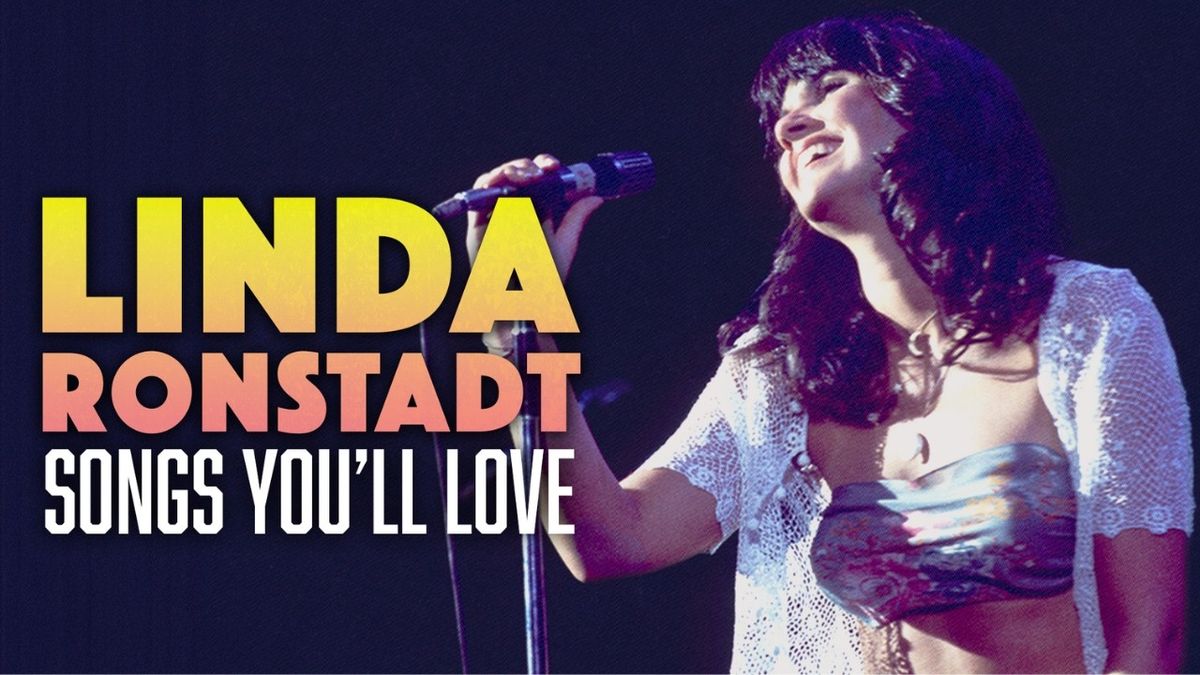
O Come, O Come, Emmanuel becomes, in Linda Ronstadt‘s voice, not merely a Christmas carol but a deeply human meditation on waiting, loneliness, and the stubborn hope that comfort will come.
There are Christmas recordings that sparkle, and there are Christmas recordings that seem to kneel. Linda Ronstadt‘s version of O Come, O Come, Emmanuel, from her 2000 holiday album A Merry Little Christmas, belongs to the second kind. It does not rush toward celebration. It lingers in the long shadow before joy, in that old and difficult space where faith is less about triumph than endurance. That is what gives this performance its quiet power. It was not released as a major pop single, and it did not become a Billboard Hot 100 event in the way many seasonal crossover songs do. Its impact was subtler than that. It lived where the best holiday music often lives: in returning listeners, dim rooms, December evenings, and hearts that needed something gentler than cheer.
That choice of song mattered. O Come, O Come, Emmanuel is one of the oldest and most solemn pieces in the Christmas canon, rooted in the Latin hymn Veni, Veni, Emmanuel. Its text draws from the ancient O Antiphons of Advent, prayers traditionally sung in the days before Christmas. The familiar English version is most often linked to the 19th-century work of John Mason Neale, while the melody most listeners know came into hymn tradition through Thomas Helmore. In other words, this is not a modern holiday confection. It is a song shaped by centuries of longing. It asks not for glitter, but for arrival. Not for spectacle, but for presence.
That is precisely why Linda Ronstadt was such an affecting artist to sing it. By the time A Merry Little Christmas arrived, she had already traveled farther than most singers ever do in one lifetime. She had conquered rock, country rock, pop, standards, light opera, and traditional Mexican music. Few American voices had moved so naturally between styles while still sounding unmistakably personal. Her gift was never just technical. It was emotional intelligence. She knew how to inhabit a lyric without crowding it, and on O Come, O Come, Emmanuel, that restraint becomes the whole point.
What makes her performance memorable is the absence of excess. Many recordings of this hymn lean heavily into cathedral grandeur or seasonal pageantry. Ronstadt does something more intimate. She allows the ancient sadness of the melody to remain intact. Her phrasing is measured, reverent, and beautifully unforced. Rather than decorating the hymn, she trusts it. The result is a recording that feels close, almost private, as if the listener has stepped into a quieter room away from the noise of the season. It is not sorrowful in a hopeless way, but it understands that hope is most believable when it has passed through darkness first.
The meaning of the song has always been richer than its place in holiday playlists might suggest. The repeated plea to Emmanuel is a plea for nearness. The song speaks to exile, absence, and the ache of waiting for peace that has not yet arrived. That is why it can move people so deeply even outside church settings. One does not have to approach it only as a doctrinal hymn to feel its truth. In human terms, it is about the seasons of life when one waits for healing, for reunion, for relief, for some sign that the coldest stretch will not last forever. Linda Ronstadt seems to understand this instinctively. She does not sing as though she is announcing an answer. She sings as though she has lived inside the question.
There is also something especially fitting about this song within the broader arc of her career. Ronstadt had always been able to project strength, but the strength in her later work often came wrapped in tenderness rather than bravado. On O Come, O Come, Emmanuel, that maturity is unmistakable. She sounds like an artist who no longer needs to impress anyone. She is not chasing a hit, not pushing for drama, not trying to modernize a sacred standard into something trendier than it is. She simply serves the song. That humility gives the recording its dignity.
In a commercial culture that often reduces Christmas music to comfort food, O Come, O Come, Emmanuel reminds us that the season has another emotional language altogether. It is the language of longing before fulfillment, winter before warmth, silence before the answer. Ronstadt’s version honors that older feeling. It recognizes that some of the most meaningful holiday music does not shout happiness but protects hope. There is a world of difference between those two things, and seasoned listeners can hear it immediately.
That is why this performance continues to matter. Not because it was loud, or fashionable, or pushed by chart momentum, but because it carries the kind of truth that survives trends. Linda Ronstadt had one of the most expressive voices in American popular music, and here she uses it with remarkable discipline. She lets the hymn breathe. She lets the waiting remain. And in doing so, she reminds us that sometimes the most comforting songs are the ones willing to admit how long the night can feel.
If there is a hidden grace in Linda Ronstadt‘s O Come, O Come, Emmanuel, it is this: she does not sing Christmas as a finished emotion. She sings it as a threshold. A promise not yet fully seen, but still held onto. That is a harder thing to express, and a more lasting one. Decades later, the recording still feels less like a performance than a companion for anyone who has ever had to wait, quietly and faithfully, for light.
