
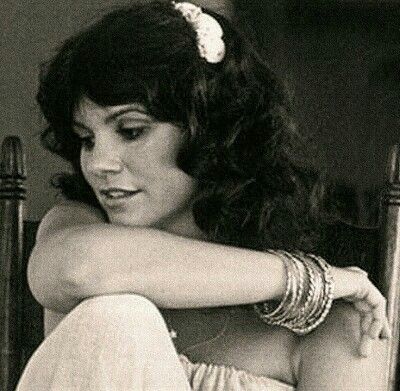
More than a soft-rock hit, Get Closer captured Linda Ronstadt at her most inviting: warm, poised, and quietly radiant, turning a simple plea for connection into one of her most graceful recordings.
Released in 1982 as the lead single from Get Closer, the title track from Linda Ronstadt’s album of the same name, Get Closer became a U.S. Top 30 hit, reaching No. 29 on the Billboard Hot 100. The album itself also made the Billboard 200 Top 40, a solid showing at a time when pop radio was changing quickly and audiences were being pulled toward newer, sharper sounds. Yet that is part of what makes this record so memorable: it did not chase noise. It trusted warmth, melody, and the unmistakable pull of a voice that already belonged to the American songbook.
The song was written by Jon Carroll and produced by Peter Asher, one of the key creative partners in Ronstadt’s finest years on record. It also features James Taylor on harmony vocals, and that detail matters. His presence does not turn the song into a formal duet, but it gives the recording an added gentleness, as if the invitation at the center of the lyric is being answered in real time. There is a kind of emotional ease in the performance, the sound of two artists who understand that tenderness does not need to be overstated to feel true.
By the time Get Closer arrived, Linda Ronstadt had already done what few singers ever do. She had crossed borders without losing herself. She could move from country-rock to torch song, from pop radio to older standards of craft and phrasing, and she did it all with a rare combination of power and vulnerability. Listeners knew her from songs like You’re No Good, Blue Bayou, and When Will I Be Loved, performances where emotion often rose in sweeping waves. But Get Closer offered something more delicate. It was not about dramatic heartbreak or vocal fireworks. It was about nearness, patience, chemistry, and the low-burning electricity of someone asking another person to step just a little closer into the light.
That is the hidden strength of the song. On the surface, it is smooth and accessible, the kind of record that glides rather than shouts. But beneath that polished surface is a deeply mature emotional tone. This is not teenage longing. It is not infatuation dressed up as destiny. Instead, the song feels like the language of grown-up affection: restrained, hopeful, gently persuasive. There is desire in it, yes, but it is framed through trust and invitation rather than grand declaration. That is why it still feels fresh. Get Closer understands that intimacy often begins in quietness.
Ronstadt’s vocal is the heart of everything. She does not oversing the lyric, and that choice is crucial. A lesser singer might have tried to turn the song into a big showcase, stretching every phrase for emphasis. Linda Ronstadt does the opposite. She lets the melody breathe. She leans into the softness of the lines and shapes them with her usual precision, but with a kind of emotional restraint that makes the song glow from within. It is a performance built not on force, but on presence. She sounds confident without becoming distant, tender without becoming fragile. That balance was one of her greatest gifts.
The production on Get Closer deserves appreciation as well. Peter Asher gives the song enough polish to sit comfortably on early-1980s radio, but he never lets it harden into something cold. The arrangement is clean, melodic, and open, leaving space for the voices to do the real work. And when James Taylor enters with those harmonies, the record gains a second emotional color. His voice does not compete with Ronstadt’s. It softens the edges, deepens the atmosphere, and makes the whole performance feel companionable. It is one of those subtle collaborations that listeners may not analyze on first hearing, but they feel it immediately.
In the larger story of Linda Ronstadt’s career, Get Closer occupies a fascinating place. It came after the restless experimentation of Mad Love and just before the dramatic artistic turn that would bring her to the standards of What’s New. In that sense, Get Closer feels like a bridge record, one that carries traces of mainstream pop, singer-songwriter intimacy, and the interpretive elegance that would define her next chapter. It may not be the first song named when people list her towering classics, but that very fact has helped preserve its charm. It remains a song people return to not because it was overplayed, but because it still feels personal.
There is also something unmistakably human about the way the song has aged. Many hits from the early 1980s are tied tightly to their production style, their era, their fashion. Get Closer certainly belongs to its time, but it is not trapped there. Its emotional center is timeless. The wish to close distance between two people, to speak softly instead of dramatically, to let attraction unfold with grace rather than urgency, is something no decade can own. That is why the song still lands. It speaks in a voice that does not grow old.
For admirers of Linda Ronstadt, this recording is a reminder of how much she could say without ever pushing too hard. She did not need a storm to move a listener. Sometimes all she needed was a carefully chosen song, a melody with room to breathe, and the instinct to sing to the heart instead of at it. Get Closer is one of those performances. It is elegant, understated, and full of feeling. And years later, it still carries that rare sensation of hearing someone open a door, not with spectacle, but with warmth.
