
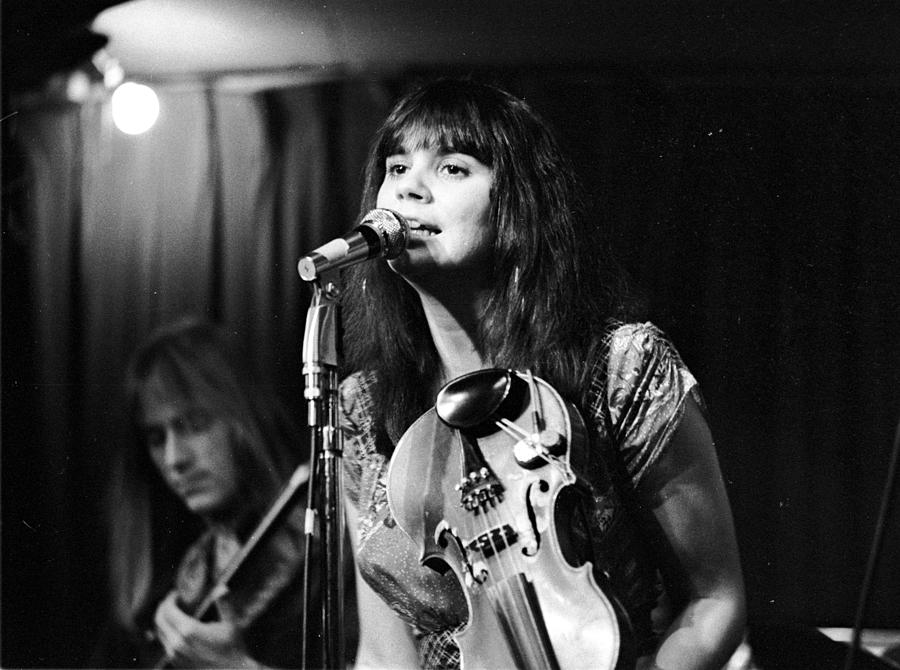
In Linda Ronstadt‘s hands, Cry Me a River is not just a standard about romantic payback. It becomes a low-lit confession, where dignity, memory, and heartbreak all sit at the same table.
When Linda Ronstadt recorded Cry Me a River for her 2004 album Hummin’ to Myself, she was not chasing a hit in the old pop sense. The song was not pushed as a major chart single, but the album itself reached No. 2 on Billboard‘s Top Jazz Albums chart, a reminder that Ronstadt’s gift for interpretation had lost none of its force. By then, she had already lived several musical lives: country-rock firebrand, pop hitmaker, traditional Mexican music champion, and one of the most convincing modern voices ever to step into the world of classic standards. Her reading of Cry Me a River feels so affecting because it carries all of that history inside it.
The song itself already had a long and noble past before Ronstadt touched it. Written by Arthur Hamilton in the early 1950s, Cry Me a River became immortal through Julie London‘s smoky 1955 recording, which reached No. 9 on the Billboard chart in 1956. It is one of the great torch songs of American popular music, built on a line that is almost cruel in its elegance: now that the tables have turned, the one who caused the pain is left to drown in his own sorrow. Over the decades, many singers have treated it as a song of cool revenge. Ronstadt heard something deeper in it. She found not only the sting, but the weariness that comes after the sting has settled into the bones.
That is part of what makes her version so memorable. Linda Ronstadt never sang standards as museum pieces. Even when she approached the Great American Songbook with enormous respect, she brought a living, breathing emotional intelligence to every phrase. On Hummin’ to Myself, she returned to material shaped by jazz, swing, and classic American songwriting, but she did so with a late-career calm that served Cry Me a River especially well. There is restraint in the performance, but it is not emotional distance. Quite the opposite: the feeling is controlled because it is fully understood.
Her earlier collaborations with Nelson Riddle in the 1980s had already shown that this repertoire suited her beautifully. Those albums helped audiences hear what had always been there in Ronstadt’s singing: clarity, phrasing, tenderness, and the rare ability to make a familiar lyric sound freshly wounded. By the time of Hummin’ to Myself, she no longer needed to prove that she belonged in this world. She simply inhabited it. That confidence gives Cry Me a River its mature power. She does not lash out. She does not oversell the bitterness. She lets the lyric breathe, and in doing so, she reveals how sadness and pride can coexist in the same moment.
The meaning of the song has always rested on emotional reversal. Someone once dismissed a lover’s tears; later, when regret comes, the answer is cold and unforgettable: cry me a river. Yet in Ronstadt’s reading, the line does not land as cheap triumph. It sounds like a person who has suffered enough to know that victory after heartbreak is never entirely joyful. That is the genius of her interpretation. She understands that some songs are not about winning at all. They are about surviving with one’s self-respect intact.
Musically, the arrangement supports that feeling with grace. Rather than overpowering the song, the accompaniment leaves room for shade and silence. Ronstadt’s voice moves through the melody with a kind of late-evening elegance, unhurried and deeply attentive to the emotional weight of each turn. She had always possessed a remarkable instrument, but one of her greatest strengths was her refusal to use sheer vocal force where insight would do more. On Cry Me a River, that choice pays off beautifully. The sadness is not theatrical. It is lived-in.
There is also something quietly moving about where this performance sits within the larger Linda Ronstadt story. Many listeners first fell in love with the sheer brightness and drive of her earlier hits, but her standards recordings revealed another side of her artistry, one rooted in patience, nuance, and memory. Cry Me a River belongs to that chapter. It is the sound of a singer who understands that grown-up heartbreak is rarely loud. Often it arrives softly, in recollection, in a line that sounds almost conversational, and that is exactly why it cuts so deeply.
In the end, Ronstadt’s version endures because it respects both the history of the song and the intelligence of the listener. She does not try to erase Julie London, nor does she imitate her. Instead, she adds another emotional color to a classic that has survived precisely because it can bear so many shades of feeling. Her Cry Me a River is tender, poised, and faintly bruised. It reminds us that the greatest interpreters do more than sing old songs well. They return them to us with new weather in them, and somehow, the room feels quieter when they are done.
