
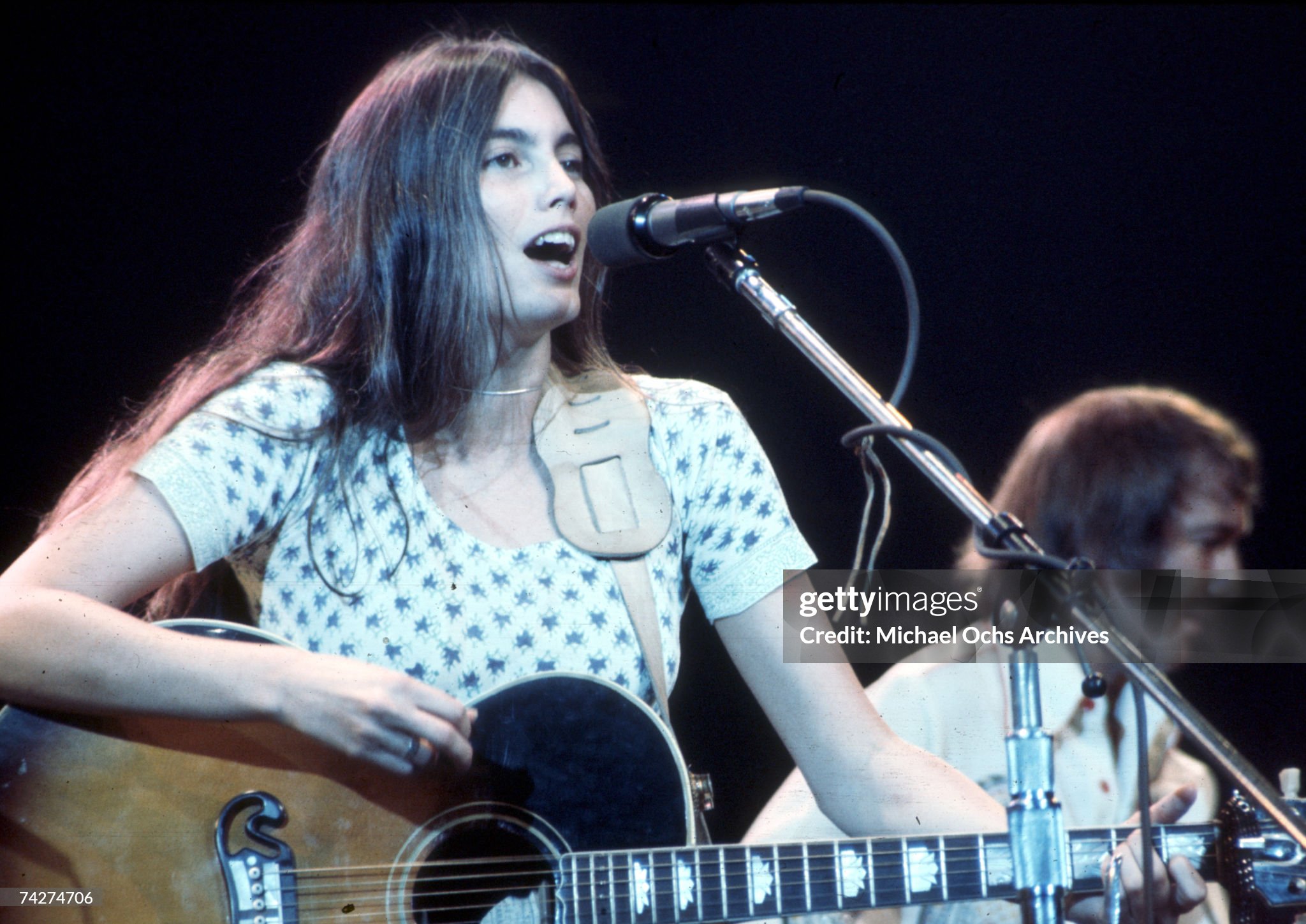
In Emmylou Harris and Heart of Gold, the magic is not in spectacle but in tenderness: a familiar classic becomes a quiet search for grace, honesty, and the kind of love that still matters after all the noise has faded.
Few songs from the early 1970s have remained as beloved, or as emotionally open, as Heart of Gold. First released by Neil Young in 1972 as the lead single from the landmark album Harvest, the song reached No. 1 on the Billboard Hot 100 in the United States and also topped the Canadian chart. It remains Young’s only American No. 1 single, which tells you something important right away: this was never just another album track. It was a defining song, one of those rare recordings that seemed to drift out of the speakers and settle permanently into the lives of listeners. When people connect that song with Emmylou Harris, what they are really hearing is the meeting of two great traditions: Young’s plainspoken yearning and Harris’s gift for making longing sound almost sacred.
It is worth being precise here. Emmylou Harris is not the original artist behind Heart of Gold, and there is no major standalone chart peak to report for a separate Harris hit version the way there is for Young’s 1972 release. The chart story belongs to Neil Young. But songs of this stature do not stay frozen in one voice forever. They travel. They deepen. They gather new shades of feeling each time a great interpreter steps inside them. That is where Harris comes in. Her voice has always carried a remarkable combination of purity and weathered feeling, and when that kind of voice touches a song built on spiritual hunger, the result can feel less like a cover and more like a second life.
The story behind Heart of Gold has become part of its legend. During the period when Young was making Harvest, he was dealing with a back injury that limited how aggressively he could play. That physical condition helped steer him toward a gentler acoustic sound, and in hindsight it seems almost impossible to separate the song from that fragile, unforced mood. The original recording was made in Nashville with Young backed by musicians who understood restraint, and it was further elevated by harmony vocals from James Taylor and Linda Ronstadt. Nothing in the arrangement strains for attention. The harmonica, the acoustic guitar, the unhurried tempo, the slightly worn tone of Young’s voice—everything serves the same emotional truth. The song sounds as if it has been living a long time before we ever hear it.
Its meaning is simple enough to hum and deep enough to spend a lifetime thinking about. On the surface, Heart of Gold is about a search for goodness, sincerity, and human warmth. But beneath that simplicity lies one of the reasons the song has lasted so long: it is not the voice of a young dreamer speaking from innocence. It is the voice of a man who has already wandered, already been disappointed, already seen enough of the world to know how rare real kindness can be. When Young sings, I’ve been a miner for a heart of gold, the image is humble and unforgettable. He is not claiming wisdom. He is digging, still hoping, still trying. That humility is the song’s great strength.
This is exactly why Emmylou Harris feels so naturally connected to it. Across albums such as Pieces of the Sky, Elite Hotel, and later Wrecking Ball, Harris built a career not on forcing songs into her image, but on entering them with empathy. She has always understood that the finest songs breathe best when they are approached with patience. In a Harris interpretation, a lyric does not merely arrive; it lingers. It carries memory with it. That makes Heart of Gold an especially rich fit for her artistry. Where Young’s version can feel like a restless confession from the road, Harris brings a different shade of light: less searching in the dark, perhaps, and more looking back through the dusk.
That difference matters. Neil Young gives the song its plain, almost conversational ache. Emmylou Harris, by contrast, has a way of making even the softest line shimmer with reflection. Her phrasing can turn a familiar lyric into something that feels newly fragile. The song’s central longing does not disappear in her hands; it becomes more intimate, more autumnal, more aware of time. If Young sounds like a wanderer who cannot stop moving, Harris often sounds like someone who knows exactly what was lost and exactly why the search continues anyway. That emotional shift is subtle, but it is powerful, and it explains why certain classic songs seem to bloom again when sung by the right artist.
Another reason the song endures is that it never pretends to solve the ache it describes. Heart of Gold offers no grand revelation, no dramatic turnaround, no easy answer. It simply stays with the longing. That honesty has always been at the center of Emmylou Harris as well. Her greatest performances are never about vocal gymnastics or theatrical effect. They are about truth in tone. They are about letting the listener feel the space around the words. In a culture that often mistakes volume for depth, both Harris and this song remind us that gentleness can carry enormous emotional weight.
There is also something deeply moving about hearing a song like this through the lens of years. The famous line about getting older lands differently now than it did in 1972. Time has changed the listener as much as it has changed the song. That is one reason Heart of Gold continues to reach across generations. It speaks to anyone who has searched for goodness in people, in love, in memory, in faith, or even in themselves. And when the song is connected with a voice like Emmylou Harris, that search feels even more human. Less like a chart-topping hit, more like a private companion.
So yes, the historical chart triumph belongs to Neil Young: No. 1 on the Billboard Hot 100, a signature moment from Harvest, and one of the most enduring singer-songwriter recordings of its era. But the emotional afterlife of the song is larger than the chart. That is where artists like Emmylou Harris matter so much. She reminds us that the best songs do not age out of relevance. They deepen with every honest voice that touches them. And Heart of Gold, in all its humility and ache, still feels like one of those songs that knows us a little better each year.
