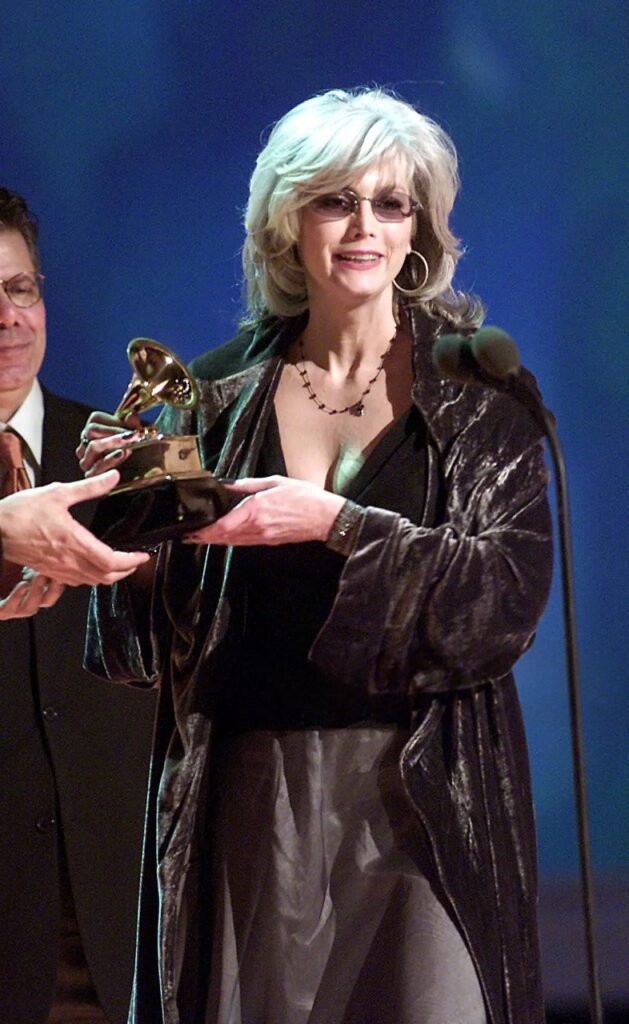
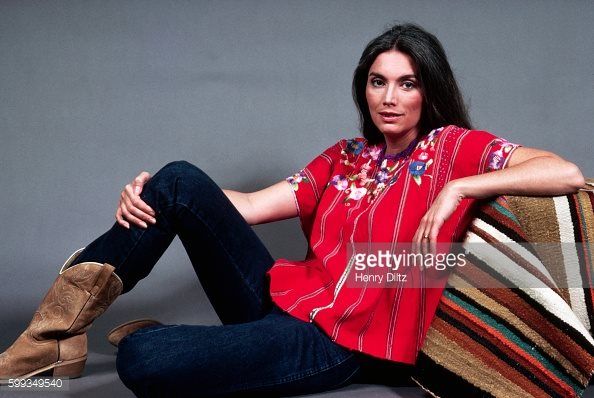
In “Even Cowgirls Get the Blues”, Emmylou Harris sings a hard truth with breathtaking grace: even the most restless, self-possessed souls carry their own private sorrow.
There are songs that arrive like a memory, and then there are songs that seem to understand memory itself. “Even Cowgirls Get the Blues”, recorded by Emmylou Harris for her 1979 album Blue Kentucky Girl, belongs to that second kind. It is light on its feet, almost easygoing on the surface, yet beneath that gentle motion lies one of country music’s oldest and most enduring truths: freedom and loneliness have always ridden close together.
One important detail deserves to come early. Unlike some of Harris’s biggest radio hits, “Even Cowgirls Get the Blues” was not released as a major charting single in the United States, so it did not earn its own Billboard Hot Country Songs peak. But the album that carried it, Blue Kentucky Girl, performed strongly and reached No. 6 on Billboard’s Top Country Albums chart. That matters, because this song lives in the kind of space where chart numbers tell only part of the story. It may not have been one of the era’s headline singles, but it became something just as lasting: a song listeners returned to, lived with, and felt more deeply as the years passed.
The song was written by Rodney Crowell, one of the finest songwriters to move through Harris’s circle during the 1970s. Crowell had been closely connected to Emmylou Harris and her musical world, and she had a rare instinct for recognizing songs that carried both poetic detail and emotional plainspokenness. That instinct served her beautifully here. Crowell’s title was borrowed from the cultural atmosphere of the time, echoing the phrase made famous by Tom Robbins and his 1976 novel Even Cowgirls Get the Blues, but the song itself is its own creation. It is not a retelling of the novel. Instead, it uses the image of the “cowgirl” as a symbol of independence, drift, romance, and self-invention.
And that is where the song cuts deepest. The central line is simple, almost conversational: even cowgirls get the blues, sometimes. In lesser hands, that might have become a novelty phrase, or a wink. In Harris’s voice, it becomes a confession. She does not sing it like a slogan. She sings it like wisdom learned the hard way. The lyric gently dismantles a familiar American myth—the idea that the wide-open spirit, the one who keeps moving, who belongs to no one and nowhere, is somehow protected from pain. This song knows better. It reminds us that strength does not cancel sadness, and that independence can sometimes leave a person alone with it.
That emotional duality is exactly what makes Emmylou Harris the right interpreter. By the time Blue Kentucky Girl was released, she had already established herself as one of the most elegant and emotionally intelligent singers in American music. She could float above a melody with angelic control, but she never sounded detached. There was always a tremor of earth in her singing, some trace of dust, distance, or longing. On “Even Cowgirls Get the Blues”, produced with the tasteful restraint that marked so much of her late-1970s work with Brian Ahern, she gives the song room to breathe. Nothing is overplayed. The arrangement lets the lyric move like a slow ride at dusk—steady, open, and quietly haunted.
That is part of the song’s lasting beauty. It does not beg for attention. It lingers. Harris understood that the emotional power of country music often lives in understatement, in the line delivered without strain, in the ache that is implied rather than declared. When she sings this song, she seems to stand at the meeting point between old western imagery and modern emotional realism. The “cowgirl” here is not simply a romantic figure in boots and motion. She is anyone who has tried to stay brave while carrying private disappointment, anyone who has kept moving because standing still might hurt more.
There is also something especially poignant about where this song sits within Blue Kentucky Girl. That album showed Harris leaning with great affection into country tradition while still preserving the refined, contemporary sensitivity that made her recordings so distinctive. In that setting, “Even Cowgirls Get the Blues” feels like a bridge between myth and maturity. It has the imagery of the American West, but the emotional insight of a grown woman’s diary. It smiles, but only faintly. It knows too much for innocence, yet it remains tender.
Over time, that tenderness is what gives the song its staying power. Listeners may first be drawn in by the title, by its charm and wit, but they stay for the recognition buried inside it. Life teaches, often quietly, that even the boldest souls are not exempt from regret, homesickness, or heartache. Harris never forces that lesson. She just lets it arrive, line by line, until it settles in the chest.
So while “Even Cowgirls Get the Blues” may not carry the chart footprint of some larger hits, it remains one of those Emmylou Harris recordings that reveals more with age. It is graceful, wise, and deceptively soft. It tells the truth without raising its voice. And that may be why it lasts: because long after louder songs fade, this one still sounds like the horizon—beautiful, open, and a little lonely.
