
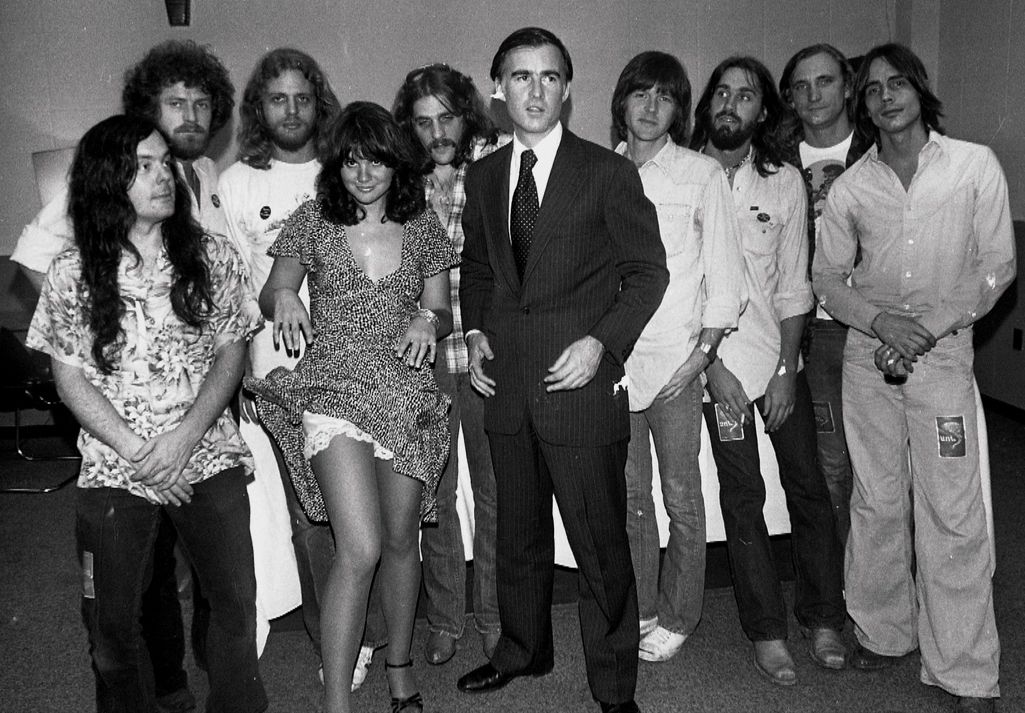
In My Reply is one of those quietly bruising Linda Ronstadt performances that feels less like a pop song and more like a letter written after the tears have dried. Its power lies in restraint, dignity, and the lonely courage of answering when the heart no longer knows how to heal.
Unlike the signature smashes that later made Linda Ronstadt a dominant name on American radio, In My Reply is not remembered as a major charting single, and it does not carry the kind of Billboard peak that follows classics like You’re No Good or When Will I Be Loved. That matters, because this song belongs to another side of Ronstadt’s art: the intimate, searching side, where the performance is not built for applause so much as recognition. It lives in that deeply personal corner of her catalog where a listener does not simply hear a singer, but hears a human being thinking, weighing, remembering, and finally answering.
That is one reason In My Reply has such lasting emotional pull. It comes from the formative stretch of Ronstadt’s career, before the blockbuster success of Heart Like a Wheel and before albums like Simple Dreams made her one of the defining voices of the 1970s. In those earlier years, she was already showing what would later set her apart from nearly everyone around her: a rare ability to inhabit a lyric so completely that even a modest song could take on the emotional weight of lived experience. She did not have to oversing to break your heart. Often, she did more by holding something back.
The title itself is revealing. In My Reply is built around the idea of response, and that alone gives the song an unusual emotional shape. This is not the breathless beginning of romance, nor the theatrical collapse of love. It feels more mature than that, and sadder too. The drama has already happened somewhere offstage. What remains is the answer, the return message, the quiet reckoning after someone has written, asked, pleaded, explained, or remembered. In that sense, the song carries one of the oldest wounds in popular music: the ache of distance, and the impossible hope that words might somehow repair what time and feeling have already altered.
Ronstadt was especially gifted with songs like this because she understood that sorrow in music does not always announce itself loudly. Sometimes it arrives in tone, in breath, in the space between phrases. In In My Reply, what lingers is not melodrama but emotional control. She sings with tenderness, but not softness alone; there is also acceptance in the performance, and a kind of weary clarity. That combination gives the song its grown-up depth. It sounds like someone choosing honesty over comfort, even when honesty hurts.
Musically, the song fits beautifully within the world that Ronstadt helped define in her early career, where country, folk, and the emerging California singer-songwriter style leaned against one another. The arrangement does not need grand gestures. Its strength is in atmosphere. The melody leaves room for reflection, and Ronstadt fills that room with feeling rather than decoration. This was always one of her greatest gifts. She could take a song that might have seemed small on paper and reveal the emotional architecture inside it. A line that would sound merely sad in another singer’s hands could become, with her, a private history.
The deeper meaning of In My Reply lies in that balance between communication and resignation. A reply suggests connection, but it also suggests separation. You reply because something has come from elsewhere, from someone no longer beside you. The song seems to understand that by the time people begin writing explanations to one another, the real loss may already have happened. Ronstadt sings as if she knows this and cannot escape it. There is no bitterness dominating the performance, no need to punish or accuse. Instead, there is something more haunting: the sound of feeling that has become thoughtful. Regret is present, but so is dignity.
That is why the song still feels fresh when revisited now. Many famous records survive because they were huge; In My Reply survives because it is true. It reminds us that Ronstadt’s greatness was never limited to chart success. Yes, she would go on to conquer radio, sell millions of records, and become one of the most admired interpreters of her generation. But long before all of that, she was already singing from a place of uncommon emotional intelligence. Songs like this reveal the foundation beneath the fame.
There is also something especially moving about hearing Linda Ronstadt in this reflective mode. Her voice has often been praised for power, range, and clarity, and rightly so. Yet some of her most unforgettable moments come when she lets vulnerability do the work. In In My Reply, she does not seem to be performing sadness for effect. She seems to be living inside it carefully, almost respectfully, as if the feeling is too real to be handled carelessly. That seriousness gives the track its character. It does not beg to be noticed. It simply stays with you.
For listeners who know Ronstadt mainly through the blockbuster years, returning to In My Reply can feel like discovering an earlier chapter written in smaller, more delicate handwriting. But the emotional truth is already there. The empathy, the discipline, the ache, the instinct for choosing songs that reveal hidden corners of the heart: all of it is present. And perhaps that is the quiet lesson of this recording. The legend did not begin with the hits. It began in moments like this, where Linda Ronstadt could turn a restrained, thoughtful song into something unforgettable.
