
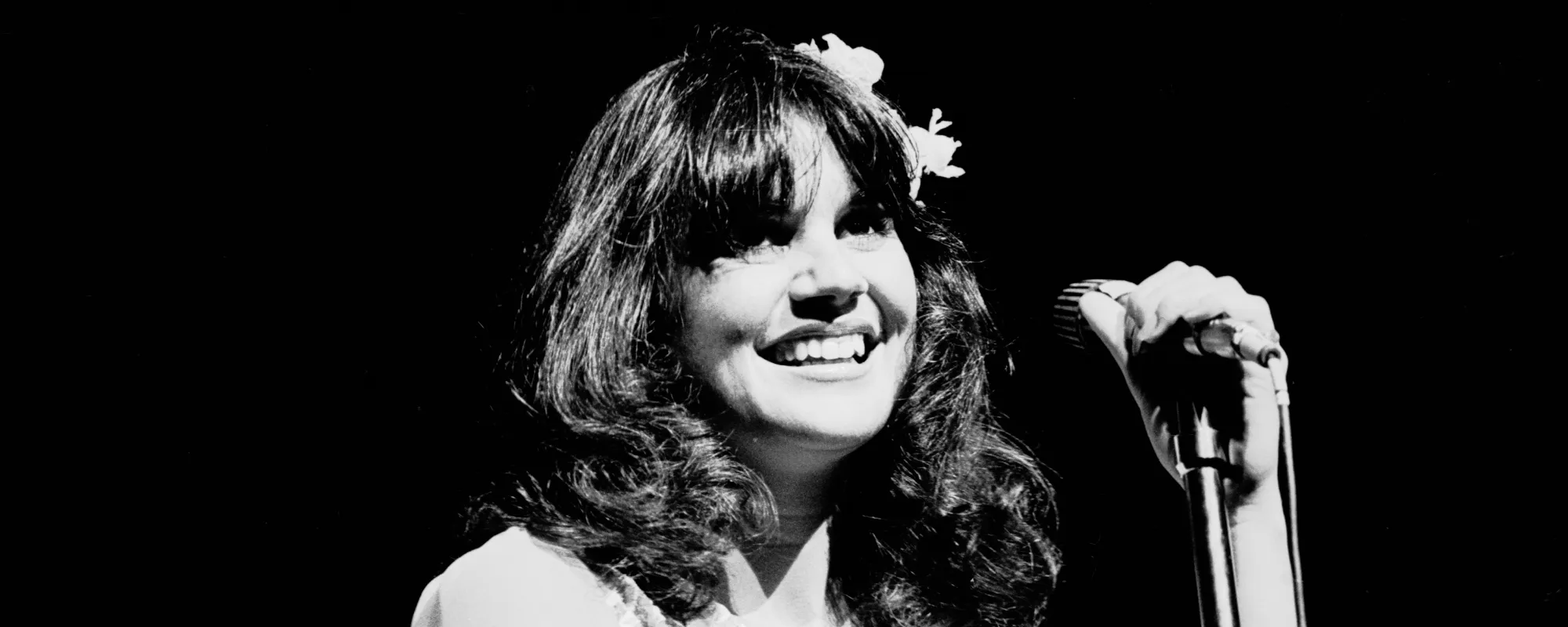
In “Sorrow Lives Here,” Linda Ronstadt does not sound theatrical or dramatically broken. She sounds worse than that—composed enough to keep singing, but wounded enough that every line feels like it was carried in carefully, and at some cost.
Was “Sorrow Lives Here” Linda Ronstadt at her most emotionally shattered?
I would be careful with that claim—but I understand exactly why the question comes up. There is something dangerously real about this performance. Not because she sounds wild or undone, but because she sounds so controlled. The pain is not flung outward. It is housed. And that often cuts deeper.
“Sorrow Lives Here” appeared on Simple Dreams, released in 1977, the album that became one of the great commercial peaks of Linda Ronstadt’s career. Simple Dreams reached No. 1 on the Billboard 200, and its larger public story is usually told through songs like “Blue Bayou,” “Poor Poor Pitiful Me,” and “It’s So Easy.” But buried among those brighter, more widely remembered tracks is this Eric Kaz song, sitting there like a private storm on a hugely successful record. That contrast matters. On an album associated with confidence, crossover reach, and mass recognition, “Sorrow Lives Here” feels startlingly inward.
That is the first reason the song still feels so raw. It was never one of the obvious headline moments. It did not arrive with the protection of familiarity. It remained closer to the nerve. The available album credits consistently identify Eric Kaz as the writer, with Peter Asher producing the track as part of the Simple Dreams sessions. That alone tells you something about its place in Ronstadt’s world at the time: she chose a song from a writer known for emotional gravity, and she placed it early on a blockbuster album, not hidden away as an afterthought.
What makes the performance feel “emotionally shattered,” though, is not any dramatic backstory we can point to. I could not find a strong documented anecdote saying Ronstadt recorded it in some singular crisis, or that she herself singled it out as her most devastating song. What we do have is the record itself—and the song’s placement inside an album often praised for both range and understatement. Even later listeners and critics have singled out “Sorrow Lives Here” as one of the album’s quieter, more understated emotional centerpieces. That is important, because it supports the feeling many listeners have without pretending there is a neat official explanation.
And perhaps that is exactly why the pain still feels so real: it is not overexplained.
The title already does half the work. “Sorrow Lives Here” is not a passing sadness, not a temporary bruise, not a storm that blows through. It suggests residency. Permanence. A place where pain has settled in and unpacked its things. In Ronstadt’s voice, that idea becomes almost unbearable because she refuses to decorate it. She does not turn the song into a grand collapse. She sings it with the poise of someone who already knows the sorrow is not leaving tonight.
That is where I think the song becomes extraordinary. If you ask whether this is her most emotionally shattered performance, I would say that is impossible to prove cleanly. Ronstadt has many devastating recordings, and different songs break in different ways. But I would absolutely say this is among her most inwardly wounded performances—the kind where the hurt is so settled, so quietly inhabited, that it can feel more dangerous than open heartbreak. Open heartbreak at least releases pressure. This song keeps it in the room.
There is also something revealing in the musical setting. The official credits for the remastered album show a relatively restrained arrangement around her, including Don Grolnick on electric piano, which helps explain why the song feels less like a showcase and more like an emotional space. Nothing crowds her. Nothing rescues her from the lyric. The production leaves enough air around the performance for the ache to register fully.
So my answer would be this: not necessarily her single most emotionally shattered recording, but very possibly one of her most quietly devastated. And quiet devastation often lingers longer. “Sorrow Lives Here” still feels dangerously real because Linda Ronstadt does not perform pain here as an event. She performs it as a condition. A place already inhabited. A truth already accepted. And once a singer gets that close to sorrow without raising her voice, it can be very hard to shake.
