
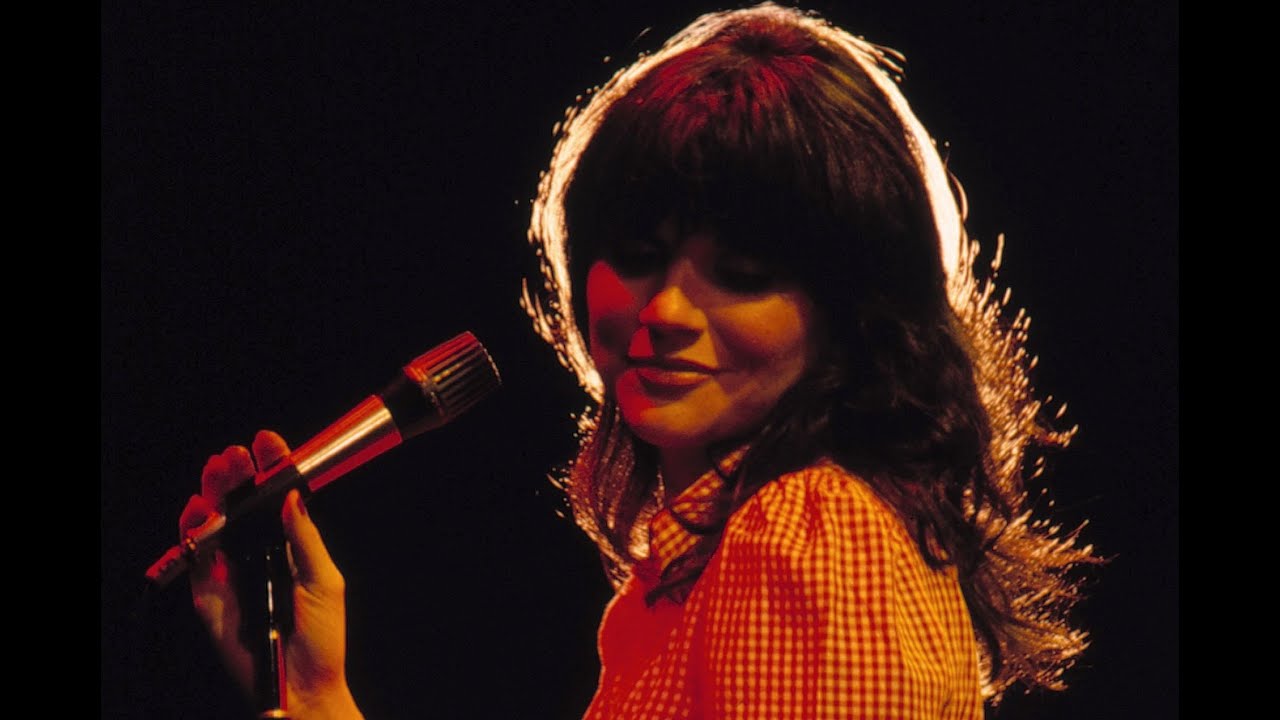
In “I’m Leavin’ It All Up to You,” the surrender sounds gentle, but the wound underneath is sharper than it first appears—because giving someone the power to decide your fate is never as peaceful as the words pretend.
There is something quietly unsettling about Linda Ronstadt’s “I’m Leavin’ It All Up to You.” On the surface, it seems simple enough: a heart laid open, a decision placed in someone else’s hands, a love story paused at the edge of yes or no. But that is exactly why the song continues to invite debate. Is this tenderness? Is it trust? Or is it the sadness of someone already losing ground, pretending that surrender is the same thing as grace? With Linda Ronstadt, that question becomes even more interesting, because she never sings like a helpless figure. Even when the lyric yields, the voice does not.
The first important detail is that Linda Ronstadt recorded the song for Silk Purse, released in 1970, her second solo studio album. This was an early and formative moment in her career, before the great run of massive commercial triumphs that would soon make her one of the defining voices of the 1970s. Silk Purse itself reached No. 103 on the Billboard 200, while the album’s best-known single, “Long Long Time,” climbed much higher and became a breakthrough moment for her. That matters, because “I’m Leavin’ It All Up to You” was not presented as a grand chart-chasing centerpiece. It lived more intimately inside the album, almost like a private emotional room tucked behind the larger story of Linda Ronstadt’s ascent.
The second precious detail is older, and it changes the color of everything. The song itself was written by Don Harris and Dewey Terry, first recorded in 1957, and later became a No. 1 Billboard Hot 100 hit in 1963 for Dale & Grace, one of the defining duos of the Louisiana-Texas swamp pop tradition. That history matters because the song was born with a built-in tension: it sounds soft, but its emotional structure is precarious. It offers the illusion of calm while standing on the edge of abandonment. In other hands, the tune can sound like sweet romantic uncertainty. In Linda Ronstadt’s hands, it feels more adult than that—less like teenage flutter, more like a moment when love and self-respect are no longer entirely on the same side.
That is where the real debate begins. Who holds the power here? The lyric seems to answer clearly: the other person does. “You decide what you’re gonna do.” It sounds like the speaker has stepped back and placed her fate in someone else’s keeping. But when Linda Ronstadt sings those words, one does not hear simple submission. One hears clarity. One hears someone who already understands that love cannot be forced, bargains are useless, and dignity sometimes survives only by refusing to plead any further. In that reading, the song stops being passive. It becomes the last strong act available to a wounded heart: not control, exactly, but the refusal to beg for what should be freely given.
And that is why the song still feels so emotionally alive. Lesser performances might have made it sound merely pretty, another polished plea drifting by on melody alone. But Linda Ronstadt had an instinct for locating the bruise inside a song, even early in her career. Her voice could be warm without becoming soft-focus, vulnerable without becoming weak. In “I’m Leavin’ It All Up to You,” she seems to stand in that difficult in-between space where love has not yet died, but trust has already been tested. The words offer the beloved freedom. The voice, however, lets us hear the cost of that freedom.
Perhaps that is the true sadness of the song. It is not really about decision at all. It is about imbalance. One person is still waiting, still exposed, still carrying more of the emotional weight. The other is granted the luxury of choice. That is why the title feels so tender and so dangerous at the same time. To leave it all up to someone else may sound noble, but it can also be heartbreaking. It means the future of the relationship rests with the person least at risk of breaking first.
So when people ask what was really going on in Linda Ronstadt’s “I’m Leavin’ It All Up to You,” the answer may be this: the song stages a quiet struggle between love and power, and never fully resolves it. That unresolved feeling is exactly what gives it life. It is tender, yes—but not entirely safe. Trusting, yes—but edged with hurt. And because Linda Ronstadt sings it with such calm emotional intelligence, the song leaves behind a question that lingers long after the last note: when one heart says, “I leave it all up to you,” is that devotion—or the final lonely proof that the balance has already been lost?
