
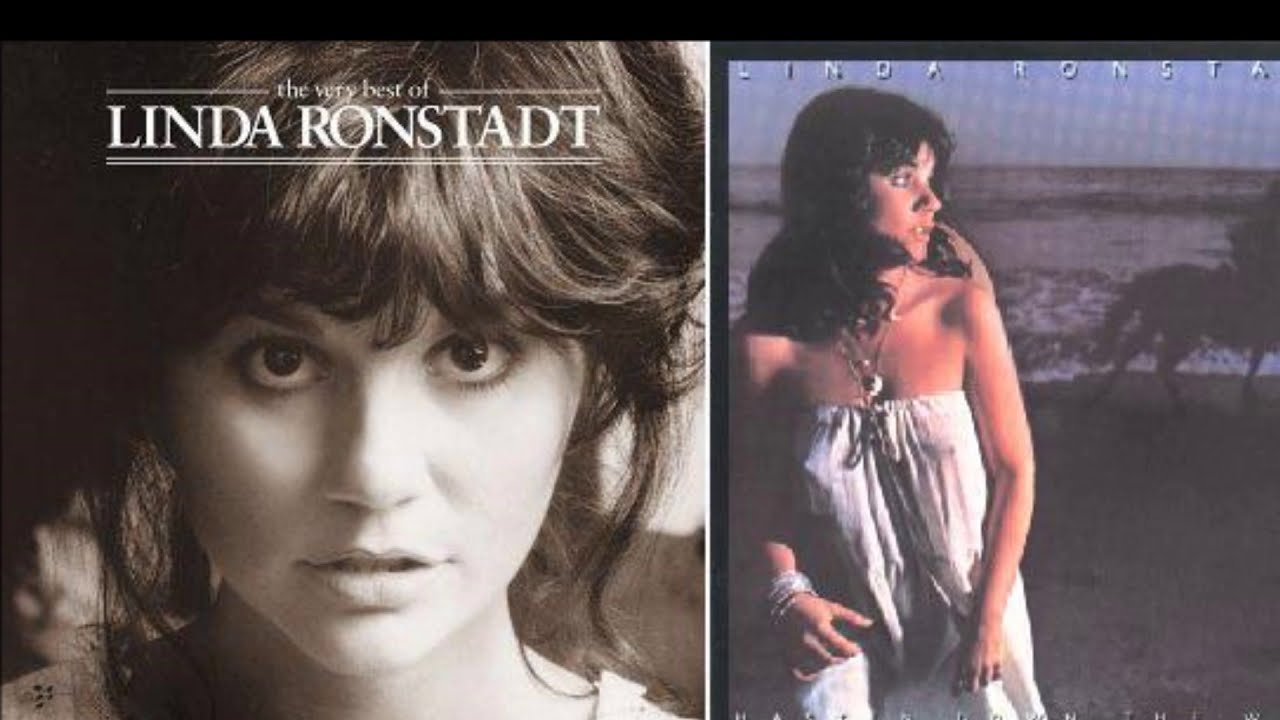
One quiet promise, one beautiful performance, and “Simple Man, Simple Dream” still louses the heart with its faith that love, if kept honest and unadorned, might be enough.
There is a special kind of power in songs that never have to raise their voice. Linda Ronstadt’s “Simple Man, Simple Dream” lives in that quieter territory, where feeling is carried not by spectacle but by sincerity. It was placed near the beginning of Simple Dreams, released in 1977, an album that became one of the defining statements of her career and eventually spent five consecutive weeks at No. 1 on the Billboard 200. In that company—alongside more widely celebrated titles such as “Blue Bayou” and “It’s So Easy”—this song can seem almost modest at first glance. Yet modesty is exactly where its strength begins. It does not fight for attention. It waits, and then it stays.
What makes “Simple Man, Simple Dream” linger so deeply is the promise inside the title itself. The phrase sounds plain, almost unguarded, and that plainness is beautiful. In popular music, love is often dressed in grand gestures, but this song leans toward something humbler and more fragile: the hope that a life built on simple truths might still carry emotional dignity. Written by J.D. Souther, it gave Ronstadt material that suited one of her great gifts as an interpreter—the ability to make emotional directness feel noble rather than naïve. A contemporary review noted how fully she understood Souther’s message, especially the vulnerability of a person who believes in simple truths and can be easily wounded for it.
That is where the beauty of the performance really takes hold. Linda Ronstadt does not sing the song as if simplicity were weakness. She sings it as if simplicity were courage. Her voice carries longing, but never self-pity; tenderness, but never sentimentality. There is a difference, and Ronstadt knew exactly how to inhabit it. The performance feels open-hearted without becoming soft in the lesser sense. One hears a woman stepping into the song with grace, letting it keep its quietness, trusting that what is deeply felt does not need to be overstated. That trust is one reason the song still lingers with such surprising force.
The setting matters too. Simple Dreams was not a minor side note in Ronstadt’s catalog; it was one of her great commercial and artistic peaks, released in September 1977 and remembered as the album that finally displaced Fleetwood Mac’s Rumours from the top of the Billboard chart. It was also the record that showed just how broad her reach had become—rock, country, folk, pop, old standards, all brought together without strain. Inside an album that held major radio successes and some of her best-known performances, “Simple Man, Simple Dream” could easily have been overshadowed. Instead, it has endured as one of those album tracks that reveal the soul of the record more quietly than the hits do.
There is something touching about that. Some songs become famous because they dominate the room. Others remain beloved because they seem to understand the room after the crowd has gone. “Simple Man, Simple Dream” belongs to the second kind. It does not glitter. It glows. The emotion inside it is intimate, almost conversational, and that intimacy suits Ronstadt especially well. For all her tremendous vocal force, she was often most moving when she sounded as though she were confiding rather than performing. Here, that quality gives the song its lasting afterlife. The promise in the title begins to feel less like a slogan than a quiet philosophy: to remain emotionally honest in a world that rarely rewards such honesty.
That is why the performance still holds such power. Not because it announces itself as a masterpiece, and not because it comes wrapped in a giant public mythology, but because it understands how much feeling can live inside restraint. Linda Ronstadt had many spectacular moments, many songs that soared, many records that changed the temperature of a room the instant they began. “Simple Man, Simple Dream” works differently. It stays close. It speaks softly. And years later, that softness feels less like understatement than wisdom. On an album that confirmed her stature at the highest level, this one beautiful performance kept faith with something smaller, truer, and perhaps harder to preserve: the belief that simplicity of heart still matters.
