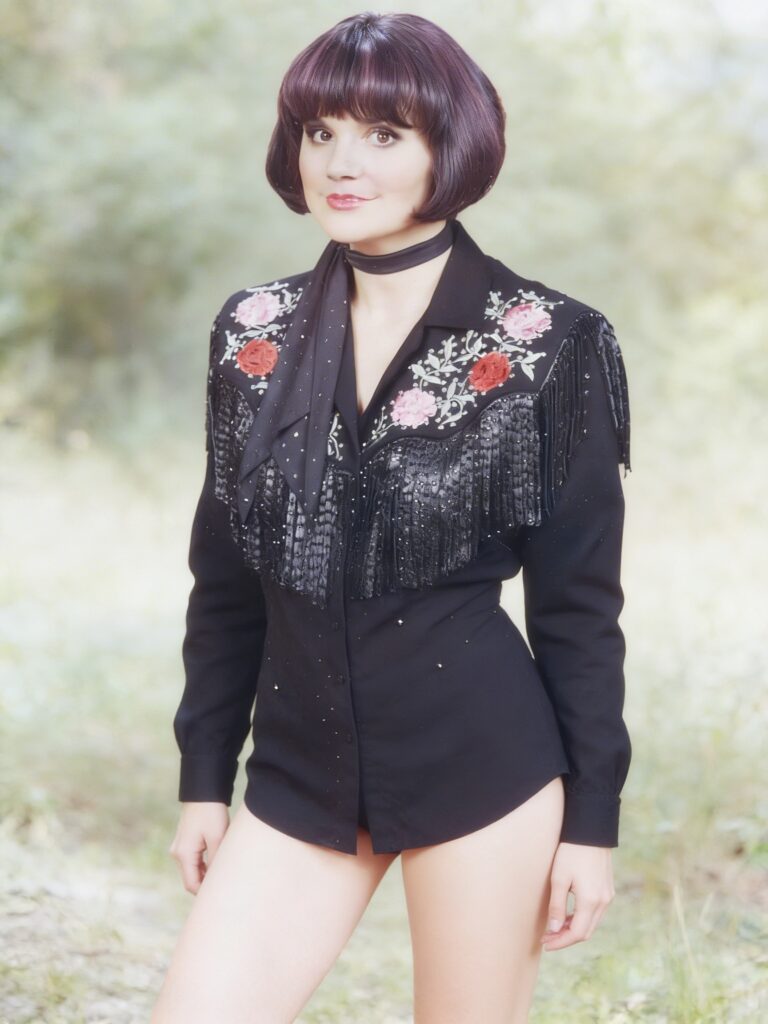

On Duets II, Linda Ronstadt and Frank Sinatra made Moonlight in Vermont feel less like a celebrity pairing and more like a late-night conversation carried on breath, memory, and exquisite restraint.
There are duets that arrive with fanfare, and then there are duets that seem to step into the room quietly and stay with you for years. Moonlight in Vermont, the 1994 meeting of Linda Ronstadt and Frank Sinatra on Duets II, belongs to the second kind. It was never the sort of performance built for noise or spectacle. Instead, it offered something older, finer, and far harder to fake: poise. While the track was not pushed as a major standalone hit, Duets II itself was a success, reaching No. 9 on the Billboard 200. That matters because it reminds us how many listeners were still willing, even in the mid-1990s, to lean toward songs that whispered instead of shouted.
The choice of song was inspired. Moonlight in Vermont, written in 1944 by composer Karl Suessdorf and lyricist John Blackburn, had long been one of the most distinctive titles in the American songbook. Its lyrics are famous for avoiding conventional rhyme, unfolding instead as a series of calm, luminous images: autumn air, distant hills, evening light, the hush of a place more felt than explained. It is not a song that begs for vocal acrobatics. It asks for atmosphere, patience, and trust. Sinatra had carried it for decades, most notably from his 1958 album Come Fly with Me, so by the time he returned to it on Duets II, the song already belonged to his mature repertoire.
Linda Ronstadt was an especially intelligent partner for that return. By 1994, she had already proven that her gifts reached far beyond rock, country, and California pop. Her recordings with Nelson Riddle on What’s New, Lush Life, and For Sentimental Reasons had shown how deeply she understood phrasing, timing, and the emotional architecture of standards. She did not approach this music as costume or tribute. She sang it from inside. That is what makes her presence on Moonlight in Vermont feel so right. She never sounds like a guest star dropped into a famous man’s catalog. She sounds like an artist who knows the difference between singing a melody and inhabiting a mood.
There is also a story behind the performance that gives it an added layer of fascination. The Duets projects, produced by Phil Ramone, were celebrated for bringing major artists into Sinatra’s orbit, but they were also discussed for their carefully managed studio method. These were not always old-fashioned shared-microphone sessions in the romantic sense people liked to imagine. Technology, scheduling, and the realities of Sinatra’s late career shaped the way the records were made. Yet that is part of what makes this track so moving. Even within a highly produced framework, Moonlight in Vermont feels intimate. The illusion holds because the musical conversation is real, and because both singers understand that intimacy in a standard often comes from space, not closeness.
Listen to the balance of their voices and you hear a masterclass in understatement. Sinatra, deep into his later years, no longer had the sleek, effortless glide of the Capitol period. What he had instead was weather, grain, and authority. He sang like a man who no longer needed to prove that a line mattered; he could simply place it there. Ronstadt answers him beautifully. She does not overdecorate the melody, and she wisely refuses to turn the duet into a contest of tone or power. Her phrasing is tender but disciplined, luminous without becoming glossy. She meets Sinatra where the song lives: in suggestion, in evening light, in the dignity of not saying too much.
That may be the deepest meaning of Moonlight in Vermont. For all its romantic reputation, it is not a song of grand declarations. It is a song of setting, of stillness, of emotion carried by landscape. Love is present, but it is present indirectly, almost shyly, hidden inside the details. That makes the 1994 duet especially poignant. These are not young voices rushing toward a climax. They are seasoned voices honoring the mystery of a standard that understands how memory works. We do not always remember life through speeches. Sometimes we remember it through weather, color, and the way a quiet room felt after midnight.
There is another reason this performance continues to resonate. It brought together two different but connected American traditions. Sinatra represented the towering authority of pre-rock popular song. Ronstadt, though fully capable in that tradition, came to many listeners through rock radio, country crossover, and modern songcraft. On paper, the pairing might have looked like a prestige move. In practice, it sounds natural. She brings warmth without softening the song into sentimentality, and he brings stature without weighing it down. The result is neither museum piece nor stunt. It is simply elegant.
That is why this duet keeps its power. Not because it is loud, and not because it tries to rewrite the song. It lasts because Linda Ronstadt and Frank Sinatra trusted Moonlight in Vermont enough to leave its silence intact. In an era that often rewarded scale, they chose measure. In a project famous for its star combinations, they made one of the gentlest moments feel among the most enduring. Decades later, that restraint is exactly what gives the record its glow.
