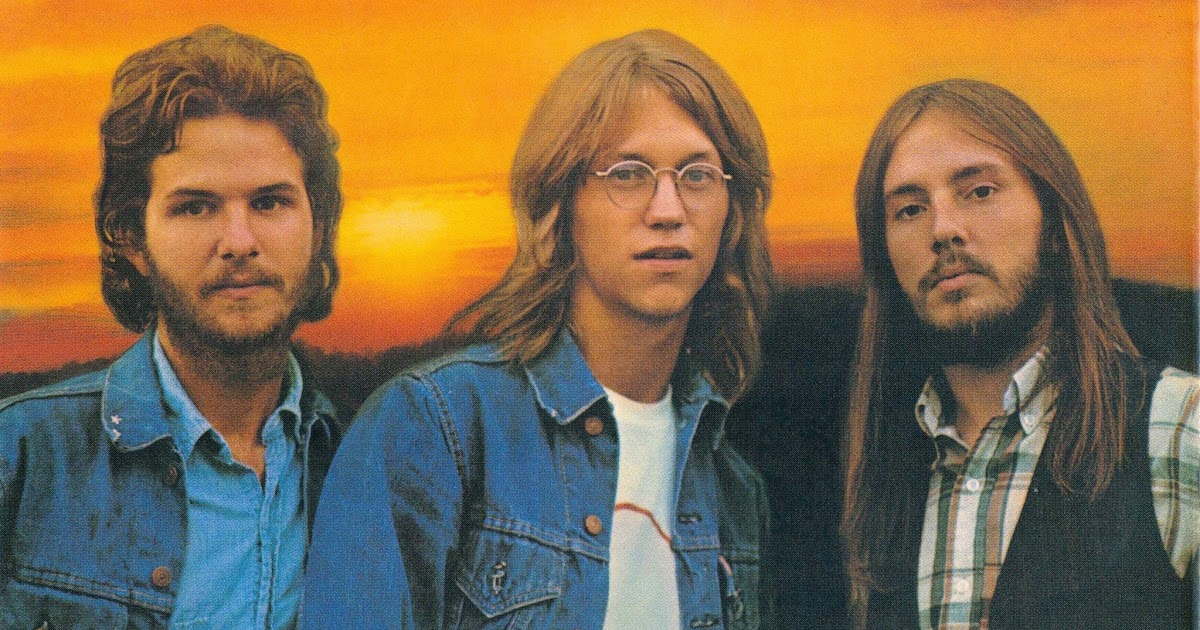
“A Horse With No Name” feels like a song about slipping away from noise and stepping into a lonely, healing silence, where the desert is not emptiness at all, but a place to hear oneself again.
When America released “A Horse With No Name”, the song did not arrive with the usual kind of fanfare. It came in quietly, almost mysteriously—late 1971 in the UK, then early 1972 in the United States—and yet it traveled farther than anyone could have guessed. In Britain, it climbed to No. 3 on the singles chart; in America, it went all the way to No. 1 on the Billboard Hot 100, holding that summit for three weeks. For a song so spare, so strange, so unwilling to explain itself too neatly, that was part of its wonder.
What makes the story even more touching is how young its creator was. Dewey Bunnell was only 19 years old when he wrote it, and he first called it “Desert Song.” It was shaped by memories of the American Southwest from his childhood, and by that very particular feeling of wide land, hard light, and the almost spiritual loneliness that only a desert can give. That is the first precious detail worth keeping close: this immortal song was born not from grand design, but from youth, memory, and a private inner landscape that somehow became universal.
The second detail is one of those lovely ironies music history sometimes gives us. “A Horse With No Name” replaced Neil Young’s “Heart of Gold” at the top of the American chart. That mattered because many listeners, at first hearing, thought America sounded uncannily like Neil Young. So there was a curious, almost cinematic twist in the fact that this hushed desert meditation would rise above the very sound it was being compared to. It is the kind of side note that gives the song a little extra glow: a young band, a haunting single, and a chart moment that felt both improbable and unforgettable.
And yet the real power of “A Horse With No Name” has never depended on chart numbers or industry anecdotes. Its lasting beauty lies elsewhere. The song moves with an unusual calm. It does not rush toward a chorus that begs for applause. It simply drifts forward, like heat rising from a road, like thought itself wandering under a cloudless sky. There is something deeply comforting in that rhythm. One listens to it and feels less entertained than accompanied.
Bunnell later explained that the song was meant as a kind of escape from confusion, a passage toward a quieter and more peaceful state of mind. That idea helps unlock the song without ruining its mystery. The horse does not need a name because the song is not really about the horse. It is about release. It is about disappearing, for a little while, from the demands of the world. It is about that rare human need to step out of the rain—not only the weather above us, but the inward rain as well.
That may be why the song has never aged in the ordinary sense. So many records are tied tightly to their era—their production, their fashion, their attitude. But “A Horse With No Name” seems to hover outside time. It belongs to the early 1970s, certainly, yet it also belongs to every season in life when silence begins to feel more truthful than speech. Its images are plain, almost bare, and that plainness is exactly why they linger. A desert, a nameless horse, the relief of leaving the rain behind—these are simple things, but they open wide doors in the imagination.
There is also a tenderness in the way the song refuses to become overdramatic. It never forces emotion. It trusts atmosphere. It trusts repetition. It trusts that a listener will bring his or her own memories into that empty landscape. That is not a small achievement. Many songs tell us what to feel. “A Horse With No Name” merely creates a space, and in that space, feeling appears on its own.
So when people remember America, this is often the first song that returns like a warm wind from far away. Not because it is flashy. Not because it explains everything. But because it carries a rare sensation: the feeling of being lost and strangely comforted by that loss. A young Dewey Bunnell wrote it from memory and instinct, and the world heard in it something larger than a hit single. It heard distance. It heard solitude. It heard peace. And that is why “A Horse With No Name” still sounds, all these years later, less like a performance than like a place.
