
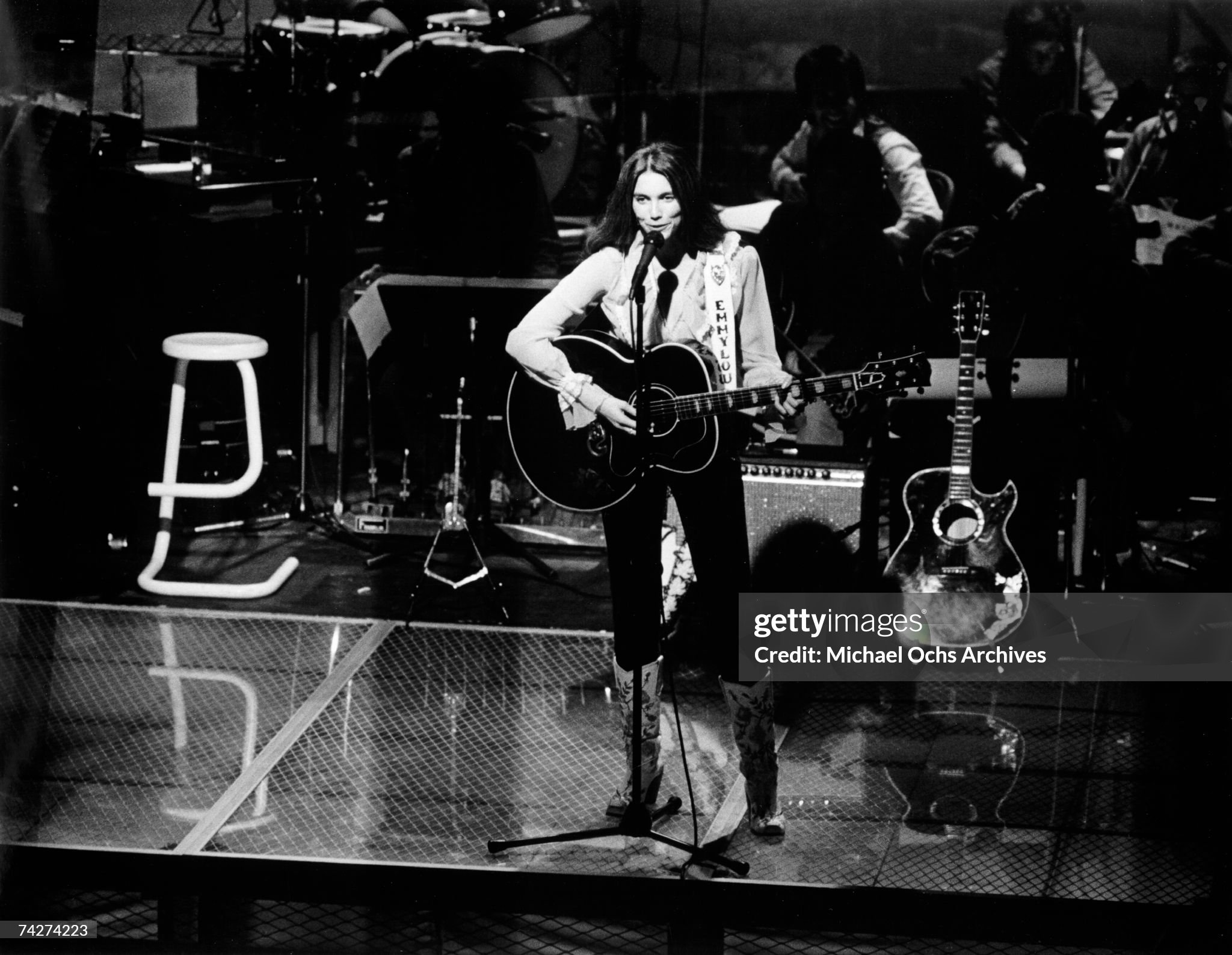
“Green Pastures” reaches so deeply because it sounds like comfort without sentimentality—an old promise of rest, mercy, and home sung by Emmylou Harris with the kind of calm that makes faith feel human again.
There is a reason Emmylou Harris’ “Green Pastures” leaves such a deep mark. It is not simply a beautiful performance, though it certainly is that. It is not merely a traditional gospel number placed carefully inside a country album. It is something more inward and lasting: a song in which spiritual longing, earthly weariness, and musical purity come together so naturally that the listener stops hearing “style” and starts hearing consolation itself. That sacred-country feeling is not accidental. “Green Pastures” appears on Roses in the Snow, released on April 30, 1980, the album where Harris moved decisively into a more bluegrass-rooted acoustic sound. The record reached No. 2 on Billboard’s Top Country Albums and No. 26 on the Billboard 200, making it one of the key artistic turning points in her career. And while “Green Pastures” was not a charting single of its own, it sits at the very center of what made that album so quietly profound.
What gives the song its unusual power is its lineage. On Roses in the Snow, “Green Pastures” is credited as traditional, arranged by Brian Ahern, which immediately places it inside an older stream of American sacred music rather than the modern singer-songwriter world alone. That matters because the song does not feel authored in the contemporary sense; it feels inherited, carried, and passed down. Its language of still waters, the good shepherd, and the longing for a heavenly home draws directly on Biblical imagery, especially the tenderness of Psalm 23, but it arrives through the plainspoken emotional vocabulary of country and bluegrass. The result is a song that sounds devotional without becoming ornate.
And that is why it hits so deeply. Emmylou Harris never sings “Green Pastures” as though she is trying to impress anyone with piety. She sings it as though she understands fatigue. The lyric begins in trouble and trial, with the weary body straying, and only then does it move toward peace beside the still water. That emotional movement is essential. This is not triumphal gospel. It is consolation music. It is for those who have already felt how hard the road can be. The promise of green pastures means something here because it is set against exhaustion. The sacred feeling grows not out of spectacle, but out of relief.
The album setting deepens that effect. Roses in the Snow is one of Harris’ most beloved records precisely because it strips away so much excess and lets the bones of the music speak. The album drew on bluegrass, traditional country, and folk material by figures such as The Carter Family, Johnny Cash, and Paul Simon, with guest appearances from Ricky Skaggs, Dolly Parton, Linda Ronstadt, Willie Nelson, Tony Rice, and others. In that company, “Green Pastures” does not feel like a side trip into old-time spirituality. It feels like part of the record’s soul. The whole album is about roots, inheritance, and the old language of sorrow and grace, and this song may be the clearest expression of that spirit.
There is also something revealing in the harmony world surrounding the track. Listings tied to the album’s legacy credit “Green Pastures” with Ricky Skaggs and, in later reference sources, associate it with Dolly Parton as well, which tells us how naturally the song belonged in the circle of voices Harris was drawing around her during this period. Even when the lead remains unmistakably hers, the performance carries that communal Appalachian-gospel feeling: one soul singing, yes, but never entirely alone. That matters because sacred-country music often works best when it sounds less like performance than gathering—less like a spotlight and more like witness.
The song’s afterlife confirms its hold on Harris herself. Two decades later, she performed “Green Pastures” in the Down from the Mountain concert film and soundtrack connected to O Brother, Where Art Thou?, placing it once again in a setting devoted to old American roots music and spiritual tradition. That return was no accident. Some songs stay in a repertoire because they are famous; others stay because they continue to tell the truth. “Green Pastures” clearly belonged to the second category for her.
So yes, a sacred-country feeling runs through Emmylou Harris’ “Green Pastures,” and that is exactly why it hits so deeply. It carries the plain beauty of traditional gospel, the humility of bluegrass, and the emotional intelligence Harris brought to everything she touched. It promises rest, but only after acknowledging weariness. It offers heaven, but in the language of people who have known dust, distance, and disappointment. And because Emmylou Harris sings it with such quiet authority, the song never feels abstract. It feels close. Like an old assurance remembered just when it is needed most.
