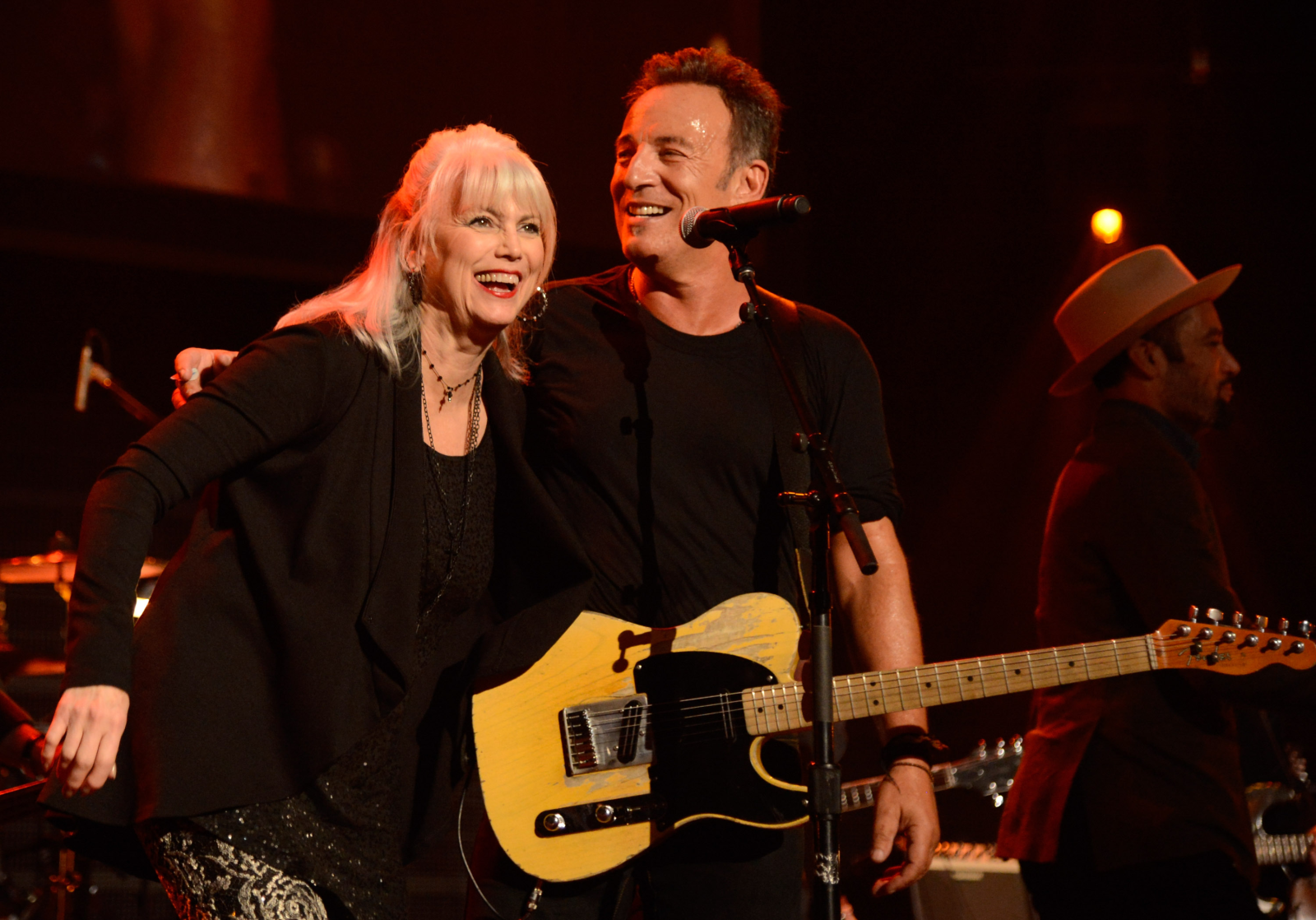
In “The Boxer,” that famous “lie-la-lie” refrain stops sounding like mere endurance and starts sounding like memory itself—weathered, tender, and lonelier in a way only Emmylou Harris could make it.
That is why true fans hear Emmylou Harris’ “The Boxer” differently almost at once. They know they are not simply hearing another cover of a revered Paul Simon song. They are hearing a transformation. Harris recorded “The Boxer” for her 1980 album Roses in the Snow, a landmark record that marked her full embrace of bluegrass-influenced acoustic music. The album was released on April 30, 1980, reached No. 2 on Billboard’s Top Country Albums and No. 26 on the Billboard 200, while her version of “The Boxer” was issued as a single and rose to No. 13 on the Billboard country chart. Those are important facts to place near the front, because they show this was not some obscure sidestep in her catalog. It was part of one of the key artistic pivots of her career.
But the real answer to your line—why that refrain “hits differently,” and why devoted listeners know exactly why—lies in the emotional change Harris brings to it. In the original Simon & Garfunkel performance, the “lie-la-lie” section has a stoic, wandering quality. It feels like the sound of a man moving through hardship with his pride intact, battered but still upright. In Emmylou Harris’ hands, the refrain softens and deepens at the same time. It no longer sounds only like resilience. It sounds like ache remembered after the fact. She does not attack the lyric from inside masculine defiance; she enters it from a place of calm sorrow, and that shift changes the entire emotional weather of the song.
Part of that comes from the setting. Roses in the Snow was built around bluegrass and acoustic textures, with a remarkable cast that included Ricky Skaggs, Tony Rice, Jerry Douglas, Linda Ronstadt, Dolly Parton, Willie Nelson, and Johnny Cash. On “The Boxer,” the instrumentation is more exposed, more organic, more rooted in string-band space than in the broad folk-pop architecture most listeners associate with the song. That matters. Once the arrangement is stripped back and set in this cleaner acoustic light, the refrain loses any hint of anthem and becomes something more intimate—like a private thought repeated to survive loneliness rather than a public chorus meant to rally the spirit.
True fans also know there is a voice-level reason. On Roses in the Snow, Linda Ronstadt is credited with duet vocals and backing vocals, and Ricky Skaggs is credited with duet vocals and backing vocals as well. Even when listeners cannot name every harmony entering the frame, they feel the difference instinctively. The refrain is no longer solitary in quite the same way. It is surrounded—gently, beautifully—by other human voices. That creates one of the most moving paradoxes in Harris’ version: the song still speaks of alienation, but the singing itself offers fellowship. The loneliness remains, yet it is held by harmony. For many listeners, that is exactly why the “lie-la-lie” refrain cuts deeper here. It sounds less like bravado against the world and more like wounded experience shared among fellow travelers.
There is also the matter of Emmylou Harris herself. By 1980, she had already become one of the most emotionally intelligent interpreters in American music. She had a way of singing sorrow without cluttering it, of making pain sound lucid rather than theatrical. That gift suits “The Boxer” perfectly. The song is about poverty, weariness, bruised pride, and the long distance between hope and reality. In lesser hands, the refrain can become decorative, a familiar hook attached to a noble lyric. Harris refuses that. She makes it feel earned. Under her voice, “lie-la-lie” becomes the sound of someone who has stopped explaining suffering because the suffering is already understood.
And that is why it lingers. Because Emmylou Harris does not merely cover “The Boxer.” She reveals another life inside it. She takes a song already rich with endurance and gives it a more autumnal truth. The refrain, in her version, is no longer just what the singer says to keep going. It is what remains after the years have already done their work. That is the secret true fans recognize immediately.
So yes, that “lie-la-lie” refrain hits differently in Emmylou Harris’ “The Boxer.” It hits differently because the bluegrass setting strips the song to bone and nerve, because the harmonies turn loneliness into shared human sorrow, and because Harris sings as if she already knows that survival is never as simple as sounding strong. In her hands, the refrain becomes less a chant of endurance than a quiet echo of all one has endured—and that is why it stays with you.
