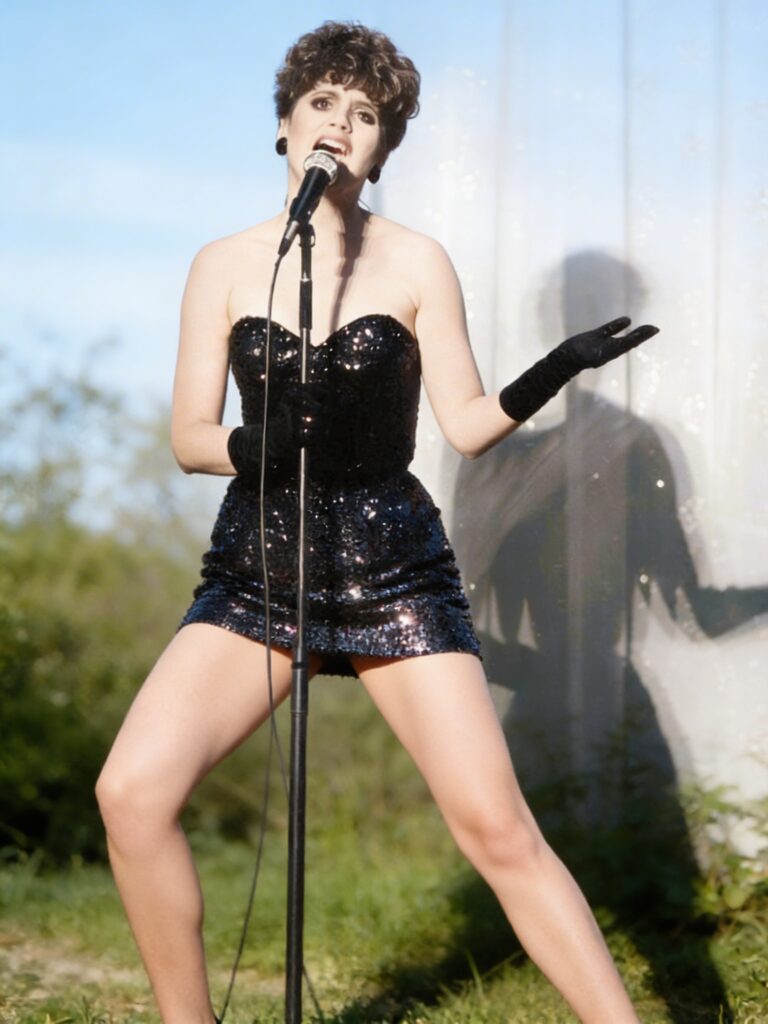
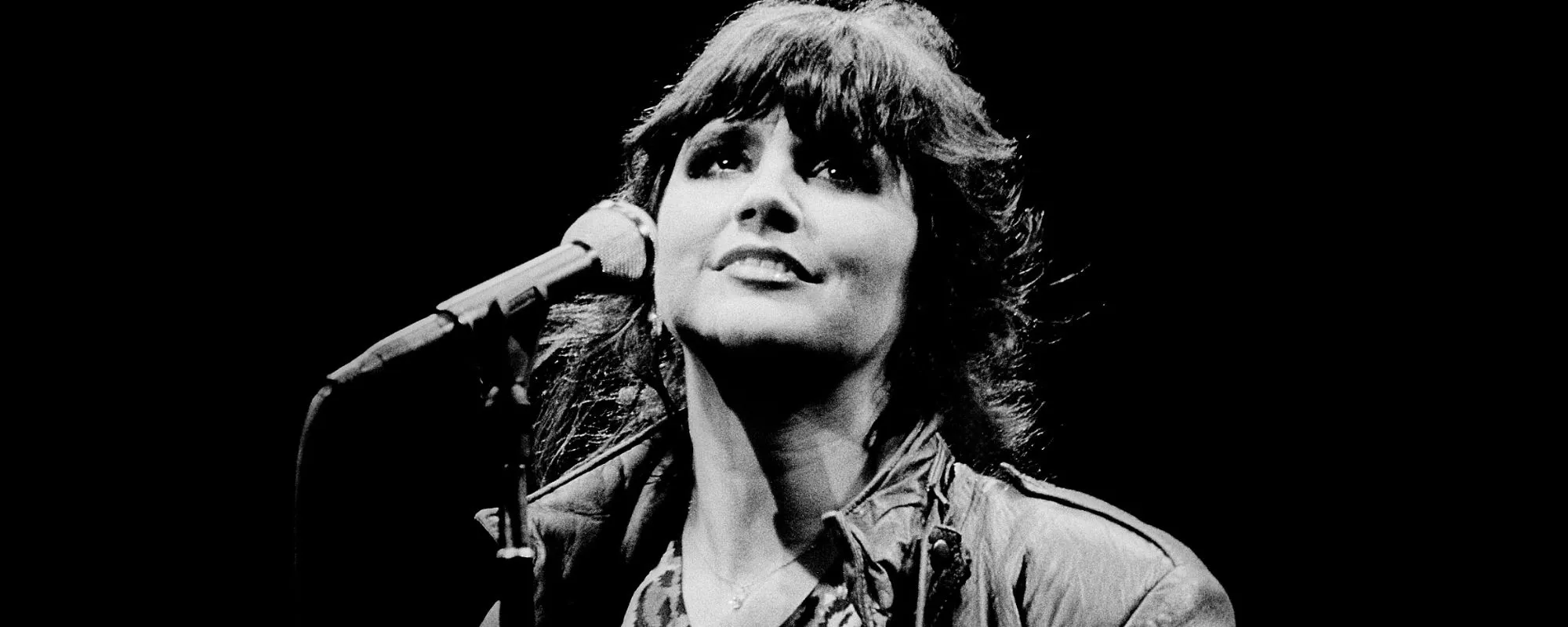
“When You Wish Upon a Star” was already one of the world’s gentlest promises — but in Linda Ronstadt’s voice, it becomes something even more emotional: less like a dream sung to children, and more like hope whispered to people who know how badly it can be needed.
There are songs so famous they seem to arrive in the world already covered in memory. “When You Wish Upon a Star” is one of those songs. Long before Linda Ronstadt touched it, the song had already become one of the defining melodies of modern popular culture — written by Leigh Harline and Ned Washington for Disney’s 1940 film Pinocchio, and forever tied to the company’s idea of longing, magic, and faith in impossible things. But what Ronstadt does with it is something rarer than simple reverence. She does not merely sing a beloved standard beautifully. She finds the ache inside its innocence. That is why her version feels even more emotional.
Her recording came in a very different phase of her career, and that matters. Linda Ronstadt recorded “When You Wish Upon a Star” for her 1986 album For Sentimental Reasons, released in late 1986 as part of her celebrated collaboration with Nelson Riddle and His Orchestra. The song was also issued as a single in October 1986. The album itself reached No. 46 on the Billboard 200 and No. 3 on Billboard’s Top Jazz Albums chart, and it became the third consecutive Platinum-certified Ronstadt-Riddle project. In other words, this was not a novelty detour into Disney material. It belonged to the rich, mature chapter of Ronstadt’s standards period — the moment when she was singing with orchestral elegance, interpretive restraint, and the authority of an artist who no longer had to prove anything except truth.
That mature context is one of the main reasons the performance lands so deeply. A child hears “When You Wish Upon a Star” as promise. An adult hears it a little differently. The lyric does not simply say that dreams come true. It asks the listener to keep believing they might. In the original Pinocchio setting, that faith feels luminous and storybook-pure. In Ronstadt’s hands, it feels more human than magical. She sings as though she understands how fragile hope can be — how often it is carried not by innocence, but by endurance. That shift changes the emotional temperature of the song entirely. It remains tender, but it no longer feels untouched by life. That is exactly why it grows more moving.
And then there is the voice itself. By the time she recorded For Sentimental Reasons, Ronstadt had already traveled through rock, country, folk-pop, Mexican traditional music, and the American standards repertoire. She had become one of the great interpreters of her era, and interpretation was always her real gift. She could take a song everyone thought they knew and reveal a slightly different weather inside it. On “When You Wish Upon a Star,” she does not push for dramatic effect. She does not decorate the melody until it glitters. She does something much harder: she sings it with calm. With grace. With enough restraint that the feeling has room to bloom on its own. The emotion is not manufactured by excess. It rises from her refusal to force anything.
The Nelson Riddle setting helps enormously. Ronstadt’s trilogy of albums with Riddle worked because they were never mere costume pieces. She did not approach the Great American Songbook as a tourist in nostalgia. She approached it as a serious singer who understood that elegance can deepen feeling rather than distance it. On “When You Wish Upon a Star,” the orchestral frame gives the song dignity without smothering its softness. It becomes less a children’s tune and more a standard of yearning — a song about desire in its purest form, stripped of glamour and returned to the heart. That is one reason the performance can disarm even listeners who think they are too familiar with the song to be moved by it again.
There is something else at work too, something subtle but decisive. Ronstadt sounds older than the song’s original dream of innocence — and that is exactly what gives it depth. She does not sing like someone who assumes wishes are easy. She sings like someone who knows they are costly, and still chooses to believe in them for the length of the performance. That changes the lyric from fantasy into consolation. The song’s famous lines stop sounding like a lesson from a fairy tale and start sounding like a mercy offered to the bruised spirit. In that sense, Ronstadt does not make the song “bigger.” She makes it more intimate, and intimacy is what makes it hit harder.
The release history adds a small but telling footnote. Ronstadt’s version was issued as a single, and while it did not become a major mainstream chart smash, it was notable enough to earn a place in her singles discography and to circulate as a distinct release from the album. That tells us the recording was heard not merely as filler, but as one of the emotional centerpieces of For Sentimental Reasons. It was a serious interpretation of a classic song, delivered by a singer whose great strength was always emotional credibility.
So why does Linda Ronstadt’s “When You Wish Upon a Star” feel even more emotional than the version every child already knows? Because she sings it from the other side of innocence. She keeps the melody’s gentleness, the lyric’s promise, and the song’s long cultural glow — but she adds something life has taught the voice. She adds tenderness touched by experience. She adds belief shadowed by knowledge. She turns wonder into solace. And in doing so, she reminds us that the oldest songs sometimes become most powerful not when they are sung as dreams, but when they are sung as things we are still trying, quietly, not to give up on.
