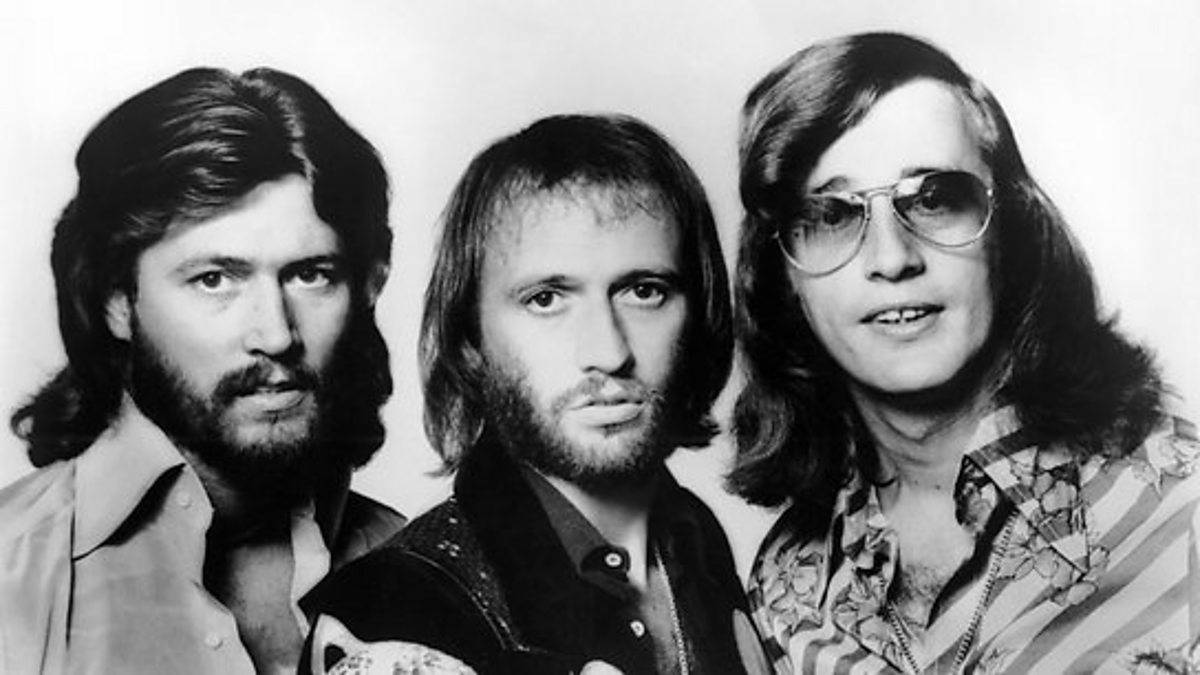
At One Night Only in 1998, Bee Gees and Celine Dion transformed Immortality into more than a duet. It became a grand television moment about legacy, elegance, and the rare power of great songwriters singing beside the voice they wrote for.
There are live performances that entertain, and there are live performances that seem to suspend time for a few precious minutes. Bee Gees performing Immortality with Celine Dion at One Night Only belongs firmly in the second category. This was not simply a guest appearance dropped into a concert setlist. It was a carefully framed, deeply symbolic television event from the MGM Grand in Las Vegas, filmed in late 1997 and presented to the world in 1998 as part of the Bee Gees’ celebrated comeback era. In that setting, the song took on a richer meaning than it had on record. It felt ceremonial, almost regal, as if three decades of songwriting history had stepped forward to meet the defining pop vocalist of that moment.
That context matters. Immortality was written by the Bee Gees for Celine Dion and first appeared on her blockbuster 1997 album Let’s Talk About Love. Released as a single in 1998, it became a major international hit, reaching No. 5 on the UK Singles Chart and making the Top 10 in several European territories. Even before the live duet, the song already carried a kind of unusual dignity. It did not chase trends. It rose slowly, with a reflective melody and a lyric built around endurance, purpose, and the longing to leave something lasting behind. Those themes, coming from the Gibb brothers, never sounded accidental. They sounded lived in.
By the time One Night Only arrived, the Bee Gees were enjoying one of the most graceful late-career revivals in popular music. Their 1997 studio album Still Waters had reminded listeners that they were not merely survivors from another era, but writers and performers of astonishing emotional precision. Meanwhile, Celine Dion was at a commercial peak, one of the biggest singers in the world, carrying both technical brilliance and a sense of occasion whenever she stepped onto a stage. Bringing her into this concert to sing Immortality was therefore much more than smart programming. It was a statement. The writers stood beside the singer they had chosen, and the song suddenly looked complete in a new way.
What makes the performance linger is its restraint. So much of late-1990s television spectacle leaned toward excess, yet this moment drew its strength from control. Barry Gibb brought warmth and steadiness, Robin Gibb added that unmistakable tremor of feeling in his phrasing, and Maurice Gibb helped ground the harmony with quiet assurance. Then came Celine Dion, not to overpower them, but to meet them. That is the secret of the performance. She sings with majesty, but also with listening. You can feel the mutual respect in every line. No one is trying to win the song. They are trying to honor it.
And Immortality is a song that rewards that kind of seriousness. Its lyric speaks of identity, devotion, and a journey toward something lasting beyond applause or fashion. In studio form, it is already moving. In this live version, with the Bee Gees physically present, it becomes almost autobiographical. The words seem to reflect the brothers’ own place in music history: craftsmen who had crossed styles, decades, and changing public tastes while still sounding unmistakably like themselves. Beside them, Celine Dion becomes more than an interpreter. She becomes the vessel through which their writing is returned to them in full scale, with all the grandeur the lyric quietly demands.
There is also something unmistakably old-world about the staging, and that is part of its beauty. One Night Only was a prestige television concert in the best sense of the phrase. It had polish, scale, and glamour, but it also understood poise. The cameras did not rush the emotion. They let the song breathe. They let viewers see faces, pauses, glances, and the invisible thread of trust between artists who know exactly what kind of moment they are creating. That is why the performance still feels so substantial now. It was built for broadcast, yes, but it never feels manufactured. It feels earned.
For many listeners, this duet remains one of the most revealing windows into what made the Bee Gees such extraordinary writers. They could write disco anthems, country-flavored ballads, blue-eyed soul, soft rock, and aching torch songs, but beneath all of that was a deep instinct for emotional architecture. Immortality is not flashy in its design. It rises carefully, almost prayerfully, and its emotional release depends on patience. In an age that often rewards immediate impact, the song asks for maturity from both singer and listener. That may be one reason it still resonates so deeply.
It also says something meaningful about Celine Dion. During this period, her voice was often described in terms of size and power, and rightly so, but Immortality reveals her discipline just as much as her range. She understands when to soar and when to stay inside the line. On One Night Only, that balance allows the performance to feel less like a showcase and more like a communion between generations of greatness.
Years later, that is what remains most moving about this 1998 television performance. It captures a fleeting kind of musical grace: the songwriters, the star they wrote for, the grandeur of a major live special, and a ballad whose title suddenly seems to describe the moment itself. Some performances age into nostalgia. This one has held onto something finer. It still feels elegant, intimate, and quietly monumental, like a song stepping into the very meaning of its own name.
