
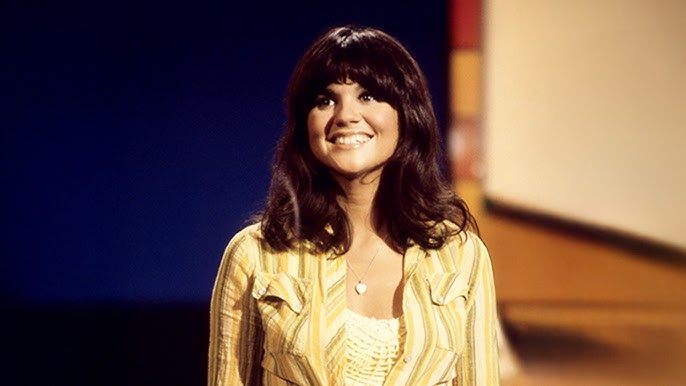
“I Can’t Help It” is one of those rare Linda Ronstadt performances that does not merely sound sad — it sounds as though the heart has already broken and the voice is somehow still standing at the edge of it, refusing to lie.
There are songs that describe heartbreak, and then there are songs that seem to breathe from inside it. “I Can’t Help It (If I’m Still in Love with You)” belongs to that second, more haunting category. In Linda Ronstadt’s hands, this old Hank Williams standard becomes so tender, so emotionally bare, that it feels less like a performance than a confession overheard at exactly the wrong moment — or perhaps the right one, if one has ever known what it means to carry love past its proper ending. Ronstadt recorded the song for her landmark 1974 album Heart Like a Wheel, and the result was no mere album ornament. Released as a single, it rose to No. 2 on Billboard’s Hot Country Singles chart, while Heart Like a Wheel itself became her first No. 1 album on the Billboard 200 and spent four weeks at No. 1 on the country album chart. The performance also won Ronstadt the Grammy for Best Country Vocal Performance, Female at the 1976 awards.
Those facts matter, because they show that this was not a minor side road in her catalog. It was one of the recordings that helped confirm Linda Ronstadt as more than a rock singer with country instincts. It proved she could step directly into the deep emotional river of classic country and not only belong there, but make the water feel newly cold. The song itself had already carried a long and sorrowful history. Written and first recorded by Hank Williams in 1951, “I Can’t Help It (If I’m Still in Love with You)” reached No. 2 on the Billboard country chart in its original form. That meant Ronstadt was not reviving some forgotten curio. She was entering sacred ground.
And yet what makes her version so unforgettable is not reverence alone. It is the way she turns the song’s simplicity into an ache so immediate that it hardly seems arranged at all. The lyric is plain, almost conversational. That is one of Hank Williams’s great gifts as a writer: he could reduce emotional devastation to language so natural it slips past the guard. “Today I passed you on the street…” There is no ornament in that thought, no literary showing off, no dramatic flourish. But once Ronstadt sings it, the line opens like a wound. She does not push the song toward melodrama. She does something much harder. She lets the sadness remain unprotected.
That is why the performance feels as if she is singing from the edge of heartbreak rather than from the center of theatrical grief. There is still composure in her voice. That is crucial. She does not collapse. She does not beg. She does not oversing. Instead, she holds the line with extraordinary restraint, and that restraint is exactly what makes the record so piercing. The feeling is not Look how broken I am. It is something more mature and more painful: I am trying to live with this, and failing more quietly than anyone knows. That is a very different kind of sorrow, and Ronstadt understood it perfectly.
The album context deepens the effect. Heart Like a Wheel is widely regarded as the breakthrough record that fully revealed the breadth of Ronstadt’s interpretive genius. It contained the chart-topping “You’re No Good,” the soaring “When Will I Be Loved,” and this Hank Williams cover that moved with entirely different weather. The album’s range was one of its miracles. Ronstadt could sound radio-bright on one track, country-pure on another, and emotionally devastating on the next. On “I Can’t Help It,” she strips herself of pop armor and sings with a tenderness that feels almost defenseless. The result is not flashy. It is far more dangerous than flashy. It is believable.
There is also something quietly beautiful in the lineage of the song itself. Many artists had recorded “I Can’t Help It” before Ronstadt, and many would after her. But her version occupies a rare place between traditional country fidelity and 1970s emotional clarity. She does not treat the song like a museum piece from the honky-tonk past. Nor does she modernize it so aggressively that its old soul disappears. She sings it as though the years between Hank Williams and herself had changed nothing essential about the pain. That is one reason the performance still reaches across decades with such ease. Heartbreak, after all, has never needed updating.
And perhaps that is the deepest reason this song still feels so tender. Linda Ronstadt does not merely sing about loving someone she should have left behind. She sings the humiliation of it, the persistence of it, the helplessness of emotion when reason has already packed its bags and gone. The title says everything: “I Can’t Help It.” That helplessness is the whole tragedy. Love remains, not because it is wise, not because it is rewarded, but because it refuses dismissal.
So yes, “I Can’t Help It” feels like Linda Ronstadt singing straight from the edge of heartbreak. It is tender, but never weak. It is wounded, but never theatrical. It is one of those performances that reminds us why Ronstadt was such a towering interpreter: she could take a song everyone thought they knew and sing it so truthfully that it seemed to begin all over again. In this recording, the ache is not dressed up. It is simply there — steady, exposed, and heartbreakingly alive.
