
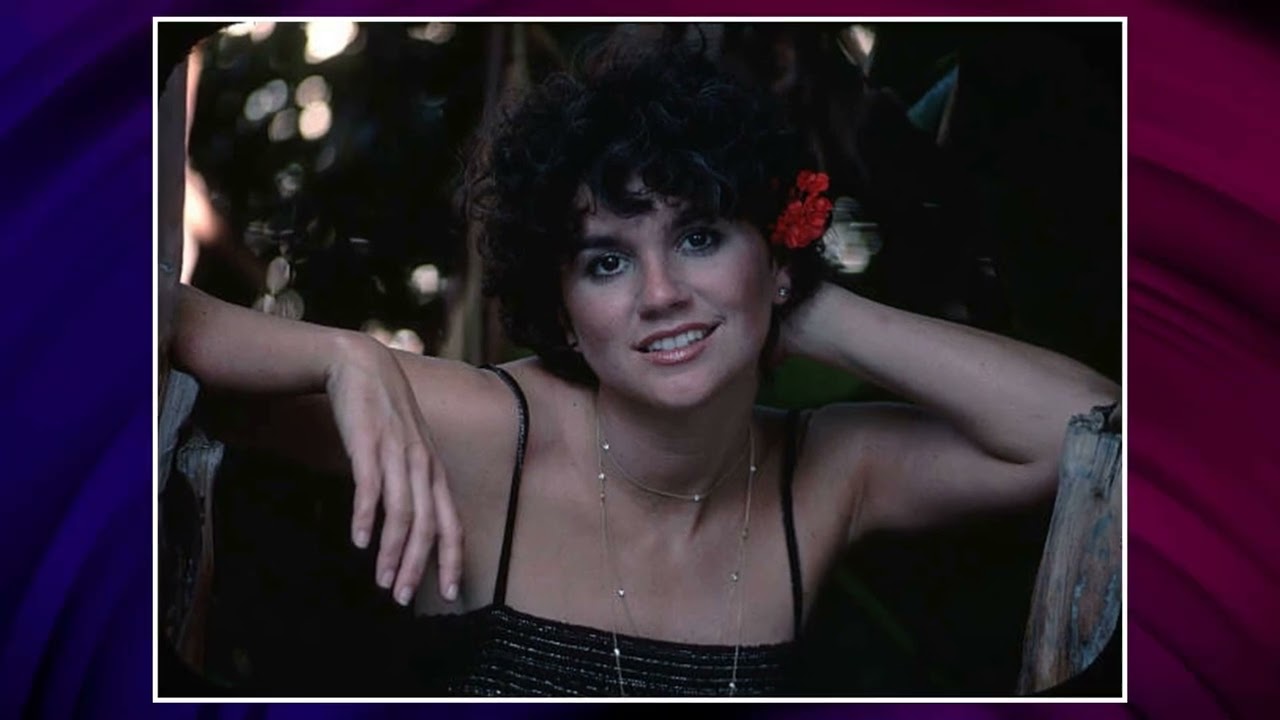
“Faithless Love” cuts deeper than most love songs because it does not plead, accuse, or even fully collapse—it simply stands in the ashes of trust and sings with the terrible calm of someone who already knows how love can fail.
When Linda Ronstadt recorded “Faithless Love” for Heart Like a Wheel, she gave one of the most piercing performances of her career to a song that never even needed the machinery of hit-single fame to survive. Written by J.D. Souther, “Faithless Love” first appeared on Ronstadt’s landmark 1974 album Heart Like a Wheel, released in November 1974 and produced by Peter Asher. The song was not a separate charting Linda Ronstadt single, which is worth saying at the outset, because its lasting reputation comes from something far more durable than radio momentum. It lives through the force of the performance itself, and through the album that carried it—an album that became Ronstadt’s first No. 1 on the Billboard 200, spent four weeks at No. 1 on Billboard’s country album chart, and changed the scale of her career forever.
That context matters, because “Faithless Love” was placed on a record already rich with major emotional statements: “You’re No Good,” “When Will I Be Loved,” “I Can’t Help It (If I’m Still in Love with You),” and the title song “Heart Like a Wheel.” Yet even among such company, “Faithless Love” remains one of the album’s quietest wounds. It appears as track three, early enough to darken the emotional weather before the record has fully opened itself. It is not there to dazzle. It is there to ache.
What makes the song cut so deeply is the writing itself. J.D. Souther, one of the defining songwriters of the Southern California scene and a close artistic presence in Ronstadt’s world, did not write “Faithless Love” as a grand romantic tragedy. He wrote it with a much harder kind of truth. The pain in the title is not merely that love ends. It is that love fails while still calling itself love. The betrayal is not theatrical; it is intimate. The wound is not simply heartbreak, but disillusionment—the realization that the thing trusted most has proved unstable at its core. That is a more devastating subject than ordinary heartbreak, and Ronstadt understood it instinctively.
Her performance is devastating because she refuses melodrama. This is one of Linda Ronstadt’s great strengths across her best recordings: she could sing pain with tremendous force, but she also knew when force would diminish the truth. On “Faithless Love,” she does not turn grief into spectacle. She sings with restraint, and that restraint makes the sorrow feel settled, lived in, almost exhausted. The performance carries none of the self-pity that weaker singers might bring to such a lyric. Instead, it has the dignity of someone who has seen too clearly and cannot unknow what she knows. That emotional poise is exactly why the song hurts so much.
There is also something especially poignant in the fact that Ronstadt was often the supreme interpreter of songs written by others, and “Faithless Love” is one of the clearest examples of that gift. Souther would later record the song himself on Black Rose in 1976, but Ronstadt was the first to record and release it, and for many listeners her version remains definitive. She did not write the lyric, yet she sounds as though she lived every line long before the microphone was switched on. That was her miracle as an artist: she could enter another writer’s emotional architecture and make it feel not borrowed, but inevitable.
The song’s power also comes from where it sits in Ronstadt’s larger story. Heart Like a Wheel was the album that finally broke open the long struggle of her early solo years. By late 1974, the public could hear what had always been there: a singer capable of taking country, rock, pop, and torch-song feeling and binding them into one unmistakable voice. In that setting, “Faithless Love” becomes more than an album cut. It becomes part of the emotional proof of why the album mattered. It showed that Ronstadt’s greatness was not only in big choruses or chart peaks, but in her ability to inhabit sorrow with absolute conviction.
Why does “Faithless Love” cut deeper than most love songs ever could? Because most love songs are still fighting for something—reunion, forgiveness, one more chance, one last explanation. “Faithless Love” sounds as though it has already traveled past all that. It stands in the cold knowledge that devotion can turn unreliable, that tenderness can fail, and that the heart may remain faithful long after faith itself has been broken. Linda Ronstadt sings that truth with such calm, aching clarity that the song never feels trapped in 1974. It feels permanent.
And that is why it lasts. Not as a loud declaration, not as one of the album’s headline chart stories, but as one of the most quietly shattering performances Linda Ronstadt ever put on record—a song where love is no longer radiant, no longer redemptive, only painfully human, and therefore almost impossible to forget.
