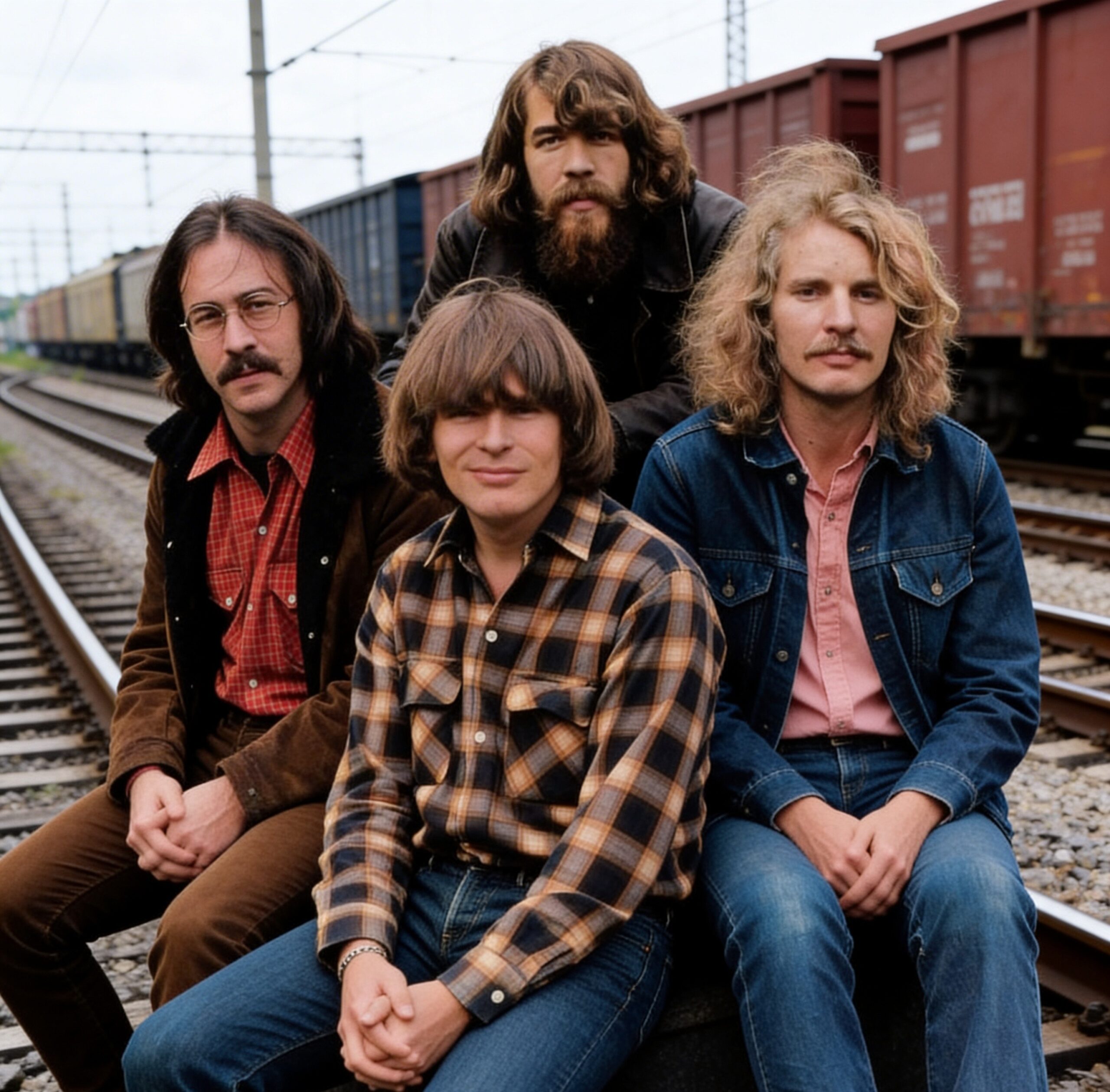
In Creedence Clearwater Revival’s last single, John Fogerty made autobiography sound like a warning passed from parent to child.
Creedence Clearwater Revival released Someday Never Comes in 1972, in the unsettled final stretch that produced Mardi Gras. Written by John Fogerty, it became the band’s final single, not as a grand farewell but as a tightly drawn story about absence, explanation, and the promises adults make when they do not know how to answer a child’s pain.
The song belongs to a complicated moment in the group’s history. Tom Fogerty had left the band in 1971, and Mardi Gras presented Creedence Clearwater Revival as a trio, with songwriting and lead vocals distributed more widely than on the band’s earlier albums. That change made authorship unusually visible. Instead of hearing one dominant voice guiding almost everything, listeners heard the members marking out separate creative territory. Within that setting, Someday Never Comes stands out because it sounds unmistakably like a John Fogerty story: direct, compressed, plainspoken, and sharper than it first appears.
Its autobiographical force is not dependent on private detail. The song works because Fogerty takes a familiar family sentence and shows how it can echo across generations. A child is told that understanding will come later. Later arrives, but understanding does not. The narrator grows into adulthood and finds himself facing the same broken language, the same helpless postponement. The title is simple enough to sound like a proverb, but in the song it becomes an accusation against delay itself. Someday is not a date on the calendar. It is the place where people hide the truths they cannot bear to say.
Musically, the recording keeps to Creedence essentials. The rhythm is steady, the guitars are clean and purposeful, and the arrangement gives the words room to move. It does not chase grandeur. There is no need for an elaborate frame because the drama is already inside the lyric’s structure. Fogerty’s vocal sits between firmness and ache. He does not overplay the sorrow; he carries it as a lesson learned too late. That restraint matters. A more theatrical reading might have turned the song into melodrama, but Fogerty’s delivery keeps it close to ordinary speech, where the wound feels more believable.
The band’s earlier work often transformed American roots music into something lean, urgent, and radio-ready: swamp-rock grooves, rockabilly flashes, country edges, and songs that seemed to understand motion as a form of survival. Someday Never Comes uses that same economy for a different purpose. Instead of a traveler, a riverboat, a fortunate son, or a back-road character, the figure at the center is someone standing inside a family pattern and recognizing it too late. The song does not need to name every event. It trusts the listener to understand the emotional shape: a parent leaves, a child waits, an adult repeats what he once suffered.
That is where the authorship focus becomes important. On Mardi Gras, John Fogerty was no longer simply the near-total authorial center of the band’s recorded identity. The album’s shared structure placed his writing beside songs by the other members, and that contrast makes Someday Never Comes feel more exposed. It is not just another Fogerty composition on another Creedence album. It is a personal song arriving in a record already marked by division, transition, and the thinning of a once tightly unified sound. Without turning the single into a literal commentary on the band, it is difficult not to hear its timing as part of its emotional weight.
The lyric’s strongest insight is that inheritance is not always property, wisdom, or tradition. Sometimes what passes from one generation to the next is silence. Fogerty writes about a failure of explanation, but he also writes about the moment when a person recognizes himself inside the failure. That recognition gives the song its bittersweet power. It is not merely sad because childhood innocence has been broken. It is sad because adulthood does not automatically repair anything. Knowledge has to be earned, spoken, and acted upon, or it becomes another version of the same unanswered promise.
As a final single, Someday Never Comes is unusually modest. It does not announce an ending, settle accounts, or dramatize collapse. Creedence Clearwater Revival would formally break up later in 1972, leaving the song to gather retrospective meaning it may not have been designed to carry. Yet that is part of why it endures. It closes the band’s singles story not with certainty, but with a warning against waiting for clarity to arrive by itself. Fogerty’s authorship turns inward, and in doing so, it finds a larger human truth: the future does not heal what people refuse to face. If someday never comes, the only honest work begins now.
