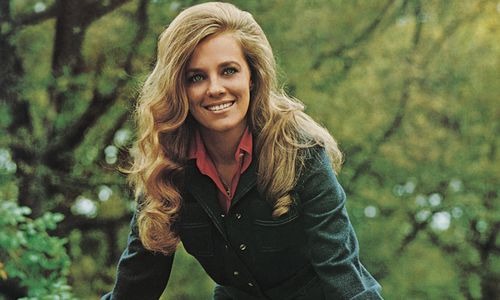
A young voice arrived with a heartbreak song, and country radio made room for eight straight weeks.
In 1964, Connie Smith introduced herself to country music with Once a Day, a debut single written by Bill Anderson and released by RCA Victor. The record reached the top of the Billboard country chart and remained there for eight consecutive weeks, an exceptional run for any new artist and an especially striking opening for a young female country singer in the mid-1960s.
That chart fact still has force because the record itself does not sound like a bid for attention. Once a Day is not oversized, theatrical, or eager to prove itself. Its power comes from the opposite quality: a steady, almost formal command of grief. The song takes a small phrase and widens it until it becomes a full day, then a full night, then a life temporarily organized around absence. Its emotional intelligence is in that compression. It understands how heartbreak can be both repetitive and endless, how sorrow can keep a schedule.
Connie Smith sings it with startling poise. Her voice has brightness and lift, but it is never careless with the pain in the lyric. She does not lean into melodrama; she holds the line cleanly, letting the ache come through the shape of the notes rather than through ornament alone. There is a strength in her phrasing that makes the heartbreak more believable, not less. The listener hears someone wounded, but not dissolved. That balance became part of the record’s identity.
The arrangement reflects the discipline of Nashville country in that period: polished enough for radio, grounded enough to keep the emotional grain of the song intact. The band moves with a measured pulse, leaving space for the voice to carry the story. The steel-guitar color and country rhythm do not decorate the record so much as frame it. Nothing hurries the singer. Nothing crowds the central confession. The production allows Smith to sound both new and fully formed, as if the debut single had skipped the tentative stage entirely.
Bill Anderson’s writing gave her a remarkable vehicle. The song’s premise is plain, almost conversational, but it contains a clever reversal: the title sounds limited until the listener realizes that once a day can mean all day long. That kind of country songwriting depends on clarity. It has to be easily understood on first hearing, then durable enough to survive repeated listening. Once a Day did exactly that. Its eight-week stay at No. 1 was not just a burst of curiosity around a new singer; it was evidence that audiences kept returning to the same restrained ache.
The achievement also belongs to its moment. Country music in 1964 had already made room for important women’s voices, yet the path to sustained national exposure was still narrower for women than for many male performers. A debut record by a female artist holding the top position for eight consecutive weeks carried more than commercial meaning. It placed Connie Smith immediately in the center of the conversation, not as a novelty and not as a fragile newcomer, but as a singer whose command could not be ignored.
What makes the breakthrough feel enduring is that the record never sounds triumphant in the usual sense. Its success came from a song about living with loss, sung without self-pity and without disguise. There is no grand resolution inside it. The heart does not get repaired by the final note. Instead, the performance offers a different kind of strength: the ability to name pain clearly and keep singing in tune with it. That may be why the record’s chart run feels emotionally appropriate. For eight weeks, a country audience kept a heartbreak song at the center of the format, as though recognizing the precision with which it described ordinary endurance.
For Connie Smith, Once a Day was more than a successful first step; it established the terms of her artistry early. The record showed a singer capable of intensity without excess, polish without distance, and faithfulness to a lyric without surrendering her own vocal authority. Many artists spend years searching for that kind of alignment between song, voice, and moment. Here, it arrived at the beginning.
Decades later, the eight-week No. 1 run remains an impressive statistic, but the deeper impact is quieter. Once a Day reminds us that a breakthrough does not always announce itself with noise. Sometimes it comes through control, through a voice refusing to hurry grief, through a song simple enough to enter everyday life and strong enough to stay there. A beginning can endure when it knows exactly what it is carrying.
