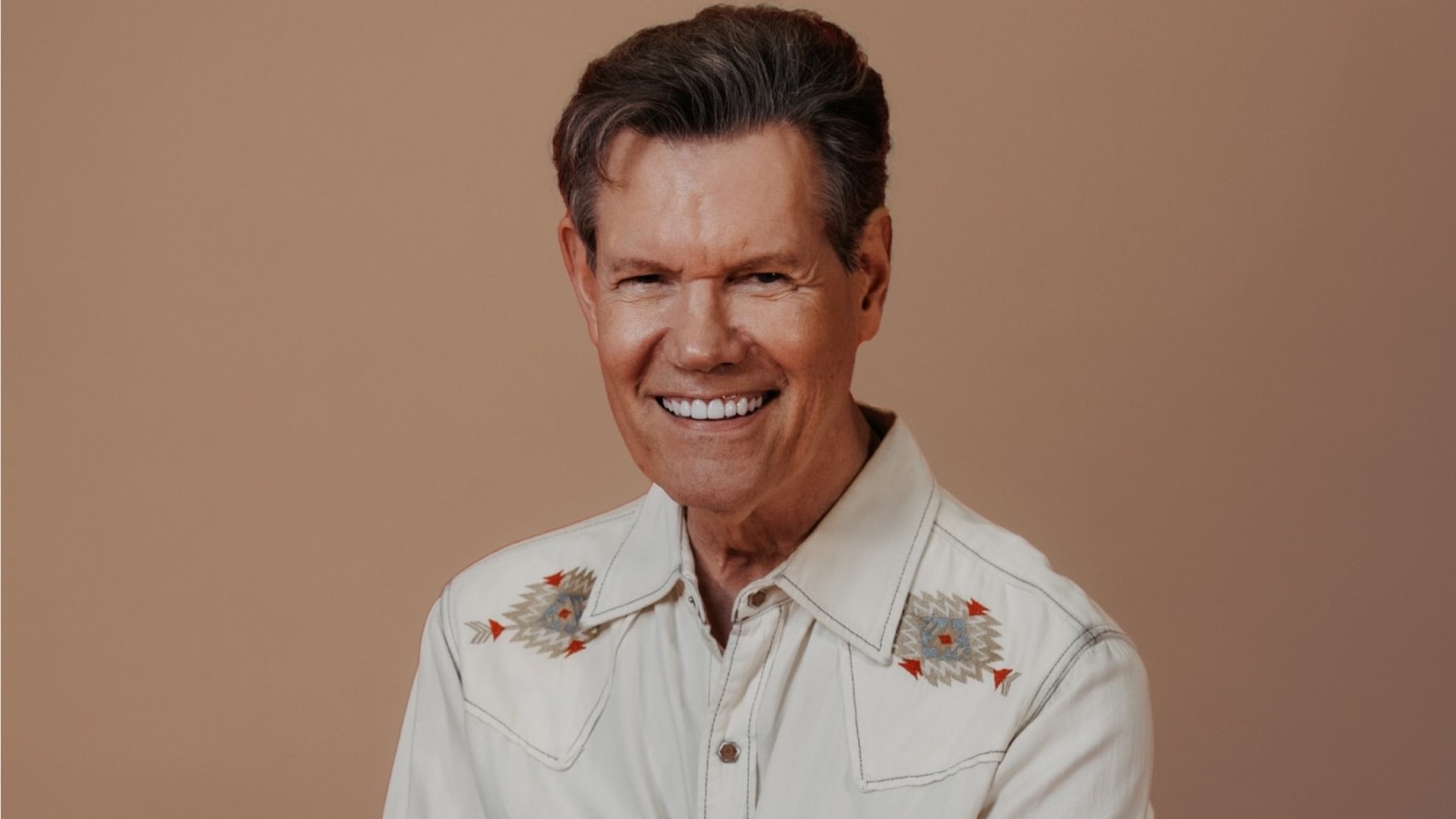
A quiet country ache wrapped in grace, “That’s The Way Love Goes” showed how Randy Travis could turn resignation into something tender, timeless, and deeply human.
When Randy Travis recorded “That’s The Way Love Goes”, he was not simply cutting another country single. He was stepping into a lineage. The song itself had already lived a full life before it reached him, written by Lefty Frizzell and Sanger D. “Whitey” Shafer, and long associated with the sorrow-soaked honesty that defined classic honky-tonk. In Travis’s hands, however, it became more than a revival. It became a statement of identity at a crucial point in his career, reminding listeners that country music did not need to shout to leave a mark. Sometimes it only needed a steady voice, a patient tempo, and the courage to let heartbreak speak plainly.
Released in 1988 as the lead single from Old 8×10, “That’s The Way Love Goes” climbed to No. 1 on the Billboard Hot Country Singles chart. That chart success mattered. By then, Randy Travis had already become one of the central figures in country’s traditionalist revival, but every No. 1 still carried weight, especially in an era when Nashville was constantly negotiating between polished crossover ambition and the older, rougher emotional truths that had built the genre. This song’s success proved that audiences still had room in their hearts for restraint, for humility, for melodies that did not rush and for lyrics that did not pretend love could always be fixed.
The beauty of “That’s The Way Love Goes” lies in its emotional maturity. This is not a dramatic breakup song full of accusations and flying doors. It is quieter than that, and in many ways sadder. The narrator understands that love has its own weather, its own way of arriving and leaving, lifting and breaking the spirit without warning. There is resignation here, but not bitterness. Acceptance, but not numbness. The song speaks to one of country music’s oldest truths: that the deepest wounds are often carried with dignity rather than spectacle.
That emotional balance was one of Randy Travis’s greatest gifts. His voice, deep and unforced, always seemed to come from a place beyond fashion. He sang as if he trusted silence as much as sound. On this recording, he avoids melodrama completely. Instead, he leans into phrasing, into the weight of a line, into the ache between words. The result is haunting not because it is theatrical, but because it feels so lived-in. It sounds like the kind of heartbreak that has been sat with, thought over, and quietly folded into the story of a life.
There is also something profoundly respectful in the performance. Randy Travis never treats the song like a museum piece, but he clearly understands the tradition behind it. Lefty Frizzell was one of the great stylists in country music, a singer whose phrasing influenced generations. To revisit one of his songs was to enter sacred ground. Travis did so not by imitation, but by sincerity. He carried the song into the late 1980s without stripping away its old soul. That may be one reason it still feels so rich today. It did not chase trends, so it never became trapped by them.
The production on Old 8×10 deserves some credit as well. The arrangement around “That’s The Way Love Goes” is elegant and economical, allowing steel guitar, rhythm, and space to do their work without crowding the vocal. This kind of production can be deceptive. Because it sounds natural, people sometimes underestimate how carefully it is built. But that openness is exactly what gives the song its staying power. Nothing distracts from the central feeling. Everything serves the story.
And what is that story, finally? It is the story of love as a force that does not always obey reason. It can be kind, then cruel. Near, then gone. The song does not offer a lesson so much as a recognition. That is why it endures. Most people, if they have lived long enough, understand the wisdom tucked into that title. Love often moves in ways that cannot be argued with. We may not welcome it, and we may never fully understand it, but we recognize its pattern all the same.
In the wider arc of Randy Travis’s career, this recording stands as a reminder of why he mattered so much. He helped restore gravity to mainstream country music. He brought back the sound of stillness, of moral weariness, of tenderness without sentimentality. With “That’s The Way Love Goes”, he did not merely score another hit. He affirmed that classic country feeling could still reach the top of the charts in modern times. That alone would make the song important. But its real value is more intimate than historical. It lingers because it tells the truth gently, and gentle truths are often the ones that stay with us longest.
Even now, the song feels like a late-evening conversation with the past. It carries the plainspoken grace that made Randy Travis such a singular presence, and it honors the kind of songwriting that trusts listeners to feel more than what is directly said. In a noisy world, that kind of music becomes almost sacred. And in this case, it also became a No. 1 country record, a bridge between generations, and one of the finest reminders that simplicity, when joined to sincerity, can be unforgettable.
